










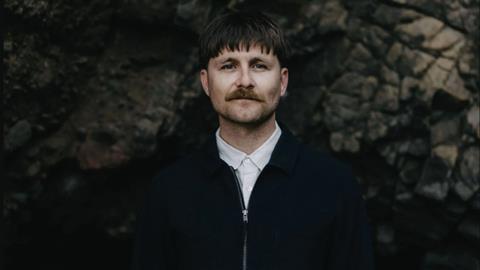

Musician Strahan Coleman was touring the world and seeing God do amazing miracles when daily panic attacks unexpectedly struck and he was left bedridden at home for two years. He talks to Emma Fowle about learning to trust God in the midst of suffering, overcoming church hurt and why his charismatic encounters with God have started to look more contemplative
How do you reconcile seeing the Holy Spirit move in extraordinary ways as you sing about God in bars in Germany, to being bedridden and without the money to buy a Christmas present for your child?
That’s the agonising tension that Strahan Coleman wrestled with as chronic illness brought his successful music ministry to a sudden halt.
The New Zealander gradually emerged from what he calls “a very deep pit” with a greater appreciation for the mystery of trusting in God’s love, even during unexplainable suffering. It also led him towards a more contemplative expression of Christian faith – although one that sits alongside, rather than being opposed to his more charismatic upbringing.
These experiences form some of the key themes in Strahan’s latest book, Thirsting: Quenching our soul’s deepest desire (David C Cook), and his wider ministry. This includes running a prayer ministry and retreat centre and being on the teaching team for John Mark Comer’s Practicing the Way.
We caught up with Strahan to chat more about his faith, ministry and the Church – including a timely encounter with a stranger while queuing for a pie, and what God’s up to amongst Gen Z in New Zealand.
What is the story of your own personal faith in Christ?
My father had a Christian background. My mother was more engaged in New Age stuff. Somewhere amid that, they had an experience of God. My dad was listening to Christian radio and heard them talking about deliverance. He drove to the radio station and said: “I’m in. What’s going on?” They prayed for him and he had a real experience of God.
As a teenager, I went to a Baptist church and had lots of really important moments where God revealed himself to be true. But when I was in my late teens, and I’d had a few things go wrong in life, I blamed God for it. I decided: I’m out. I tried to fill myself with everything that I could find in the world, and I found that deeply unsatisfying.
We will only feel loved by God to the extent that we let ourselves be seen by God
When I was at my worst, I gently heard the voice of God one morning saying: “Strahan, I love you. I want you to come home to me.” I thought it was the Jack Daniels, but it returned that night, and then the next morning, and a week later. I felt like God was chasing me, and if he was chasing me now, at my worst, [I realised]: This thing must be more beautiful than I’d known.
What would you say to someone who’s perhaps going through something similar and questioning God in the middle of their suffering?
After eight or nine years, I started wrestling with chronic illness. I was incredibly sick for several years and I ended up asking the same question: “God, where are you?”
The first time around, I was a 20-year-old man. The next time, I’m in my late 20s, with children. You feel differently about life. Instead of asking why questions, I began to ask who questions, because underneath the question: “How could you let this happen?”, is the question: “Are you really good? And if you are God and you are loving, how does that equal chronic illness, or the loss of a loved one, or a divorce?”
When I turned to God and asked who he was, I felt like that gave him more of a chance to show me than a simple transactional why question. When you ask a who question, you’re engaging in a relationship in a more intimate and deeper way.
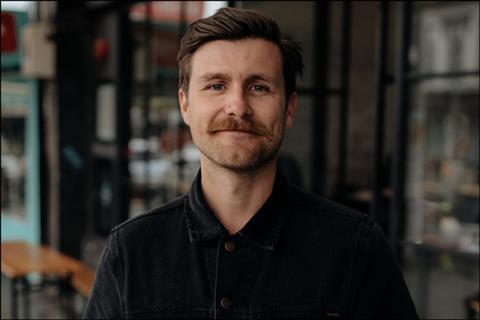
Tell us about your journey with chronic illness. You had a burgeoning career as a musician, you were active in ministry and you had a young family. What happened?
I was touring musician and we’d finished a tour overseas where we were seeing God do amazing stuff. I was playing gospel songs in very secular bars in Germany, and people were weeping. I was laying hands on people, praying for them and sharing the gospel.
Two months later, I’m at home, basically bedridden for a couple of years. We ran out of money. The miracles that we’d seen in ministry and in our lives ceased. The provision ceased. I was having panic attacks almost daily. I had two young boys and I was not able to play with them.
There were two pivotal moments for me. One day, I was journaling. I looked up and in the café window, the low sunlight struck along the cars. It was beautiful. I felt terrible, my life was falling apart, but I was drinking a coffee, looking at the sunrise and I started to thank God. Honestly, it was like a weight just lifted from my shoulders. It began a journey of turning away from suffering and towards what is good and beautiful.
The second thing I did was, every morning, I’d make a coffee, sit in bed and say: “God, I can’t string a thought together. I feel sick, but I’m here. Would you just show up?” And I’d sit there until that coffee was done. I did that every day, giving God the opportunity to love me. It was like a slow walk out of a very deep pit.
When we see God moving in ministry, and then that stops or gets interrupted, we don’t always know what to do with that. What did that feel like for you?
It was completely confusing and disorienting. Initially, I was looking under every rock, repenting of things I hadn’t even done in my life. I was getting deliverance ministry as often as I could.
There’s one story I’ve never forgotten. We couldn’t buy our son a soccer ball for Christmas, and it was killing us. My wife and I ended up hugging each other in a pile of tears on the floor. I got in the car to pick my son up from daycare. I was exhausted and hadn’t eaten all day. With the last seven bucks I’ve got, [I thought]: I’m going to buy a pie so that I don’t turn up to daycare and my son freaks out. I took my pie to the cashier, and as I was about to pay, this guy in front of me turns around and says, “Are you Strahan Coleman?” I said: “Yeah.” He says to the cashier: “I’m going to buy this man’s pie.” And then he said to me: “You don’t know who I am, but I know who you are, and I know all the things that God is doing through your music. Right now, I feel God is telling me to tell you: ‘Don’t give up. You’re exactly where you need to be.’” He puts $150 in my hand and prays for me in the parking lot.
I could tell you a dozen stories like that. I don’t know how to make sense of the why, but I can look at those stories and say I know it wasn’t because God was disowning me.
You start your book with the premise that God wants all of us, and then you say: “That sounds romantic until he comes for all the things that we don’t want to give away.” How did life change for you when you learned to embrace that?
I used to say: “God, I need you to show me that you love me.” I studied at Bible college, I preached the gospel, I was in ministry and yet, at the end of the day, I felt lonely and unloved by God. I would say “I’m loved by God”, but deep down, I didn’t know how to make this a reality. I was praying one day, saying: “How do I know you love me? Why wouldn’t you show me?” I felt him say: “Strahan, I’ve shown you that I love you in Christ. I’ve shown you all these times in your life, but you’ve never received it.”
As I slowed down and found stillness, my charismatic encounters with God actually became more vast and spacious and beautiful
If you look at Genesis, it wasn’t God who hid from us, it was us who hid. We decided that because of the icky feelings we had, because of who we are, how we saw ourselves, that we must be unlovable, and we hid. And who was it that did the pursuing? God looked for us, and he said: “Strahan, where are you?” Whether it’s shame caused by our own actions or unfair shame that’s been put on us from others, guilt, a sense of not being enough – you name it, we have these little chambers with locked doors and we won’t let God in there. And then we feel unsatisfied because we don’t feel fully loved or accepted.
What I’m trying to do in Thirsting is suggest that maybe you are more pursued and loved and wanted and yearned for than you could ever dream of, and actually, we’re the ones who put up the walls and block God out.
I use the image of the ocean. The deeper into it you go, the greater the pressure and the darkness. If we don’t think about darkness as something negative, but as hiddenness or mystery, then I suggest in the book that we are a bit like a dark ocean. The deeper we open ourselves up, the harder it gets, because there’s more pressure and it’s a bit more mysterious, because our own soul is kind of mysterious to us.
It’s the same with God. The deeper we get into him, the more mysterious he becomes. To feel fully loved by God and fully experience him, we have to let him right into our deepest, darkest places.
We will only feel loved by God to the extent that we let ourselves be seen by God.
You grew up in a charismatic church, but have moved towards a more contemplative expression of Christianity in recent years. Tell us about that journey.
For me, there was never any conscious move from “charismatic” to “contemplative”. The only difference between my charismatic background and the contemplative is that they have different ideas about the way we spend our energy.
In a charismatic environment, I’m going to give; I’m going to sing and praise; I’m going to speak in tongues. The more I lift myself up in energy, the more likely I am to encounter God. In the contemplative world, you’re more sinking down into the energy of God. It’s more: I’m going to be still and passive, and I’m going to let God’s energy fill me. There’s a quietness and a beauty to it, but both are still centered on the presence of God.
When I was sick, I couldn’t go in to a room of charismatic people and verbally pray for an hour. I couldn’t do a worship night. Instead, I sat and looked out a window for eight hours a day and then quietly went to bed at night. But what I found was, as I slowed down, as I found stillness, my charismatic encounters with God actually became more vast and spacious and beautiful.
You tell a story about being in ministry and going through a very painful experience with a leader. Could you tell us what happened?
In my early 20s, I ended up in a job with a charismatic pastor who was very prophetic. He would stand up on a Sunday, point to people and deliver words, and they were mind-blowingly accurate. He seemed like someone who was really close to God, which is pretty easy to assume when someone has a gift like that.
But this person had a lot of trauma in their childhood. They came through the Church in the charismatic renewal of the 80s and 90s. He was 23 years old, hardly a Christian, and they’re like: “Go, plant a church.” He was just a normal, broken person, but that brokenness really spilled out in relational patterns that were super destructive for me, such as being told I’m nothing. It was very confusing. Here’s this guy who’s seems like he’s as close to God as you can get and he’s telling me that I’m not cut out for ministry, that there’s something wrong with me. It really broke me.
Amazingly, that’s what caused me to get into music. But I had to spend a lot of time processing how I could still love the church as an institution, and pastors and people in position of authority, even when my experience was that negative.
We’re hearing lots of stories about Gen Z returning to church in the UK, US and Europe. What’s happening in New Zealand?
Similar things. We’ve got millennials who really have a chip on their shoulder, possibly because of the kind of experiences I’ve described. But I think that there’s a genuine innocence to Gen Z, that most of them have never heard the gospel. I know people in my small town in New Zealand, even people my age, who are saying: “Who is Jesus?”
My twelve-year-old son was telling me that at school last year, kids started getting the Bible out from the library, because it was just so fascinating. I think it’s possible that, because we felt like the world didn’t want to hear from us, we forgot what it’s like to walk in a community that’s pursuing love – a broken community, yes, but a community of people who acknowledge brokenness and who acknowledge that we need salvation.
We take worship music for granted, how good and positive it is, and that it’s possible to be relieved from your guilt and shame. I wonder whether part of what’s happening with Gen Z is that they’re hearing it for the first time - and we’re remembering how good we have it.
We are in a cultural moment where all of the levers that we’re used to pulling to get a little bit of salvation, they’ve just bottomed out. When that happens, people go: “Now what are we going to do?” When you’re really hopeless, you start to look at options that you had dismissed entirely.
I’m fully convinced that, in this moment in history, God wants to meet people in really significant, deep ways.
This article was produced with editorial support from Tim Bechervaise.
To hear the full interview listen to The Profile podcast

























No comments yet