



They toured with rock legends, scored a US Top 10 hit after disbanding, and never compromised their Christian faith. Tony Cummings speaks with founder Peter Banks about After The Fire’s extraordinary career navigating the mainstream music industry, and why their new ‘Bright Lights’ box set proves they were one of Britain’s finest bands of their time
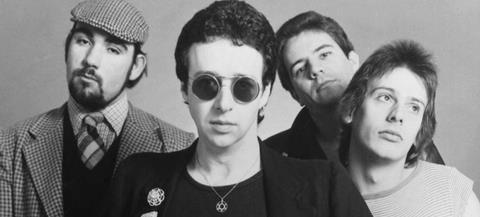
The recent release of a 6-CD box set ‘Bright Lights 1974-1983’ by After The Fire (ATF) brings back into focus the cutting edge rock music of a fine British band.
ATF have a peculiar place in popular music history. They are the only British act ever to have a Top 10 US hit single after they had disbanded. And the only band of Christians ever to tour with the rock luminaries of their day such as E.L.O., Queen and Van Halen without any compromise in faith, lifestyle or lyrics.
I had a chat with ATF founder Peter ‘Memory’ Banks about his and the band’s decade-long encounter with the notoriously exploitative world of the mainstream record industry and the ongoing interest in their music.
The Beatles had demonstrated that the album could sell as well as the single and by the early 70s progressive rock bands like Yes, freed from the limitations of the three-minute single, were exploring the creative opportunities available to them with new studio technology and new instruments on 40-minutes-plus albums. And so in 1972 Isle of Wight-born Peter Banks bought a synthesiser, brought in some friends and began playing gigs in London’s pubs and clubs clamouring to get students into their premises.
Peter was a Christian and the name of the band came from scripture. 1 Kings 19:11-13 recounts the prophet Elijah’s encounter with God. The Lord sends a wind, an earthquake and a fire but the Lord is not in any of them. But then “after the fire came a gentle whisper.”
Our faith informed our music naturally - it wasn’t contrived
Bit by bit After The Fire’s personnel changed and improved so that by 1977 the line up was Banks on keys; vocalist and guitarist Andy Piercy (who’d had three years scratching a living with Christian scene acoustic duo Ishmael & Andy); bassist Nick Battle and drummer Ivor Twydell. Such was their tight musicianship and confident stage presence that ATF created a buzz whenever they gigged on London’s club scene, performing Banks and Piercy compositions like ‘Back To The Light’ and the long epic ‘Pilgrim’ based on Bunyan’s Pilgrim’s Progress.
But despite the bold declaration of faith in their songs the band were never part of the British Christian music scene. “We always aspired to be a successful mainstream band,” said Banks. “Church youth leaders who were into music would sometimes bring their groups to our gigs, even though they were often in licenced premises. We never saw sacred and secular as separate. Our faith informed our music naturally - it wasn’t contrived. Some journalists misunderstood that and thought we were preaching, but we just wrote about what we believed in.”
ATF recorded their debut album Signs Of Change on their own label Rapid Records. Thanks to the help of Eastbourne’s ICC Christian recording studios, who allowed them to settle their bill over a lengthy period, Signs Of Change sold 4,000 in the first week, a highly respectable figure for an album with no shop distribution.
Getting a major label rep to turn up at an aspiring band’s gig is a bit like securing an audience with the Pope but eventually the head of A&R at CBS Records, Muff Winwood, came to see ATF. The music scene was changing. Prog rock was now deemed passe. Instead, new wave rock was emerging and the band, responding to the change, wrote shorter, catchier pop rock tracks. For months on end ATF toiled away in a small studio. (16 of those demos constitute a whole CD in the ‘Bright Lights’ box set.) Finally in 1979 a song out of the demos was selected, the band were put in the studio with producer Rupert Hine and the band’s first single ‘One Rule For You’ was released. At first it stiffed. But a relaunch at Ronnie Scott’s finally saw it become a small hit (number 40 in the charts). As Peter Banks said, “It put us on the map; it was easier to get bookings, radio interviews and TV slots.”
The Laser Love album followed. Although they didn’t produce any more hits, even small ones, their following, particularly among young Christians, was sizeable. Along with Cliff Richard, ATF were joint headliners at 1979’s Greenbelt Festival and Buzz magazine readers Sue and Kathy were typical of young Christians’ support for ATF when they enthused on the letters page about the band’s “superb performance”.
But behind the scenes things were getting difficult. Ivor Twydell left to try to establish a career as a frontman. He was replaced by Nick Brotherwood and they began working on their album 80-f. It proved to be what Banks called “one of the low spots for the band.” Having chosen producer Tony Mansfield to oversee the album, they went into his South London studio. The resulting album was mixed, mastered and delivered to the label. But then disaster struck. “We were called in to the CBS boardroom and informed it would be dropped. We were simply told it was not good enough and we needed to go away and write three ‘hit’ singles to replace some of the tracks on the album.”
Brotherwood left the band, Peter King became the new drummer and there were changes in management and producer. The new producer “Mack”, real name Reinhold Mack, had had major success with Queen and E.L.O. but the re-recorded version of 80-f still didn’t produce the hits the CBS suits were clamouring for in the UK, yet the instrumental ‘1980-f’ became a surprise hit in Germany. It did however show a band at the top of their game, tightly running through catchy items like ’Love Will Always Make You Cry’, ‘Starflight’ and the wonderfully titled ‘Who’s Gonna Love You (When You’re Old And Fat And Ugly)?’. For their 1982 album Batteries Not Included Mack suggested they fly out to Munich to record at his Musicland Studios. The album contained punchy post-punk anthems like ‘Short Change’, ‘Rich Boys’ and ‘Frozen Rivers’. In Britain ‘Batteries Not Included’ was released without fanfare and the singles from it got little radio play. In Germany though, their following was growing all the time and the album sold well.
While in Germany Banks had become intrigued by a single he’d heard by Austrian dance music artist Falco. Remembered Peter Banks, “I heard ‘Der Kommissar’ in Germany and loved it. We were being encouraged to record a hit single, so we tried it and cut a cover. We did a 12 inch mix that Muff Winwood loved, then edited it for release. It eventually became a big hit in the US (making number 5 in the Billboard Hot 100) - though ironically, by then the band had already split up. Andy went out for radio promotion, but that was it.”
Looking back, I realised we were a better band than we thought at the time
Free from ATF, Andy Piercy began working on sessions for a planned solo project, but only a single was released. Unhappy with the recordings, the project was dropped by CBS. Years later Piercy was to make an impact on the Christian music scene as the producer of three successful Delirious? albums.
In 2004 Peter reformed After The Fire (as ATF2) with Keith Smith handling lead vocals. A live performance at the 2004 Greenbelt Festival was recorded and eventually released in 2006 under the title Live From Greenbelt…Plus. By 2008 songsmith Rob Halligan was drafted in as ATF2’s main singer. But despite his abilities the revamped ATF2 could not rekindle the band’s former glories. In 2013 the reformed ATF2 played their last gig. “The proper end of After The Fire was in 1983. We did a few reunion shows later, but they weren’t very successful. Looking back, I realised we were a better band than we thought at the time,” says Banks.
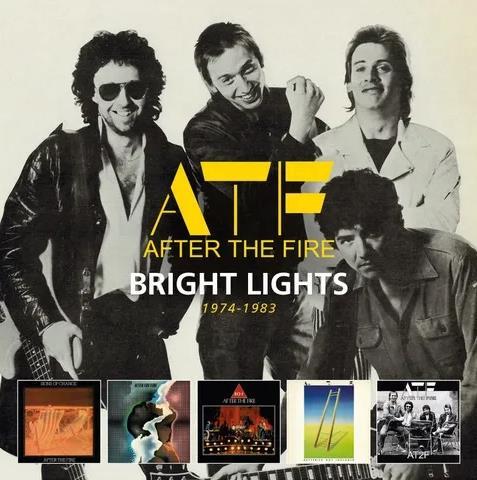
Clearly there still remains a legion of nostalgists hankering for ATF’s Banks and Piercy glory days. Peter explained, “Out of the blue I had a call from Cherry Red Records. They’d taken over the CD release of Signs Of Change, our first self-financed album, and now wanted to do a box set - an anthology of everything we’d ever done on CBS/Epic Records. Cherry Red told us CDs were making a comeback.”
Banks explained how the royalty system works. “The re-issue company pays a licence fee to CBS, and we get a proportion. We only started receiving royalties in March 2020, after all debt to CBS was finally cleared - decades after ‘Der Kommissar’! People don’t realise record deals are effectively loans. Every meal, taxi and promotional cost is charged back to the artist.”
As their box set demonstrates, After The Fire were one of the best bands of their era, Christian or non-Christian. No doubt there will now be collectors clamouring for the re-issue of their much-loved albums on vinyl.

















2 Readers' comments