







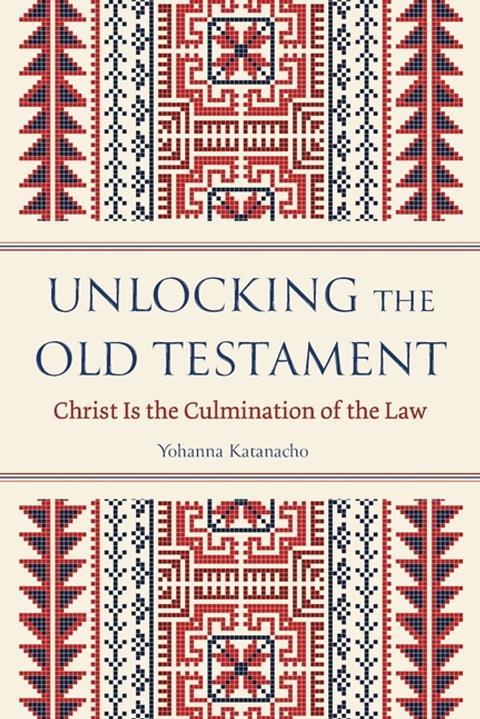
In a timely and moving introduction to the Old Testament, Palestinian theologian Yohanna Katanacho weaves together biblical scholarship, covenantal theology and the raw pain of his people’s displacement, says our reviewer
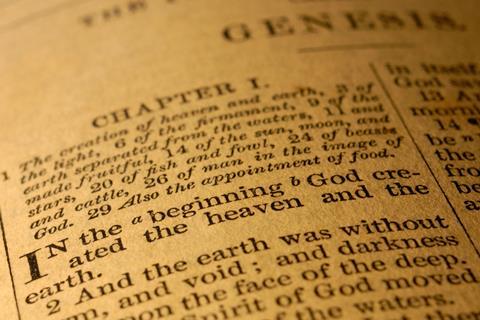
We are increasingly realising that there is a great temptation to read the Bible only through Western eyes, interpreting it through our own perspective and undervaluing its Middle Eastern origins.
Dr Yohanna Katanacho is a professor and a Palestinian evangelical Christian. His concise introduction to the Old Testament has two clear aims. Firstly, to help Palestinian believers appreciate and accept the Old Testament, even though it’s used by their Jewish neighbours as the basis for their prior claim to the land they share. Then, secondly, to invite the global Church to look again at familiar passages of scripture, but to see them through Palestinian eyes and so enrich their understanding.
To both groups, his appeal is passionate. The Old Testament is the book of Christ and finds its meaning and culmination in him. Jesus is the key to unlocking a book that can often feel baffling and anachronistic. It speaks about Him and comes alive only as we discover Him in its pages.
Katanacho seeks to help Christian leaders and Bible students gain this broader perspective by identifying key milestones in the Old Testament story and linking them to the religious cauldron of the Middle East where Muslims as well as Jews have their own interpretation of the texts.
Four introductory chapters explore the value of reading the Old Testament today: why we give it that title, how we should obey it in the light of the New Testament, and the importance of the creation story.
Then he identifies and explains his seven key milestones: the covenants made with Adam, Noah, Abraham, Moses and David plus the Exile and post-Exilic periods. His explanations are clear and his grasp of historical detail impressive. His use of charts and diagrams add to his teaching, giving space to differing interpretations whilst also carefully showing the relevance of the Old Testament texts to the Christian life.
His main emphasis throughout is on how the coming of Christ is foretold clearly throughout all the Old Testament. Jesus is the fulfilment of centuries of longing for a Messiah, and this is the thread that binds the two sections of the Bible together.
Interestingly, the chapters were originally sermons delivered during his ministry as a pastor in an Arab Palestinian church near Nazareth. I can’t really imagine many British churches following such a sermon series, but then maybe I underestimate them! What I would say is that I found the book gave me a refreshing reminder of the beautiful crafting of the Old Testament, and it made me take out my Bible and follow the covenantal thread again, finding Jesus in so many places.
What is most striking about this book, however, is the contemporary Palestinian perspective that it brings. Katanacho does not shrink from expressing the pain and suffering that Palestinians have experienced since their land was annexed in 1948, and in Gaza and the West Bank in recent times. The fall of Jerusalem and the exile in Babylon, he says, serve as a pattern for their own displacement and the devastation and tragedy that they have experienced.
Commenting on the many songs of lament in the Old Testament, he writes movingly of a “theology of tears” and bravely asks: “Following the horrific massacres on October 7, acts that stand condemned for their violation of the sanctity of life, and subsequent genocide and total destruction in Gaza, how can Palestinians hope in God or trust the people of God? … Can Palestinians believe after horrific massacres, war crimes, human rights violations, and unprecedented oppression? Can Scripture guide and enlighten our path, especially since the story of the people of faith is our story.”
To find hope, Katanacho turns to the book of Lamentations where Jeremiah, the weeping prophet, facing the destruction of Jerusalem, offers divine wisdom in time of disaster by articulating a theology of tears. As he analyses Lamentations, Katanacho sees there is no comforter, no prophetic voice, and seemingly no hope. Yet in the darkness, a light is shining – the faithful covenant love of God:
“Yet this I call to mind and therefore I have hope: Because of the LORD’s great love we are mot consumed, for his compassions never fail. They are new every morning; great is your faithfulness. I say to myself, ‘The LORD is my portion; therefore I will wait for him.’ The LORD is good to those whose hope is in him, to the one who seeks him; it is good to wait quietly for the salvation of the LORD.” (Lamentations 3:21-26).
The reason for hope is God’s covenant and his commitment to his children and people. Human hope is rooted in the identity of God as the good and saving One. We can trust, even when our faith is weak, because he remains faithful. “Love is not an excuse to forsake justice”, says Katanacho, “but the motivation to seek justice through love, not revenge.”
Unlocking the Old Testament (Langham Global Library) by Yohanna Katanacho is out now

























2 Readers' comments