











How should Christians respond to young people exploring sexual identity? This thoughtful guide combines theology, psychology and pastoral wisdom, says our reviewer

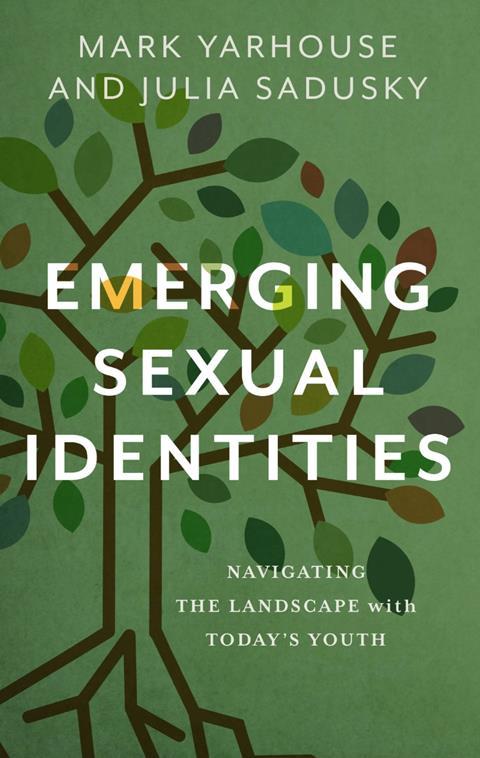
For the Silent Generation and Baby Boomers it was so simple. The general understanding was that there were boys and girls, men and women. Anyone who didn’t neatly fit into those binary categories were termed ‘gay’, ‘lesbian’ or simply ‘queer’. At least, that was the somewhat naïve theory. In reality, it was never that simple, and with Generation X, and more so with Millennials and Generation Z, discussion has increasingly demonstrated the confusing complexity of gender identity. Emerging Sexual Identities: Navigating the Landscape with Today’s Youth by Mark Yarhouse and Julia Sadusky is therefore an important, much-needed and timely book.
The book is a careful, interdisciplinary, and pastoral study of how young people today construct and inhabit sexual and gender identities. Written within a broadly orthodox Christian framework, the book attempts something rare in current discussion: to move beyond both reactionary rejection and uncritical affirmation, offering instead a mediating, ‘third way’ grounded in clinical psychology, theological reflection, and lived pastoral experience.
The rapid expansion of identity categories among adolescents is a pressing cultural reality. The authors argue that this development is not merely a matter of individual psychology or reactionary sociology, but the result of complex interactions between language, culture, social validation, and personal experience. They use contemporary research to show how identity labels function as interpretive frameworks through which young people understand themselves, rather than as fixed descriptors of an underlying essence. This emphasis on the ‘constructed yet meaningful’ nature of identity is one of the book’s central contributions.
The book is divided into two parts. The first half is analytical and descriptive. Here, the evolving landscape of sexual and gender identities is mapped, along with definitions, some historical context, and discussion of theoretical frameworks such as queer theory. Particularly useful is the attempt to explain the proliferation of identity categories through sociological mechanisms such as the ‘looping effect’, whereby classifications shape individual behaviour and are subsequently reshaped by those who adopt them. Simplistic explanations (e.g. identities are entirely innate or entirely socially constructed) are thus avoided, and the genuine experiences of young people are acknowledged.
Emerging Sexual Identities is a work of practical theology informed by clinical psychology
Part two shifts toward praxis. Here, the authors develop a relational-therapeutic model for engaging with young people navigating sexual identity questions. Avoiding prescriptive ‘solutions’, they emphasise the need for accompaniment: listening, understanding, and guiding individuals within the context of their broader narratives, using a framework of interpretive ‘lenses’ (the integrity, disability, and diversity lenses). These provide ways of understanding sexual and gender variance as a matter of moral coherence, psychological distress, or natural human diversity. Rather than privileging one lens, a case-by-case application is suggested. This approach is both innovative and controversial. On the one hand, it reflects clinical realism and avoids reductive thinking; on the other, it raises questions about coherence, particularly for readers seeking a more determinate theological or ethical stance.
The book is rooted in traditional Christian anthropology but adopts a placatory tone. Yarhouse (an evangelical) and Sadusky (a Roman Catholic) avoid theological disputes, focusing instead on shared commitments and practical care. This enables the book to function as a multi-denominational resource, although it also means that some doctrinal questions are superficially treated. That said, their primary aim is to equip readers (especially ministers, parents, and counsellors) to respond wisely and compassionately to real-world contexts.
Commendably, the authors insist on epistemic humility. They acknowledge the limits of current knowledge and the complexity of human identity formation, which is refreshing. For example, their engagement with ‘queer theory’ is neither dismissive nor uncritical. Instead, they ask what insights the theory offers, while also noting its limitations. This balanced engagement encourages discussion rather than polarisation.
Nevertheless, the book is not without its weaknesses. Some readers may find its middle-ground approach frustrating; others may find it too accommodating, while some may feel it is constrained by theological commitments. Additionally, the sociological and psychological theory in the first half may make it less accessible to the general reader. Furthermore, the blending of clinical and theological perspectives is not always seamless. Sometimes, the pastoral recommendations sit uneasily alongside the theological framework, raising questions about how competing commitments are to be prioritised in practice. This is especially so in the use of the ‘three-lens model’, where the criteria for selecting one lens over another are not clear.
Despite such criticisms, the book makes an important contribution. It reframes the conversation about sexual identity among youth, shifting the focus from abstract debate to relational engagement, and the emphasis on listening, narrative, and pastoral presence offers a workable approach. Moreover, its integration of empirical research with theological reflection provides a model for further interdisciplinary work.
Emerging Sexual Identities is a work of practical theology informed by clinical psychology. Definitive answers are not offered, nor does it attempt to settle cultural and ecclesial debates. Instead, it equips readers to navigate these debates with greater nuance, empathy, and intellectual integrity. For those working with young people, it represents a significant and timely resource.


























1 Reader's comment