








The Myth of Good Christian Parenting traces the rise of parenting resources over the last 50 years, focusing on how Christian authors have idealised obedient children at all costs. But what are the consequences of this doctrine? Our reviewer finds out

The Myth of Good Christian Parenting: How false promises betrayed a generation of evangelical families looks at the rise of the Christian parenting advice industry with a critical eye.
Written in an academic, yet accessible tone, the authors chart the rise of modern Christian parenting resources in the USA since the publication of James Dobson’s Dare to Discipline. In a cultural context of the 1960s, campus protests, draft card burnings and Woodstock, Dobson was convinced that American parents were too heavy on love and too light on discipline.
This spawned a genre of Christian parenting books that all veer towards the same political ideology, while claiming that they don’t have one. “The authors of Christian parenting books have long framed their advice and ideas as “Biblical” – a label that gives the impression of authorial neutrality positioning them as mouthpieces for God’s word”. Of course, the thing that is never mentioned is that the lessons we learn from the Bible are influenced by our place in society. Many of the authors and influencers cited are predominantly white evangelicals in two-parent families. Many of these books have no space for anything but the nuclear family and neurotypical children.
The Myth of Good Christian Parenting acts as a literature review for the whole genre. It points out how writers such as James Dobson, Ted Tripp and Ginger Hubbard framed children as ‘sinners’ who needed correction and emphasised corporal punishment – smacking. This was presented as the only way to prevent your child from falling into sin and being condemned to eternal damnation. In this worldview, there is no question as to whether a child’s behaviour is ‘sinful’ or just ‘developmentally appropriate’. Doug Wilson (currently most famous for being Pete Hegseth’s spiritual adviser) advocates for a ‘Reign of Terror’ wherein parents offer no warnings and spankings for all offences. It seems the most searing critique that Franks Burt and Kramer McGuinness give of Christian parenting authors is when they quote them verbatim.
There are times when it does feel like we are looking over the shoulder of a book intended for an American evangelical audience. The idea that anyone believes they have to ‘win’ in every interaction with their dependents is both ludicrous and tremendously petty. It reveals a fragility in the egos of these so-called ‘Christian parents’ that is not found in the Bible. This book also has the courage to do what many of these authors do not, namely, to look at the consequences of this teaching.
Many of these books have no space for anything but the nuclear family and neurotypical children
The authors Marissa Franks Burt and Kelsey Kramer McGinnis interviewed adult children who had endured the type of Christian discipline espoused by Dobson and those that followed in his wake. Those individual messages are perhaps some of the most heartbreaking of the book: “I wish my parents could understand how terrified I was of them and how I felt like they hated me (while also loving me… It was confusing) and how their parenting set me up to be in an abusive marriage”.
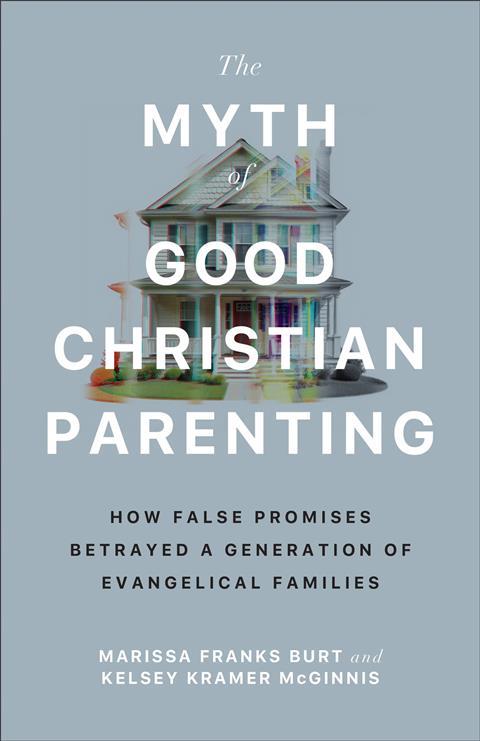
The book also highlights how spanking grooms children for abuse. If you normalise being hurt by people who love you, then children are likely to seek that out in their own relationships. Love feels like pain to them. Perhaps most gallingly, it points out how when these techniques fail to produce the results promised, parents desperate to raise their kids the ‘right way’ will so often be presented with yet another Christian parenting book, sometimes by the same author, espousing much the same views with only a slight tweak. And so the cycle repeats.
Perhaps frustratingly for some readers, after hearing this convincing critique of the whole culture of Christian parenting, the book offers no easy answers for an alternative. This is by design, as it states that although they have resources they might recommend personally: “Using the platform of this book to do so enables the very system we are critiquing.” What it does do is equip the reader to make their own judgements, they even design a handy traffic light system for evaluating parenting resources. One thing is clear; for those desperate to parent their children in a way that orientates them towards Christ, The Myth of Good Christian Parenting may not be the last word, but it is certainly an excellent place to start.
























No comments yet