

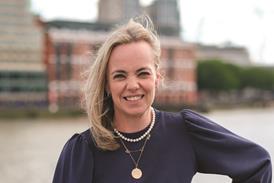









Whatever happens under the leadership of Most Rev Dame Sarah Mullally, it is a huge step forward for equality in the workplace and wider society, says Abigail Frymann Rouch
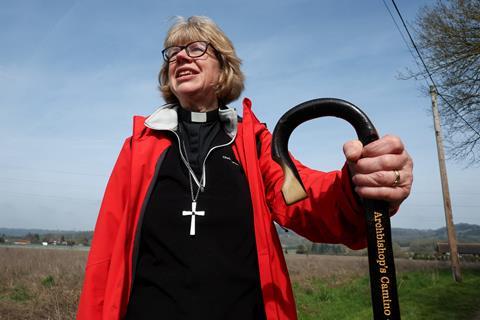
Today is a big day for the nation and its long journey towards recognising women as equally capable to men.
The dyslexic daughter of an electrical engineer and a hairstylist, raised on a Woking housing estate, is to be installed as the 106th Archbishop of Canterbury: the first woman to become the Church of England’s most senior bishop and the first among equals in the Anglican Communion.
The appointment of Most Rev Dame Sarah Mullally was radical the moment it was announced. Even before her installation, she has had to cope with a heckler at the service confirming her election, a vexatious abuse claim, and conservative rebels in the Anglican Communion renewing their efforts by forming a new Global Anglican Council.
Whatever comes next, it signals a shift away from what has always been, to what is possible. It is a turning-point for many more people than just those who campaigned for women’s ordination.
Women and the Church
Women make up one third of all active clergy - and that proportion is growing. Yet according to the campaign group Women and the Church (WATCH), five per cent of churches (nearly 600) have passed “resolutions” to limit the things women can do, be that serving there as priest, preaching or celebrating Communion.
Opponents of women’s ordination say they’re not being sexist, just faithfully sticking to their understanding of scripture and tradition. Yet even in parishes who don’t officially object, an ambivalence towards women clergy can persist, with men ending up in the more visible, prestigious roles.
Mullally is only the second archbishop since the 14th century not to have studied at Oxford or Cambridge
When Mullally was made bishop of London in 2018, she said: “I am aware that as the first woman Bishop of London I am necessarily subversive - and it’s a necessity I intend to embrace.”
When I met her in October, I pointed out that her appointment to Canterbury was making waves. Her eyes lit up as she replied: “I know.”
Any senior figure walking into an organisation knows they won’t be universally loved. And of all people, Archbishop Sarah knows what she is taking on. Eight serving Church of England bishops and several hundred parishes don’t fully accept women’s ordination, let alone a woman’s authority as a bishop.
The traditionalist group Forward in Faith has said it recognises Mullally “as the true and lawful holder” of the office of Archbishop of Canterbury, while continuing “to support the mutual flourishing of different Anglican traditions”. To say that navigating this will require the patience of a saint is an understatement.
And the ripples reach far outside of Anglicanism. In 1994, Pope John Paul II shut down the issue of women’s ordination, saying that the Catholic Church “has no authority whatsoever” to ordain women. Nonetheless, Mullally’s appointment may encourage the extremely capable women in other denominations to ask afresh: “What about us? When will out gifts be recognised?”
A wider story of equality
This isn’t only about churchgoers: the CofE reflects the nation’s story and journey, even if only fewer than two per cent attend services regularly. This is a big moment for the nation. Women have had the vote for 98 years. We’ve had female judges for 70 years.
And while the Church is often criticised for being old-fashioned, when it comes to letting a woman take the helm, it beat the Civil Service by a month (congratulations to Dame Antonia Romeo, who took office in February), and both institutions remain ahead of the Labour Party and the armed forces. The make-up of England’s top table is changing.
Archbishop Sarah, who turns 64 on Thursday, told BBC’s Songs of Praise that her appointment was a big moment for young women to realise they can “be what they want to be”. But not just younger women, surely. Something happens between A-levels, at which girls usually outperform boys, and retirement, by which time men are out-earning and out-ranking women, especially those who have taken time out to raise children.
The gender pay gap increases after the age of 40. Among people in their 50s, working full-time, it is about 12.5%. But Archbishop Sarah’s appointment shows that women still have much to offer in later life. Squeezing training for the priesthood part-time around her role as Chief Nursing Officer and raising two children points to a woman who is highly capable. It also suggests she understands the plate-spinning and the worries about holding everything together that so many working parents live with.
Compare and contrast
Mullally is also the first archbishop of Canterbury to have studied at a former poly, and the only the second since the 14th century not to have studied at either Oxford or Cambridge. Only 0.05 per cent of adults in the UK graduate from Oxbridge, while ex-polys make up about half our universities.
However, comparisons with predecessors are inevitable. Some people will not be satisfied unless she is somehow more intellectual than Lord Rowan Williams and more polished than Justin Welby. She will not be conservative enough for the conservatives or progressive enough for the progressives.
Yet she brings her own skills and priorities, and they have been judged right for this moment. They include clear delegating, which she practised in the vast diocese of London, and which will be vital if she is to effect any change in the labyrinthine CofE. Many people who meet Archbishop Sarah talk of her warmth and pastoral qualities, regardless of which issue they disagree with her on. These qualities, shown in sermons and speeches as well as conversations, will be well received at a time when we face increasing global and economic instability.
The appointment of Most Rev Dame Sarah Mullally was radical the moment it was announced
However, she will need vision and determination to steer a divided General Synod towards a solution to their disagreements over gay blessings, to ensure that safeguarding procedures are well thought through, and to persuade a government often ambivalent towards faith to value the congregations and midweek groups that hold communities together.
Archbishop Sarah’s installation isn’t just about one woman taking the top job of one institution; it is also a recognition that women - regardless of age or background - have much to offer the workplace and society. Experience, people skills, judgement – Archbishop Sarah has those qualities in spades. And she will need them as she flings open the windows on the dusty, Old Boys-scented corridors of church politicking.
If, after her six years serving as Archbishop before she retires, she has prevented the Church – and the wider Anglican Communion – from fracturing, helped churches keep the lights on, and persuaded the factions to row in the same direction and catch the wind of the Quiet Revival*, that will be a considerable victory. And maybe even one that nudges some of the “resolution” parishes to reflect on their views.
Perhaps other women will be inspired to be “necessarily subversive” and persevere in scaling other male-dominated heights. I don’t know how many women would have wanted her new job, but we can all be thankful to her for taking it on.
*Editor’s note 27/03/26: In April 2025 Bible Society published their ‘Quiet Revival’ report, based on polling by YouGov which claimed to show a significant increase in the number of people attending church in the UK. Following widespread debate and questioning of the data in the press, YouGov, admitted “human error” in the way data had been collected and apologised unreservedly to Bible Society, who withdrew their report in March 2026. See Premier’s news story and Premier Christianity’s editorial for more information.



















No comments yet