









With 42,000 civilians killed and an average of seven terror attacks every day, Nigeria’s crisis is vast — but new research shows the world has been looking in the wrong direction. The group responsible for nearly half of all civilian deaths rarely makes the headlines, says Steven Kefas
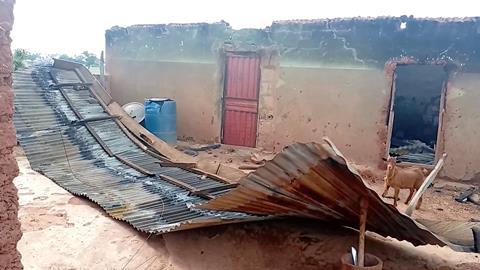
Who is actually killing people in Nigeria?
It sounds like a simple question, but it isn’t.
Nigeria, everyone knows, is beset by violence and kidnapping. Terror attacks are so frequent they do not make the international headlines – but when they do, one name dominates: Boko Haram.
These two words, ‘Boko Haram’, are the label the world reaches for automatically, just as people once reached for ‘Al-Qaeda’ to explain every act of Islamist violence.
For the past six years, my colleagues and I at the Observatory for Religious Freedom in Africa (ORFA) have recorded the data features of every single violent incident we could find in Nigeria. 42,033 civilians killed; 34,773 civilians abducted; 15,434 recorded attacks with killings.
In the past six years there has been an average of seven terror attacks every day in Nigeria.
I can tell you plainly: Boko Haram is not killing most Nigerians. They are not even close.
Six Years of Evidence
The ORFA project began on a tiny budget in 2019. Nigeria had been suffering regular mass atrocities for nearly a decade. Events such as the horrific Owo Church killings still lay in the future.
A joint team of Dutch and Nigerian researchers were frustrated by the Nigerian government’s failure to investigate killings. From the seeds of surprising friendships, they set out to build an archive of record. Local recorders were recruited. Reporting back to data scientists outside Nigeria, they began to travel to the scenes of attacks, often at great personal risk. They questioned eyewitnesses, insisted on determining victim identity - and checked all testimony against secondary evidence.
Depending on the availability of evidence, ORFA logs up to 60 data elements for each violence incident, and we publish our methodology and datasets.
The point is simple. Data doesn’t have a political interest. It doesn’t fear reprisal. It doesn’t need to please a government. Numbers, patiently gathered, tell you what actually happened — not what someone wants you to believe happened.
Truth in Numbers
Our research shows that Boko Haram and Islamic State West Africa Province ISWAP are responsible for killing 4,941 civillians - 12% of the total number of victims.
Another terror group has killed far more people.
Perpetrators we call ‘Fulani Terror Groups’ killed 44% of all civilians — 18,577 people. A further 32% of civilians died at the hands of those who could not be conclusively identified. These unknown killing units are categorised simply as ‘Unidentified Terror Groups’.
What does this mean? It means that when the world reaches for the label ‘Boko Haram’, a far larger, and more active terror network, avoids scrutiny.
Who are the Fulani Terror Groups?
The name ‘Fulani Terror Groups’ does not refer to a single, uniformed army.
Instead, it describes an amorphous, shifting network of militias - loosely linked by structure, cross-state logistics, and ties to jihadist networks, and operating out of camps deep in the forests of Northern Nigeria.
These camps function as small city-economies: field research describes drones, ICT centres, solar-powered lighting, as well as large scale supplies of motorbikes, fuel, weapons, drugs and food. Religious clerics come and go.
The militias’ signature method is the land-based raid: first, the large scale movement of armed men to a target location; second, the arrival of cattle surrounding homes, grazing and trampling farmlands, and finally, invasion: motorcycle-borne armed units shooting, setting light to buildings, abducting women, killing men and boys and clearing land.
What sets these militias apart from other jihadists is a Fulani identity. One of the largest ethnic groups in West Africa, the Fulani are traditionally a cattle-herding culture. The political power of Fulani ruling families in the region stretches back centuries.
ORFA is explicit that the great majority of Fulani people are traders, farmers and civilians – not people serving in any militia. Culpability for atrocities lies with the militias and their protectors - not with the Fulani people as a whole.
What Still Doesn’t Add Up
Good data should admit what it cannot yet explain.
One mystery ORFA’s violence tracking keeps circling back to is the location of military engagements with terror groups. When attacks on Christian farming communities occur – people are killed in the worst numbers during April and May, the heart of the farming season – this is exactly when security presence seems to be thinnest.
The Nigerian state does engage terror groups, but hundreds of miles away. Security is absent from the most vulnerable and fragile communities when they most need protecting.
Why the state’s attention sits so far from where the killing is worst is a mystery our data raises. It remains unsolved.
What can be done?
Nigeria’s government has had over 15 years to enquire into the atrocities its citizens suffer. They have not tried: there has been no inquiry, no judicial forum, no serious investigation into the tens of thousands of innocent lives taken.
Perhaps that, too, is a kind of answer.
What I can tell you is this: the name on everyone’s lips is not the name behind most killing. Until this changes, the world will keep looking for the crisis in the wrong place — and civilians will keep paying the price.
You can read ORFA’s full report here. For more information see their website
















1 Reader's comment