






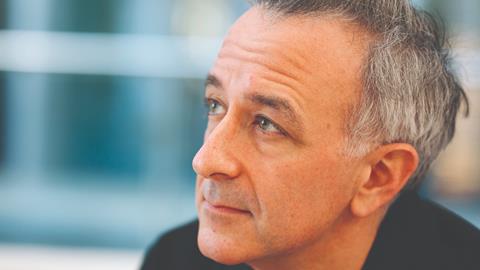

We’re living through the greatest technological revolution in human history – and it’s preparing the ground for a spiritual awakening. Rev Al Gordon, leader of SAINT church in Hackney, tells Sam Hailes why the Church must rediscover its God-given creativity in the age of AI
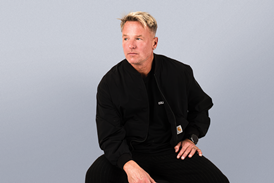
A decade ago, you may not have wanted to go anywhere near St John’s Church, Hackney. The building sat on London’s notorious “murder mile”, so named for its high levels of gun crime. At one point, an estimated 80% of the borough’s hard drugs were being sold from the church porch. When Rev Al Gordon arrived with a vision to revitalise the church, you could still see bullet holes in the doors.
“We started with a small crew of people to pray, and God has done amazing things,” he says.
What has happened since has indeed been remarkable. The church – now known as SAINT – has grown from around 150 people to more than 2,000. But alongside the spiritual renewal has come a physical one (the building has been restored to its former glory), plus an unusual championing of creativity. From beekeeping to beer brewing, SAINT has developed all sorts of imaginative projects. They’ve helped curate gigs from the likes of Coldplay, Ed Sheeran and Stormzy. Each November, it hosts Renaissance, a conference billed as “two days of wonder” where, alongside Bible teaching and exuberant times of sung worship, delegates can learn bread-making or even get a free tattoo.
Why the emphasis on creativity? Gordon believes history reveals a pattern: first a technological breakthrough, then a spiritual awakening and, finally, wider cultural renewal. For example, when humans first harnessed fire around 40,000 BC, ritual burials also began to appear – hinting at belief in an afterlife. Around the same time, the earliest cave paintings emerged. For Gordon, the link is significant: moments of creative invention often spark both spiritual renewal and artistic expression. The Church should be the place where creativity is welcomed and encouraged, he says, not stifled.
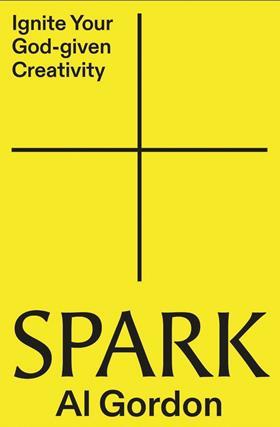
Gordon explores these ideas in his debut book, Spark: Igniting your God-given creativity. And the argument may be especially timely. Many believe artificial intelligence represents the most significant technological revolution in human history. If such inventions often precede spiritual renewal, Gordon suggests the next awakening may not be far away. Or maybe it’s already here. “In the age of AI, social media and our hyper-connected, always-on world, we’re beginning to see the first signs of a generation emerging who are spiritually hungry,” Gordon says.
He stops short of calling it revival. But he’ll happily call it an awakening. “I’ve been involved in church life for 30 years,” he says. “And this is definitely not business as usual.”
How did you become a Christian?
I wasn’t raised with a faith. I became a Christian just after my 18th birthday when I powerfully and radically encountered Jesus in my room, listening to worship music and learning to read the Bible. God totally changed my life. I mean, it was night and day. My life had been a wreck. My parents had been divorced. I had a totally messed up upbringing, broken home, got involved in drugs – the whole works. God rescued me.
How were you called into church leadership?
I’d been a Christian for a few weeks when I had a dream. I’ve never actually told anyone this before, but I felt the Lord call me to church leadership – and I journalled it a few days after my 18th birthday.
I think that the age of the celebrity Christian is over – thank God!
I never set out to say: “I want to lead a church”, but I think I did want to try and help as many people as I can. It’s the pouring out of one’s life for others, and it’s the most rewarding and the hardest thing you can do.
Why are you so passionate about creativity?
We’re living in the most extraordinary time. The world is changing incredibly quickly. As people who follow Jesus and are interested in the future of the planet and the good of the culture, we’ve got a moment where we have to think really carefully about what it means to be human.
I was at a dinner the other night for a friend’s birthday. It was a black-tie thing – like a wedding where there’s a placecard at the table. I’m there with my wife and we’re walking up the stairs with this lady who doesn’t know me. She says to me: “Oh my gosh, I’m on a table with an effing vicar…Are you on this table too?” I said: “Yeah, I’m on this table too.” And she says: “Where’s your name?” And I said: “Well, actually, I’m the effing vicar.”
The poor lady was mortified! But we had an amazing conversation because there’s another guy on the table talking about how he’s investing in robots. He said two things that were fascinating. Number one, he said that by the time you get to the end of your life, there will be more cyborg humanoids on the planet than actual humans. That was mind-blowing. What does that mean for the human race? Secondly, he said: “The number one threat for humanity right now is not medicine, science, tech, military, finance or jobs. The thing we should all be most worried about is human creativity.” This guy is not a Christian. But ironically, he’s saying that the most needed thing in the age of the algorithm is that we spark our creativity.
You can punch into any AI engine right now and get it to do a lot of work for you. The thing that it can’t do – and will never be able to do – is original thought. Only you and I, made in the image of God, get to create original ideas. So, the Church actually has an amazing message in this moment – we can encourage people to step into their God given creativity and make an impact.
The most needed thing in the age of the algorithm is human creativity

How does what’s been happening at SAINT church connect with this vision of creativity?
East London is full of more creatives per square mile than anywhere else on the planet. It’s very young, it’s incredibly diverse. Highest deprivation rates in the UK, the highest knife crime rate in the UK.
The church was a heartbeat away from closure. We started with a small crew of people to pray and God has done amazing things. We’ve seen the building restored to life. We worked with an amazing architect, John Pawson, who is the father of modern minimalism. We wanted to start by aiming for the best. William Booth [founder of the Salvation Army] said: “Why should the devil have all the good tunes?” We said: “Let’s work with the best people in the world.” To my astonishment, John said: “Yes, I’d love to help.” People are often more willing than we think. He helped reimagine the building, and we had to pray, raise money and do all the things. I don’t know how it happened, but we got there in the end, and today it’s a revitalised church. The old is always made new in God, and God never gives up, never leaves himself without a witness in each generation.
Some leaders are reluctant to spend money on church buildings - your project was £5.5m. Why is it important to you?
Matter matters to God, if you read the incarnation. God cares about atoms and dust, and it’s important that we don’t lose sight of that.
It’s easy to say: Why would you bother spending money on renovating a place? Can’t you just patch it up and muddle through? And of course, there’s an argument for that, but I think the glory of God is never reflected in a decaying embassy for the kingdom.
Beauty matters and how people feel when they walk into a space matters. Design, creativity and beauty are not distant from the concerns at the heart of God. In fact, God is very prescriptive. In the Old Testament, God is an architect. He measures out the temple and he says: “I’d like this type of embroidery” [see Exodus 26]. He’s very detailed. He cares about us reflecting the glory of God in our human creativity.
Why did you put beehives on the roof of your church?
Beekeeping was always part of what the monastic movements did in the UK, going back 1,500 years. There’s also a famous, apocryphal Einstein quote: “If the bees go extinct, the human race goes extinct within three years”, because of the impact that bees have on the ecosystem. When you have bees in a neighbourhood, the whole area becomes more fruitful. I thought that was a cool parable for what the Church could be.
So, one day, very naively, I ordered some bees on the internet. You can actually do this! (Don’t do it.)
I had this slightly arrogant [idea]: I’m gonna be the father of a bee nation. I pictured opening the box, and the bees landing on my hands, like a Disney movie. And of course, the beekeeper said to me: “You may want to take a step back, because they can get quite agitated.” He was in a full hazmat suit, and I’d turned up literally only wearing sunglasses for protection.
Of course, the bees go straight for the first person they see, and one stings me on the eyebrow. What I didn’t realise at the time was that, when you get stung by a bee, it releases a pheromone that says to all the other bees in the hive: “That person is a threat”, and they all go for you until either you flee or die. No one told me this! So, there I am getting stung over and over again. I’m shrieking, screaming. There’s a six-foot-high metal railing around the churchyard, and I sprint and I supernaturally vault it and run into the church. Locked in the dark with an ice pack and antihistamines, quivering in the corner, I’m thinking: I’m never going near those bees again.
My experience in that moment was what so many of us experience with creativity. You try doing a podcast, or writing something, or you try an idea at church that you think is going to be great, and you end up getting stung. It goes horribly wrong and you think: I’m never doing that again. So many of us have the stings of creative failure, but that’s got to change, because we’re needed right now to make a difference in the world.
Today, we have six hives on the roof the church. We make honey. But more than that, it started to impact the neighbourhood. There’s a guy who would often write me emails complaining about the church – the noise, the traffic. One day, I got an email from him, and I thought: Oh dear, here we go. I opened it up. Subject line: “Thank you”. The email says: “My wife and I are keen gardeners. We’ve got a fruit tree in our garden that backs onto the churchyard. We’ve noticed in the last year that it is laden with fruit. Unbelievably, our rose bush is double the size. We’ve been scratching our heads saying we don’t understand what’s happened here. We have the same garden routine. The weather’s broadly been the same. Then we realised the rose bush was full of bees. We watched the bees make a beeline back to the church, and we realised that they were coming from your beehive. We just want to say thank you. Your bees are bringing my garden to life.”
Only you and I, made in the image of God, get to create original ideas
In that moment, I thought about the Church. If we just focus in on ourselves, we’re going to die. But this is where creativity plays its part. If we get out there, we pollinate and we are involved in encouraging the whole ecosystem of the culture. The fruitfulness can change the world.
SAINT has seen significant growth. Ultimately it is God who grows His Church, but I imagine there are things we can do to help or hinder this. What are the lessons you’ve learned?
The work that we’re seeing God do is profound and humbling and very little to do with us. And I do mean that. I look around my generation and there’s no superstars. I just think that the age of the celebrity Christian is over. And thank God! That’s a good thing.
I think back to about three years ago. I had the privilege of being an eyewitness at the Asbury outpouring.
This was called “Gen Z’s first revival” when a normal chapel service at a Christian university in Kentucky turned into 24-7 meetings, and people visited from all over the world. How did going there impact you?
I remember you and I met up shortly afterwards, and I could hardly speak. I still can’t really talk about it without crying.
I was really impacted by the sense of the holiness of God and the call to repentance. I remember thinking: Gosh, this is not Disneyland. It was terrifying. You could feel the presence of God – and it was really uncomfortable. I was like: OK, as a pastor, I need to repent. I’ve been driven. I’ve been leading in my own strength. You become a Christian; you repent of your sins. And quite often we think that’s it, we’re done. But we need to walk in repentance. We need that daily activity of walking in humility, on our knees.
On the plane on the way home, I was just weeping. My heart was broken. There was this grief of having sat in an outpouring and going home and knowing that London wasn’t going to be the same. A stewardess kept coming over with tissues and pretzels because she thought I’d had a row with the guy I was with – my mate, Steve. I guess she thought we’d had some kind of break-up!
I felt the Lord say two profound things. He said: “Al, you’ve got 18 months to get your church ready for revival.” And I was like: “Whoa, back up God”, because when we teach on the prophetic, we tell people “never do dates.” But I wrote it in my journal, and then I started making a rather pathetic list. I thought: We should get more toilets and: We’re gonna need a bigger coffee rota and more connect groups.
Then I felt the Lord say: “Change nothing but your heart.” All the other stuff, God will take care of – rotas, buildings, gifting, preaching. There’s lots of important work to do, but the heart of the matter is a matter of the heart. And so, as leaders, my encouragement in this moment would be to get on your knees behind a closed door, meet with Jesus and bring your heart to Him.
God spoke to you on that plane in February 2023. We’re now more than 18 months on…so has revival come?
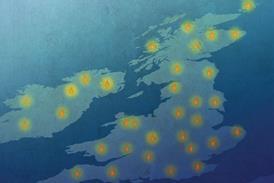
I think we are at the beginning of an awakening. We’re not there yet. But people are talking about revival now, and they weren’t three years ago.
Yes, Bible Society reported less than twelve months ago that a “quiet revival” is happening…
I don’t think we’re in revival yet. But this is definitely not business as usual. I’ve been involved in church life for 30 years now, and I have never known a time like this where there are signs and wonders, people having dreams in the middle of the night and turning up at church.
Change nothing but your heart
One famous theologian defined revival as “the acceleration of the normal Christian life”. On one level, we are seeing normal things happen. People coming to faith, getting baptised, experiencing Jesus, joining the church. But we’re definitely seeing an acceleration of these things.
I think there are some hot spots where there are signs of breakthrough. Asbury was one. But we have a very Western lens on this. Don’t forget, around the world, revival is how the Church grows. China, Iran, Africa, Latin America, Asia, India, much of the world has been in revival.
In the West, secularism has had its way these past 100-plus years, when the post-war generations walked away from Church. I think we are at a turning point. The tide has been turned. But I encourage people not worry too much about all of that. Just start with your heart. Get yourself right with God.
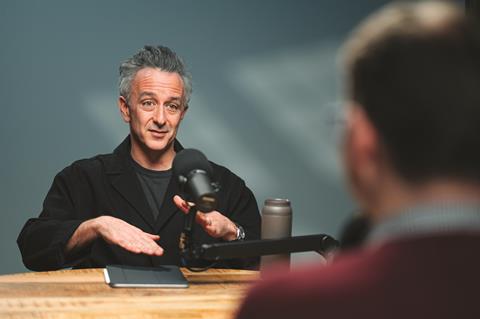
To hear the full interview listen to Premier Christian Radio at 8pm on 11 April or download ‘The Profile’ podcast
All photos by Ruth Towell
























No comments yet