











Esther Walker’s account of attending church as a newcomer in The Times is no typical revival story. Drawn in by her son’s cricket superstitions and kept by an amusing vicar, Rev Peter Crumpler says her honest reflections offer vital lessons for how the Church reaches those outside its walls

“I’ve started going to church,” ran the front-page headline in The Times newspaper last week, promoting an article by journalist Esther Walker.
Inside, the popular columnist explained how she had begun going to Sunday worship and was finding it much better than she had expected or feared.

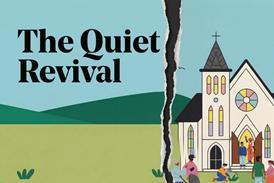
As I scanned the headline and opening paragraphs, I anticipated the article would be another one of those stories about young people being attracted to faith, the growing interest in the Bible and green shoots in church growth. More evidence for the so-called Quiet Revival* perhaps.
Except this was different, and Esther Walker’s column had other lessons and challenges for the church.
For example, what was her motivation for going to church services? Walker writes “I went because my son thought going to church would help with his cricket – sportsmen are very superstitious.”
I’m not sure where that fits into any teaching about church growth or evangelism I’ve ever read or been taught. But it does demonstrate that people come to church for all kinds of reasons, and leaders should not take anyone’s motives for granted. Asking questions of newcomers is always good.
And then there’s the writer’s response to the vicar. She admits that she went to church because of her son “but I stayed because the vicar is a laugh. He is in his late thirties, and his sermons are worth the trip.”
She recalls, “I remember my first visit, putting my head on one side to listen to the inevitable drivel. He hit us with a banger of a top line, which was ‘I really don’t like spiders’. I was sold.”
Here’s a lesson about the power of the sermon. Many people will have low expectations, and maybe that says something about past experiences. The challenge for any of us who find ourselves preaching is to engage our congregations from the outset and to seek to hold people’s attention in a way that confounds expectations.
And, of course, our primary goal is to bring out the meaning in the Bible passage in a way that impacts people’s lives. (I’d avoid jokes, unless you’re pretty confident…)
But the deepest concern I have from the article is a serious one. Esther Walker writes “I have never and would never talk earnestly about Jesus, and if anyone else did, I fear I would laugh out loud.”
People come to church for all kinds of reasons, and leaders should not take anyone’s motives or motivation for granted
I’m sure Esther’s vicar does speak about Jesus, and that each week’s readings in a traditional Church of England setting would include a passage from one of the gospels.
The challenge for all of us within the church is – like John the Baptist – to be pointing people to Jesus Christ. Our role is to be helping people look beyond the church building, the setting, the music, the traditions, even the people around us…to the person of Christ.
In a world of so much conflict and disagreement, Christ’s life and teaching are surely central to all that we believe and are.
I enjoyed reading Esther Walker’s thoughtful, perhaps unusual, article and appreciated how she was discovering church-going from a background of little engagement with faith.
I appreciate, too, how she sits and meditates and lets the service wash over her. She is, she says, grateful “for the hour away from my b***** phone.”
But I’m challenged by the article about how we can help people who come to church and enjoy the experience, to be drawn to an authentic faith that helps them live their lives, and to find hope and peace in a fractious, uncertain world. This includes, of course, the key message of repentance, salvation and coming to life in all its fulness.
I’m grateful for the experience this journalist has laid out before us. Beyond cricket and spiders, we need to show that believing in Christ has far more to offer our modern world than an hour of quiet distraction on a Sunday morning.
*Editor’s note 27/03/26: In April 2025 Bible Society published their ‘Quiet Revival’ report, based on polling by YouGov which claimed to show a significant increase in the number of people attending church in the UK. Following widespread debate and questioning of the data in the press, YouGov, admitted “human error” in the way data had been collected and apologised unreservedly to Bible Society, who withdrew their report in March 2026. See Premier’s news story and Premier Christianity’s editorial for more information.
























2 Readers' comments