









He leads one of London’s most significant Pentecostal churches, but Pastor Mike White remembers when the now 4,000-strong congregation had dwindled to just 120. He explains what changed and why churches need to rethink their methods without compromising their message
Should churches try to be relevant? That question has long divided opinion among evangelicals. In recent times, the idea of cultural relevancy has fallen out of favour in some spaces. It’s commonly argued that the Church needs to stop pandering to young people in a misguided quest to be cool. It’s a waste of time. Out with the smoke machines, soundbite sermons and trendy branding, they say. Embrace the strangeness and weirdness of our faith instead. That’s what people really want.
That, in a nutshell, is the prosecution’s case. Now it’s the turn of the defence. And Mike White has a compelling case to make.
White is the senior pastor of one of the oldest and most influential Black Pentecostal churches in the UK. The Tab (formerly The Tabernacle) in Lewisham, south London has a membership of 4,000 and has been a fast adopter of digital technology in order to fulfil its mission statement of promoting the person of Jesus “to this generation”.
“We’ve taken an age-old product, the gospel. We’ve not touched the gospel. Jesus is still Lord…But we’ve presented it in a package that connects with this generation,” he tells me.
White’s approach to excellence and clarity in communication is evident when looking at the church’s vibrant social media pages or listening to his passionate preaching. It’s also found in the music that emanates from Tab Worship – the collective has collaborated with Christian music legend Israel Houghton and previously won Best Worship Group at the Premier Gospel awards.
“We have to engage in ways that are not just relevant, but relatable,” says Pastor Mike. That means eschewing the Christian bubble and learning to speak the language of our culture. The 51-year-old admits to deliberately swotting up on how young people speak and liberally peppering sermons with applications to everyday life: “As a minister, you need to not just be theologically astute but also be culturally astute.” Some of these ideas were controversial 26 years ago, when White first took on the church. “We went on a long journey of reinvention,” he explains. This reinvention, as I’d soon discover, involved metaphorical dynamite.
Jesus used the right metaphors, analogies and examples for the generation He was talking to
On any given Saturday, you’ll likely find a group of Christians engaging in street preaching in the roads surrounding The Tab. I wonder what the pastor makes of this evangelistic tactic – prevalent across many UK towns and cities. How does this old-school approach fit within the philosophy of a ministry based on cultural relevance? “Street preaching is like a penknife versus a chainsaw,” he smiles, employing another one of his memorable metaphors. “If I’m trying to cut down a tree, I could use a penknife, and it will work…kind of, over time, long-winded, a lot of pain, and I might break the knife…but a chainsaw is going to take the tree down very quickly.”
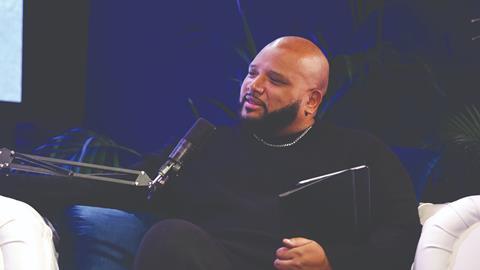
Which begs the question – what is the evangelistic chainsaw? The answer can be found in the entourage who have accompanied White to his interview at Premier’s studios. A flurry of young people, holding impressive-looking cameras, are recording Pastor Mike’s every move; behind the scenes footage from our interview that they will later edit and upload to TikTok and YouTube. These young people know how to wield the chainsaw. “It’s how this generation listens,” the pastor explains. “Podcasts, conversation; presentation is very important.”
The Tab was started by your father, Bishop Leon White, who was part of the Windrush generation. Tell us about him.
He came over to the UK as a response to the call to help rebuild the infrastructure of this country. That generation came with a radically strong faith. However, locally they were very oppressed. There were signs in windows saying: “No dogs, no Irish, no Blacks”.
One of the stories that really upset me was when Dad got a job interview. He was at the train station and asked a member of staff for directions. The guy just started laughing at his accent, taking the mickey and telling him: “Say that again!” So, he ended up missing the train and missing the job interview.
Now, if there’s anywhere [that generation] thought they could turn, it would be the Church. But they were rejected there. So, they decided: “Well, we’re ministers, so if you don’t want us at your table, we’ll build our own tables.” Interestingly, if you study the history, the phrase ‘Black-majority church’ was attributed to them by white churches. It wasn’t a title we ever took upon ourselves.
Black people came to this country primarily in two waves – the Afro-Caribbeans coming in the 50s and then many of my West African brothers and sisters who came in the decades after that. Both groups have established some phenomenal networks and denominations. To be honest with you, Christianity is probably statistically strongest among the Black-majority churches today. So what began as a rejection has turned into a massive blessing to this country.
Do you think progress is being made today among church leaders when it comes to racial reconciliation?
Yeah, I have many white church leader friends who have a desire for healing, reconciliation, restoration. Why can’t we all just be one? And I think that’s a beautiful statement. But without getting too deep, I think we also have to be careful, because if we say: “Why can’t we all be one?” then the question needs to be asked: “Which one?” Because one culture will often dominate.
I don’t think God minds if there are Black-majority churches or if there are white-majority churches
Some would disagree with me on this, but I don’t think God minds if there are Black-majority churches. He doesn’t mind if there are white-majority churches. I don’t think a church has to have equal numbers, because from God’s perspective – when God looks at His Church – He sees a multicultural Church. It’s like looking at a garden; He sees the daffodils over there, the roses over there, the bluebells and tulips over there.
There’s a big difference between being divided and being separate. We don’t want the kingdom of God to be divided. I want to be able to go to my friend’s church and have pie and mash, and I want them to come to my church and have jerk chicken and jollof. And go to my other friend’s church and have some moin moin.
What was The Tab like when you first started leading it?
When I took the church on, it was in a bad state. There had been some schisms. It was a bit of a mess, to be transparent, and people had left.
Was that over doctrinal differences?
There were doctrinal differences, and also some schisms in terms of the leadership. I mean, it’s so complicated, it’s a whole podcast just to explain that!
The church had probably been around 400 strong. But when I took over, there were about 120 people, most of whom were elderly.
I was a 24-year-old young, single man, and it took a lot of Semtex-ing, dynamiting and blowing up some old mindsets.
That sounds like a high-risk strategy. Most people would probably advise a long, slow management of gradual change. You did it differently. Why?
I did it differently. Some would say unwisely in some areas.
I think there are two ways of transitioning. Sometimes it’s taking the gentle route. But back then, I was a young guy saying: “Guys, we’ve got to do this. Let’s blow this up. Whoever stays, stays. Whoever goes, goes. But we’re going. We’ve got a direction.” I’d probably do some things differently today. But God gave me a vision, and today we are 4,000 strong.
What I’m thankful to God for, and to this day so humbled by, is there was a group of older people in the church who recognised that the church was on life support. And they realised that, if something radical doesn’t happen, we’re probably going to be closing the doors soon. And so, they were behind me. That was a blessing to my leadership at that time.
What were the radical changes you made?
Women in ministry was number one. I was very determined to empower the women in the church who clearly had a gifting and a teaching ministry. Ordaining women was quite controversial and contradictory to the denominational background that we’d come from.
The approach to preaching changed. We made sure there wasn’t just theological analysis and exposition of a text, but life application. How does that plug and play into my life on Monday?
We were also trying our best to become far more engaged in being present and active in the community. We had been doing church by us and for us. I wanted to have some more altruistic and philanthropic things happening through us into the community – being a blessing to those who are less fortunate, opening our doors not just for people to come and get saved, but for people to actually get sense. Some people in our urban context didn’t have any sense. They were ignorant. I don’t use that as a pejorative. They just didn’t know how to manage their money, how to manage a budget, how to feed their children. There was lots of stuff we were able to start doing. That was quite radical at the time.
How do you explain the recent growth of The Tab?
In July 2019, I got this vision that wouldn’t let me go. I needed to hire a videographer and a graphic designer. It was the most bizarre thought.
I talked to my leadership team. They looked at me sideways, like: “Are you alright, Pastor? Do you need a sabbatical?” But we went through the interviews and hired them. By January 2020, they were on board. In March 2020, we went into lockdown and those people became critical for everything we were doing.
Before Covid, we didn’t even have a YouTube channel. We just about had a website! We developed something called Tab at Home. I was filming sermons using my phone, my wife’s phone and my daughter’s phone in our living room. The first stream we ever did had 2,500 people [watching].
Covid, as horrible as it was, really amplified people’s awareness of The Tab. I think our exponential growth happened as a result.
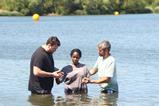
To this day, we baptise an average of 50 people every other month. People giving their testimony still say they first found The Tab online. We’ve had people flying from Germany and Denmark to get baptised, having found us online. It’s been mind-blowing.
Some Christians now watch online services instead of attending a local church. What would you say to them?
When you genuinely can’t attend, that’s fine. But online church is a substitute. There’s nothing more important than a community gathering together. That’s where you get discipleship. You’re supposed to be around people who aren’t quite like you.
Annoying people!
There you go! That discipleship, the disciplining of our own character, being able to deal with people who are different from us, only happens in a room.
You can get information online, and you can get inspiration online, but true transformation comes from community
Nobody nightclubs online! There’s no online nightclub. There’s something about community. You can get information online, and you can get inspiration online, but true transformation comes from community.
What are the distinct opportunities and challenges of ministering in south London?
Lewisham is a very urban context with its own difficulties and challenges economically and sociologically. We have to engage in ways that are not just relevant, but relative, because you can have something relevant to say, but if you don’t say it in a relatable way, it’s not going to go through.
I don’t want to speak about the gospel in such irreverent terms, but it’s easily transferable when I put it in this analogy. We’ve taken an age-old product, a bit like Starbucks did with coffee – something you and I could make at home if we weren’t so lazy! We’ve taken an age-old product, the gospel. We’ve not touched the gospel. Jesus is still Lord. No one comes to the Father but by Him [John 14:6], and there is one name whereby we are saved [Acts 4:12]. But we’ve presented it in a package that connects with this generation.
Every church should have a purpose statement. Ours is that “we exist to present and promote the person and the principles of Jesus to this generation for transformation”. So, everything we do, our language, our style, our expression, is something that’s trying to engage this generation.
How do you ensure you are communicating in a way that reaches young people today?
I listen to people younger than me. I keep up to date with the latest words, colloquialisms and trends. I love people, and I love studying, watching, viewing and understanding the evolution of how we interact sociologically. That’s what Jesus did. Jesus used the right metaphors, analogies and examples for the generation and context He was talking to. He was talking to a bunch of farmers and fishermen so, every second, he’s talking about a seed, a plant and a man casting a net. He’s talking in a way which makes sense to people.
As a minister, you need to not just be theologically astute, but also be culturally astute. I don’t just listen to gospel music. I don’t just go to Christian events because, otherwise, all I’ll speak is Christianese.
What are your distinctives as a preacher?
I’d like to hope I’m a relevant preacher and a relative preacher. That’s the critical thing. I’ve been to seminary. I’ve got my bachelor’s degree; I’ve studied up to master’s level. I get all of that. Theology is important. Hebrew, Greek, yada yada yada. Fantastic. But after all that is said and done, has communication actually happened? Because communication has only been accomplished if the recipient has received what you put out.
Isn’t it interesting that God has given us the ministry of reconciliation [2 Corinthians 5:18]? When my wife first got involved in employment law, she was a reconciliation officer for ACAS [The Advisory, Conciliation and Arbitration Service]. She would get two parties together who were in conflict – an employer and an employee – and her job was to reconcile them. She needed to understand where both were coming from. So, if God has given us the ministry of reconciliation, then we can’t just understand God. We’ve got to understand the world, too. I am not against Bible school – it blessed me – but I also think we have to be intentional, as ministers, to understand the world and what’s happening in culture.
I’d like to hope that anybody who hears me, says: “Yeah, I can relate to the way Pastor Mike has presented the text. It’s been true to the text, but it’s also been transformational to my life.”
To hear the full interview listen to Premier Christian Radio at 8pm on Saturday 26 December or download The Profile podcast
BONUS: We asked Pastor Mike White what the biggest issue is in the Church that Christians are not talking enough about. Subscribers can hear his answer exclusively on the Premier Christianity app. Find it on the app store (iOs / Android)























No comments yet