








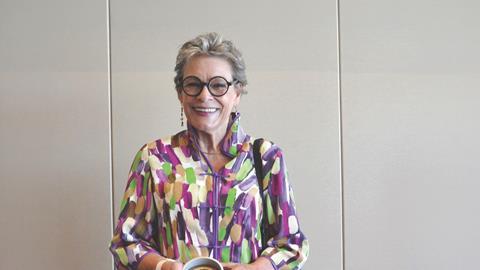

She’s spent her life confronting gangs, addiction and exploitation, but the veteran missionary is uncomfortable with being praised. Sixty years on from her arrival in Hong Kong, Jackie Pullinger explains how Christians misunderstand power and why, in the end, sitting with someone matters more than the miracle
Eight years ago, Jackie Pullinger made it abundantly clear to the editor of this magazine that she doesn’t enjoy interviews. This, she tells me, has not changed. Unfortunately for the famed Christian missionary, when you have a story as captivating as hers, conversations about it are an inescapable reality.
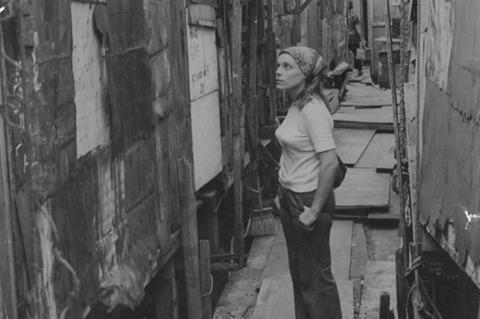
Now in her 80s, Pullinger was a young woman from Croydon when she famously boarded a ship with nothing but £10 in her pocket and a prayer that God would show her where to get off. When the boat docked in Hong Kong in 1966, God told her to disembark – and the missionary obeyed, finding her way to Kowloon Walled City, a dark labyrinth of streets governed by Chinese triad gangs.
The now-demolished metropolis confined as many as 60,000 people to 6.4 acres of dystopia. Her induction into the city saw her encounter a man fishing through the open sewers for drugs and a prostitute seated on a box with “needle marks in the back of her hands because she’d used all the veins up in her arms and legs”.
All this, alongside confrontations with gang leaders as she sought to liberate the young women they had trafficked, and testimonies of drug-addicted criminals being pursued, loved and prayed out of the depths of darkness and into relationship with Jesus, is detailed in Pullinger’s classic autobiography, Chasing the Dragon (Hodder & Stoughton). The book has just been re-released as a 60th anniversary special. But the high esteem in which Pullinger is held seems to make complete sense to everyone but the woman herself.
“I’m very uncomfortable [with the admiration]. Where I am, in Hong Kong, they don’t care. I’m their friend. We’ve got hundreds of grannies and grandpas who are terribly poor who’ve come to know Jesus, and they just think I’m Jackie or Miss Poon. They couldn’t care less if there’s a book or anything like that.”
I cried for a whole day, but I praised God at the same time because you are supposed to
Her discomfort becomes easier to understand when she articulates how little of the courage required for her journey she considers to be her own.
“You feel frightened, and He gives you what I had. I don’t know if it was courage, because it feels like fear…We don’t feel strong and courageous. We feel trembly and weak, and God comes and shows Himself.”
I left the conversation not only admiring all she had done, but the humility with which she holds it. That humility does, however, appear to be balanced by a beautifully boastful security in Christ.
“I know I’m one of [God’s] favourites, but I think most of us are,” she smiles.
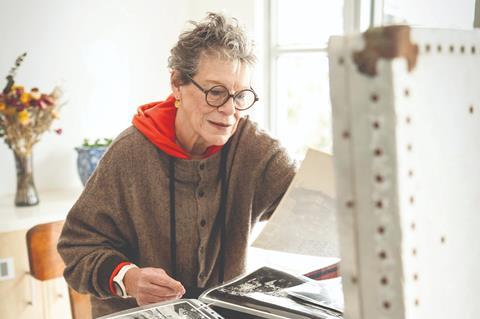
Before the Walled City, who were you and what was your life like?
I’m just a normal girl from Croydon. I was part of a four-girl family. I have a twin sister. We were unfortunately named Jack and Jill. I grew up with lots of dreams. I didn’t know Jesus, but I had a fear of God and meeting Him one day.
I studied music at the Royal College. I was teaching afterwards, and that was when I met Jesus. I’d grown up knowing people called Christians, but they didn’t look at all happy, so I hadn’t really been attracted.
When I met people who looked as if they liked Him, I began to listen, and that’s how I met Him. And then there seemed to be only one thing to do with the rest of my life when I knew His love – what else do you do but share it? That’s when I began to pray: Where shall I go and what shall I do?
What dreams did young Jackie have for her future?
Some of them were very unrealistic. I wanted to be a gymnast, but I’m not that supple. I wanted to climb Everest, but I’m afraid of heights. And I wanted to be a missionary, but that was really because I thought I’d get some points from God.
But, in a way, all the dreams have happened, because I’ve climbed mountains, and I’ve exercised extraordinarily and I have been a missionary. So, I think God puts these sorts of dreams in you, but it’s not actually the career; it’s the way you live.
In the 60th-anniversary edition of Chasing the Dragon, you write about how you often still dream about the Walled City.
I do.
Tell us about the dreams and how else your time in the Walled City remains with you.
The Walled City was such a set-up; it’s like a film set. Every time I dream, it’s a different street, and I’m still exploring. I’m looking for one more room. I want somewhere for a poor person to live, or I want somewhere for some of us to live so we can help the poor.
Even now, amazing things happen. One man came to me a year ago and said: “I have to believe in Jesus now.” I didn’t know him – at least I didn’t recognise him – and when he got baptised, I said: “Tell me, why did you suddenly decide to believe, after all these years?”
He said: “Well, 50 or so years ago, my friend got arrested. I went to court and needed to bail him out, and you lent me the money. Later on, I came to you and I said: ‘Here is the money. I am returning it to you.’” He said that I had told him: “No, don’t give me back the money, please spend it on your family, because I know they need to eat.”
I had no memory of this, but he never forgot that. And 50 years later, [he has] come to Christ. I think that’s what the gospel really is. It’s them noticing Jesus in a part of their lives and remembering that’s who He is, that’s what He did. I just happened to be there. So, even though the Walled City has been pulled down, the ripples of what happened are still going on.

How did your time there change your understanding of courage?
If you look at Corinthians, it’s full of “For when I am weak, then I am strong” (2 Corinthians 12:10). The weakness of the cross is stronger than man’s strength. Everything is a paradox.
You feel frightened, and He gives you what I had. I don’t know if it was courage, because it feels like fear. I don’t like fights. I don’t like blood. I don’t like violence. But I don’t like girls being sold either.
Most of the time, we don’t feel like overcomers. We feel, like Paul said: “I came to you in weakness with great fear and trembling” (1 Corinthians 2:3) and I think that’s because we have an upside-down gospel. We don’t feel strong and courageous. We feel trembly and weak, and God comes and shows Himself.
Is the Spirit moving – and providing the power you required – a theme you can identify throughout your journey?
Part. It’s only an ingredient. I prayed for power because I would walk into a drug den and see 100 people taking drugs. I did pray: “Lord, You need to break through with power because otherwise these people will die before they’ve lived.”
But I think people have a wrong understanding of power. Jesus overcame the world by dying, and that sure didn’t look very powerful. But that’s where the power is – the giving up of His life.
Paul says in Romans: “I have preached the gospel by what I’ve said, by what I’ve done, by the power of signs and wonders, by the power of the Holy Spirit” (see Romans 15:17-19). If I don’t visit the sick, if I don’t visit prisons, if I don’t listen to somebody, if I don’t bind up their wounds, if I don’t give them an apartment to live in or give them my lunch, then what’s a miracle for?
So, you do [all of those things]. And the miracle may happen. But the miracle won’t do it instead. There are a lot of people who are chasing power, when somebody just needs you to cry with them.
In the book, you tell a story of some boys from the triad gang smashing up your youth club. The gang leader sends them back, confident that you would forgive them because you were Christian. Were there ever times in the Walled City where, though you went there to serve others and proclaim the name of Jesus, they taught you something about walking with the Lord?
I already knew that he would believe in Jesus because even though they did really bad things – I mean, they sold girls and chopped each other up – he did love his brothers. And he was watching all the time.
After they’d beaten up my youth club, my natural reaction was to say: “OK, I’ll shake the dust off my feet and go and preach the gospel in Kensington, where it’s sane and you can have dinner parties.” At the same time, I remembered that when somebody hits you on one cheek, you’re supposed to offer the other (see Matthew 5:39). It doesn’t make sense, but you’re supposed to do it.
I’m not in awe of me, so I don’t know why anyone else should be. I’m just in awe of what the Lord has done
So yeah, when I met the gang leader later, it was wonderful to know that he was expecting me to welcome people back. Of course, I learned from them. I mean, that’s striking. If people are watching, and they know how believers are supposed to behave, you really can’t throw a temper [tantrum] because they’re watching.
That must have been difficult.
Well, I cried for a whole day, but I praised God at the same time, because you are supposed to.
You’ve been described as a hero of the faith. What does that level of admiration evoke in you?
I’m not in awe of me, so I don’t know why anyone else should be. I’m just in awe of what the Lord has done.
I’m just me. I’m not any more special than you. It’s a great story, but your story is just as great because it’s yours, and every believer’s story is just as great because it’s theirs.
I think everybody’s having adventures with the Lord. I don’t think I’m high on His list of wonderful saints. I think I’m among a great multitude.
I know I’m one of His favourites, but I think most of us are.
You met your husband by helping him get off drugs; he eventually died from liver disease. What was your experience of losing and grieving him?
I knew John was going to die, and a wonderful man from Britain visited Hong Kong shortly before, when he was in hospital. A lot of people had come to pray for him, and he never felt that good after because they went on and on and on and on; it exhausted him. But I felt this man might be OK.
He came in and he said he was one of London’s top death experts. He was a believer. He didn’t know us, but he’d been praying.
John was lying down and thought: Oh, one more long prayer. And [the man] looked at John and said: “I think I have a word for you. The Lord says: ‘You are a prince amongst men.’ That’s all.”
John sat up. That word gave him life, and so they went on talking. John asked: “Do I have to fight this time?” When he had his liver operated on 18 months before, he’d had a vision of the enemy inviting him into a big black pit, and he was too tired to fight. But he started praying in tongues and saying the name of Jesus, and the enemy ran away. Then he woke up from the operation.
In the end, the only thing that matters is loving like Jesus
So, he asked this doctor: “Do I have to fight this time?” And the doctor said: “No, when death comes this time, it’ll be a friend.” John asked: “How long do I have?” And he said: “You’ve got as long as you want.”
He saw everyone he wanted, and he died very well. And I let him die. I released him. I said: “You can go now.” There was huge sadness and grief, but there was no sting. I knew it was the right time. He knew it was the right time. And that’s the last enemy to be destroyed: death.
In Chasing the Dragon, there are extraordinary stories of transformation, but you also write about missionary hopefuls who came seeking those specific moments and failed to see the bigger picture of walking alongside people and loving them. What is the reality of costly, long-term service that most people fail to recognise?
I remember a girl came to stay with us once. I’d started taking people into my home again and praying them off drugs, and I remember her saying: “I thought all you had to do is pray in tongues.” I said: “Well, that’s part of it.”
We had a girl lying on the floor who was eight months pregnant, on drugs and 30 days constipated. That is not a good combination. She was terribly uncomfortable, and it meant we had to sit with her.
We sit with every drug addict for ten days. We pray in tongues. They pray in tongues. They usually go to sleep quickly, but we pray for four-hour shifts. That’s six shifts a day; 60 [shifts] in ten days. So, we’re tired.
Afterwards, do they remember the miracle of praying in tongues and getting off drugs without pain? Well, it’s 50-50. They remember that. They also remember: “You sat with me.” That bond is always there. However they turn out, they’ll never forget: “You sat with me” – and that’s just as important.
“Love covers…a multitude of sins (1 Peter 4:8). In the end, the only thing that matters is loving them like Jesus did. That’s it.

And everyone can do that, with or without the power of the Holy Spirit. That’s what’s going to change the world. It’s what kids today need. They just want to be heard and loved and known and accepted – and most people are the same.
To hear the full interview listen to Premier Christian Radio at 8pm on Saturday 5 December, download The Profile podcast or watch on YouTube

























No comments yet