


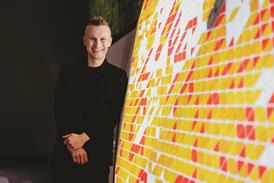






Ian Proud was one of the first British diplomats on the scene after the 2004 Boxing Day tsunami in Thailand, and one of the last to leave. The experience left him with PTSD and an alcohol addiction. Now, he’s written a novel about his experiences – and how love helped him survive
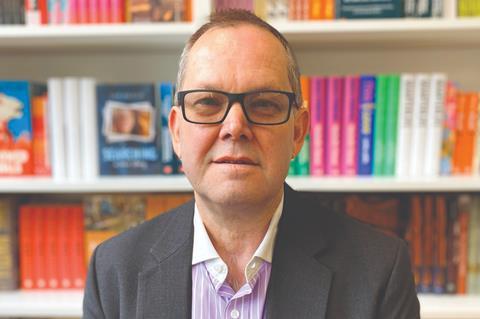
On 26 December 2004, Ian Proud was at the cinema in Bangkok when his phone rang. It was a message from the British Embassy, where he worked as head of the political section. A giant tsunami had hit Thailand, and hundreds of people were already confirmed dead. He left the film and rushed to an emergency meeting.
Hours later, he was in a car with the British ambassador, heading 500 miles south to Phuket, one of the regions worst affected by the disaster that would claim more than 8,000 lives in Thailand and almost 250,000 more across 14 other nations.
Flights were cancelled and the country was plunged into a state of emergency. Armed with a box of brick phones, they spent the nine-hour journey trying to find out what had happened, fielding calls from anxious relatives and liaising with the Foreign Office in London.
Having already been part of the team that responded to the 2002 Bali bombings in Indonesia, Ian knew that time was of the essence – and resources were severely overstretched, with their team totalling just seven people. “For the next 24 hours, my job was to get the whole operation moving,” says Ian, “but we were basically on our own.” For the first 30 hours, he didn’t sleep. His days involved trying to help survivors locate family and having to stand by their side as they identified their loved ones who had died. “It’s an emotional hammer blow, you know? What do you say in that situation, apart from being empathetic?” he reflects. “It was so tough.”
A disaster zone
Moved by the need to help practically, Ian spent the next two weeks at a hospital in Krabi, which he describes as “absolute pandemonium”.
“The Thais did a brilliant job,” he says, “but they were utterly overwhelmed. My job was to figure out what help people needed and make sure they got it. I was trying to figure out where people were. It was very emotional.”
When he eventually left the disaster zone – the last British diplomat to do so – for a brief break in Bangkok, the impact of what he had just witnessed began to hit him. Back in the UK, people were highly critical of the government’s response – a position Ian fully understands. Yet he felt assaulted by both sides – struggling with the feeling that they had failed the victims and their families, and that he’d been “abandoned” by officials back in London. He became depressed, turning to alcohol to numb the pain of what he’d seen.
We help people because that is what God would do
Yet, at his lowest moment, Ian was more aware than ever of God’s presence. “I had some very, very dark moments,” Ian says. “But then, just hearing the quiet voice of calm, saying: ‘You can get through this. There are better times. I’m here with you,’ I knew that I hadn’t been completely forsaken, and in that moment, I felt closer to God than I ever had.”
A deeper faith
Three years after the tsunami hit, Ian was recalled to London. Still struggling with his mental health, he began counselling and slowly reduced his alcohol intake. Then, his mother was diagnosed with terminal cancer. Ian moved home to nurse her. Three months after her death, he met Catherine at a ballroom dancing class. She was a committed Christian and Ian recalls: “There was a goodness to her that was really overwhelming to me.” Looking to impress her, he decided to read the Bible from cover to cover. They started going to lunchtime Holy Communion services at Westminster Abbey and in 2010 they married.
Ian still lives with the effects of post-traumatic stress disorder (PTSD) but says his wife and two children – as well as his faith – continue to inspire him to live life to the full. And he does not regret serving in Thailand. “Feeling that you’re doing something in service of your country, in service of God, that’s important,” he says.
Finding purpose
Did seeing such acute human suffering ever make him question God’s goodness? “It never did. If anything, it strengthened my faith,” he says.
“We live in a very broken world, and broken things happen. God’s there to help people going through the brokenness of life. It is not a remarkable revelation that horrendous things happen because of the brokenness of our world, including natural disasters.
“It’s unfair and unjust. But God helped me cope and helped me understand that I had a purpose. Helped me recognise I had value, even when I was at my lowest ebb. He helped me identify the sort of life I wanted to live; that I wanted to be a good person, have a family, live a Christian life. The tsunami strengthened all of those things in me.
“We help people because that is what God would do. That is a role that God has identified for me. I don’t have many skills in life, but I’m able to remain incredibly calm and work with real intensity during high-pressure situations. That is His gift to me. I have to use that gift, and that was the way I served Him.”
Now, 22 years later, Ian has written his first novel Searching: A love story, which charts the relationship between Monty and Hattie, through Monty’s experience of losing his father during the tsunami. The character of Monty is semi-autobiographical in many ways, Ian says, painting a vivid picture of what it is like to deal with such trauma. The descriptions of hospital wards and mortuaries also come straight from his own memories. But ultimately, it is a hopeful book that points to the healing power of love.
“I wanted to write something positive,” Ian says. “That idea of somebody who helps you see a brighter path forward, in the service of God. Ultimately, Monty recognises that the best way for him to heal is through Hattie and that, in essence, is my journey too.
“The scripture that comes to mind is Exodus 33:15. Moses said to God: ‘If your Presence does not go with us, do not send us up from here,’ (NKJV). I often tell people that my journey is one of obedience, but also learning to listen and understand when it’s time to move. It’s just so much better doing life with God.”
Searching: A love story by Ian Proud is available now

























No comments yet