










John MacMillan was a practising Christian, a church deacon and an alcoholic. He explains how shame drew him away from fellowship - and why recovery taught him that grace and personal responsibility belong together
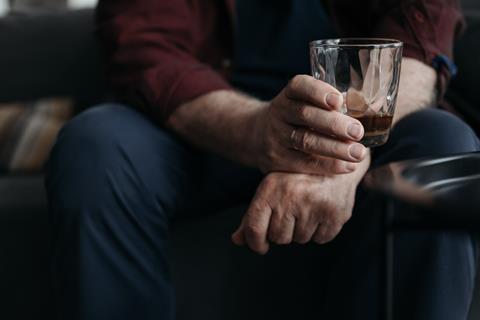
I believed in God throughout my alcoholism. That may sound contradictory, but addiction is full of contradictions. I could pray for the strength not to drink and then drink again. I could make promises with complete sincerity and then break them within hours. I could serve as a deacon at my local church while concealing how unmanageable my life had become.
My faith was real. So was my alcoholism.
Church has been part of my life for as long as I can remember. I joined the Boys’ Brigade aged five and later became an officer. As an adult, I became a deacon and trustee at my local church. Faith gave me belonging, purpose and a community of people who cared about me. Yet, as my drinking progressed, I increasingly drifted away from the very place where I could have found support.
Sometimes I was drunk. Sometimes I was hungover. Often, I was simply ashamed. It became easier to stay away than to sit among people whose lives appeared ordered while mine was becoming increasingly dishonest. The longer I remained absent, the harder going back became.
Nobody at church drove me away. The separation happened largely inside me. Alcoholism narrowed my world and persuaded me that concealment was safer than honesty. I was frightened of being judged, but I was also frightened of being helped, because accepting help would require me to admit that I had lost control.
For years, I resisted the word ‘alcoholic’. I was a chartered building surveyor with a successful career, a home and professional standing. I associated alcoholism with somebody who had lost everything. My qualifications and responsibilities became evidence in my own defence. I reasoned that, if I could continue advising clients and meeting deadlines, the situation could not be as serious as it looked.
Shame and spirituality
I also believed I should be able to stop through willpower, prayer - or some combination of the two. When I failed, the result was not simply disappointment. It felt like a moral and spiritual failure. I had broken another promise to my family, to myself and, in my mind, to God.
That shame did not make me stop. It made me want to escape from myself, and alcohol remained the quickest escape I knew. I would drink to quieten the guilt caused by drinking. Every failed attempt strengthened the belief that I was weak, dishonest and beyond help.
There is still a tendency to view addiction as evidence of poor character or insufficient faith. Some people imagine that the answer is simply to make better choices, pray harder or show greater discipline. I understand that reaction because I once believed it myself. But by the final stage of my drinking, choice no longer operated in the straightforward way people assumed. I knew alcohol was destroying me and hurting those I loved, yet I continued to drink. That was not because I lacked consequences, intelligence or love. I was ill and had become powerless over alcohol.
Recognising illness does not remove responsibility. I caused harm. I lied, concealed my drinking and repeatedly broke trust. The people around me had every right to protect themselves and establish boundaries. Describing alcoholism as an illness helps explain my behaviour; it does not excuse it.
Gradually, I began to speak honestly about what was happening inside me rather than performing the version of myself I wanted others to see
In 2016, I entered residential treatment. I arrived physically dependent and emotionally exhausted. I had expected treatment to repair me and send me home. Instead, I encountered the twelve steps. Initially, I was frustrated by what I saw as a heavy emphasis on a programme I thought I already understood. I was a Christian, after all. I already believed in God, so what could people in recovery tell me about a higher power? Quite a lot, as it turned out.
My difficulty was not believing that God existed. It was accepting that I was not God - that I could not control everything, manage every outcome or think my way out of alcoholism. The twelve steps asked me to become honest, admit powerlessness, examine my conduct, make amends and seek help from other people. None of that threatened my Christian faith. It forced me to start living it.
Treatment also challenged my preference for appearing capable. In group therapy, I initially found it easier to advise other people than to expose my own fear and vulnerability. That habit was familiar from professional life and from church: being useful felt safer than being known. Gradually, I began to speak honestly about what was happening inside me rather than performing the version of myself I wanted others to see.
Recovery was not immediate or tidy. After twelve weeks in treatment, I relapsed. During the months that followed, I drank in secret while trying to retain everything I had learned. My son Logan was awaiting major heart surgery, and my wife Katie begged me to be sober because she needed me.
On the day of Logan’s operation in February 2017, overwhelmed by fear, I left the hospital to buy sandwiches - and a bottle of vodka. I returned visibly intoxicated. The following morning, Logan suffered a cardiac arrest. His heart stopped for around 30 minutes and, because his chest was open, a nurse kept it going by hand.
Drinking alcohol did not make the situation easier. It did not help my son, support my wife or strengthen me. It made an unbearable situation worse and left me trying to hide my condition at the moment my family most needed me.
A long, slow recovery
My final drink a short time later was not accompanied by a dramatic spiritual experience. There was no thunderbolt. I simply reached a point of complete surrender. Active alcoholism had become harder than recovery. Hiding bottles, managing withdrawal, maintaining the right level of alcohol and constructing explanations had become a full-time occupation. I had no fight left for that life.
I returned to the basics: one day at a time, meetings, prayer, reflection and accepting help. After one meeting, two men took me for coffee. They did not offer clever answers. They understood and, at that point, being understood mattered enormously.
My church community also remained part of my support. My minister has stood by me through difficult periods. Recovery allowed me to return without pretending that nothing had happened. I did not need a more polished version of Christianity. I needed honesty, humility and the willingness to accept grace without using it as an escape from consequences.
For me, making amends is not principally about repeatedly saying sorry. My family heard the word too often. It is about living differently: being present, reliable and safe; being a husband and father who can be trusted; and doing the next right thing even when nobody is watching. I cannot change what I did, but I can take responsibility for what I do today.
I believed I should be able to stop through willpower, prayer - or some combination of the two
This is where churches can make an enormous difference. A person struggling with addiction may be serving, leading, working and smiling. They may know the right language and still be terrified of telling the truth. A church does not need to diagnose them or become a treatment service. It can listen without gossip, encourage professional help, maintain sensible boundaries and make clear that honesty will be met with compassion rather than humiliation.
This does not mean enabling. Families may need distance. Employers may need to act. Trust may have to be rebuilt slowly. Christian forgiveness does not require somebody to remain exposed to danger or accept endless broken promises. Love can include firm boundaries, and consequences can become part of recovery rather than evidence that grace has failed.
I have been sober now since February 2017. Recovery has not made life free from anxiety, grief or difficulty. But it has given me a way to face those things without running away. My faith is no longer something I use to judge whether I should have been strong enough. It is the foundation from which I accept that I am human, that I need others and that asking for help is not a failure.
I once thought my alcoholism disqualified me from the Christian life I wanted to present to the world. I now believe the opposite. Recovery stripped away the performance and forced me towards truth. Grace did not pretend that the damage was unimportant. It showed me that the damage did not have to be the end of my story.




















No comments yet