












Jesus Christ is both a name and a divine title. Understanding the difference could transform the way we worship, says Elaine Storkey
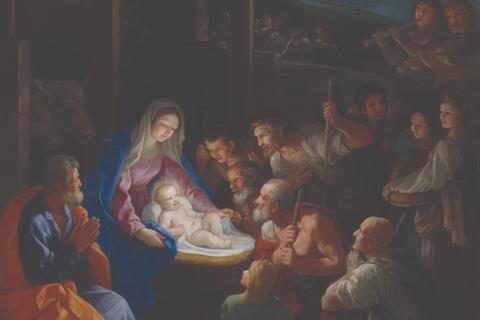
Most Christians know now that ‘Christ’ isn’t Jesus’ surname. But we can still miss the significance of those two words that define God’s Son. Advent seems like a good moment to examine them.
We read in Matthew 1 that Joseph is told by the angel that Mary “will give birth to a son”, and they should call Him Jesus: “because he will save his people from their sins” (v21). Jesus is Greek for the Hebrew name Joshua, which means “the Lord saves”. Matthew also references a prophecy from Isaiah that a virgin will give birth to a son: “and they will call him ‘Immanuel’ (which means ‘God with us’)” (v23).
These weighty names, however, were unlikely to have been used in Jesus’ everyday family life. In Aramaic, He would simply have been called Yeshua.
Christ the King
So where does ‘Christ’ come in? Christ comes from the Greek word Christos, which means ‘anointed one’ – the equivalent of the Hebrew ‘Messiah’. It isn’t a name at all; it’s an identifier. It’s the word used by Matthew to begin Jesus’ genealogy (v1) and in Luke 2:11 when the angels announce Jesus’ birth to the shepherds: “for to you is born this day in the city of David a Saviour, who is Christ the Lord” (RSV).
When the Magi approach King Herod, seeking the newborn King (Matthew 2:1-8), Herod asks his advisers where “the Christ” (v4, RSV) is to be born. From the very beginning, Jesus was given both a name and a title: Jesus, the Christ: the Anointed One, the Saviour.
Jesus’ name and divine title belong together. Yet they are used differently throughout the New Testament. The Gospels use the name ‘Jesus’ more than 600 times. They tell the story of His birth, baptism, ministry, miracles, death and resurrection. The name ‘Jesus’ identifies Him as a person, anchored in human history. ‘Christ’, on the other hand, is mentioned only around 50 times, as when John insists: “I am not the Christ” (John 1:20, RSV), or as a disclosure of Jesus’ identity: “You are the Christ, the Son of the living God” (Matthew 16:16, RSV).
Jesus’ name and divine title belong together. Yet they are used differently
By contrast, the Epistles use ‘Christ’ more than twice as often as ‘Jesus’, drawing out the implications of Christ’s significance rather than focusing on historical storytelling. Paul gives us a glimpse of Christ’s origin as “the image of the invisible God” (Colossians 1:15), the One “before all things, and in him all things hold together” (v17). He tells us we are reconciled to God “by Christ’s physical body through death” (v22).
So, although Jesus and the Christ are the same person, Jesus identifies the specific, historical human being born in Bethlehem, while Christ identifies His divine origin and mission as the Saviour promised by God.
Why it matters
Do these differences really matter to us today? Well, yes. They’re reflected in our denominations and traditions. Catholic and Orthodox Christians, for example, have historically focused their worship on ‘Christ’ rather than ‘Jesus’, elevating sacramental worship that communicates the solemnity of Christ’s identity as God. Familiarity towards God is not encouraged; instead, rituals encourage reverence and awe.
Evangelicals, especially charismatics, use the word ‘Christ’ far less. Their worship focuses much more on an individual, personal relationship with Jesus. They will often address Him in terms of love and intimacy; He is a friend and brother: one who understands us. There is less reverence for Christ’s ‘otherness’ and a much greater desire for closeness with Jesus.
We don’t need to argue about who is right. Whether our focus is on Jesus or Christ, what is important is to see Him biblically, and worship Him as God’s Son who died to reconcile us to God. Every Christian tradition has important strengths, and the Holy Spirit can help us to understand each other better and learn from one another.
One way we can come together more easily is to accept a common understanding of our identity as Christians. We are the body of Christ, not a collection of Christian individuals. Paul stresses this often (see Romans 12; 1 Corinthians 12; Ephesians 4; Colossians 1). But we’re not Jesus’ body; Jesus’ resurrected body ascended to the Father. We are the body of Christ, given power from the Holy Spirit to seek the mind of Christ and fulfil His mission in our world today.
As Christ’s body on earth, we connect people with God through love, prayer and service. Through love, Christ’s body can lift the downcast and defeated. Through forgiveness, Christ’s body can reconcile those who are broken. If we have children or family members far from God, we have power, as Christ’s body, to be their connection with God. So, let’s love them this Advent and release God’s power in our world.

























No comments yet