









From Christmas crackers to eggnog, experiencing an American Christmas made Jeff Lucas realise how bewildering our familiar traditions can be to outsiders. As newcomers flock to our carol services this December, perhaps it’s time Christians took a fresh look at some of their own peculiar customs
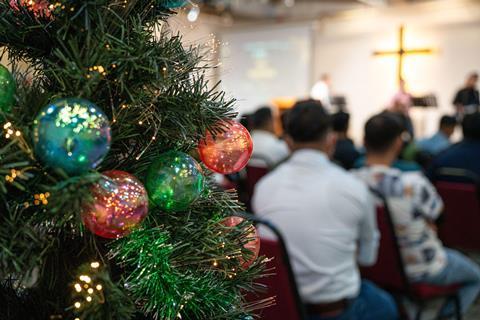
Credit: Sinsee Ho (Alamy)
I thought I understood Christmas. After all, our family had celebrated plenty of them in England so, when we moved to America, I assumed the festive season would travel with us, like our accent and my fondness for tea that’s hot, not iced. How different could it be?
Quite different, it turned out.
We were welcomed to our first American Christmas dinner by friends who took pity on us homesick souls. I asked if we were having crackers, and someone kindly passed me a plate of Ritz. I tried to explain: a Christmas cracker is a cardboard tube that you pull with your neighbour. It goes bang (sometimes) and reveals a paper crown, a joke so bad it’s almost good and a tiny plastic gadget nobody has ever found a use for. Then you balance the paper crown on your head and wear it throughout the meal, unless it rips, which it usually does.
Our hosts looked at me as if I were describing an obscure, ancient ritual. “But why?” somebody asked. I had no answer. We just do.
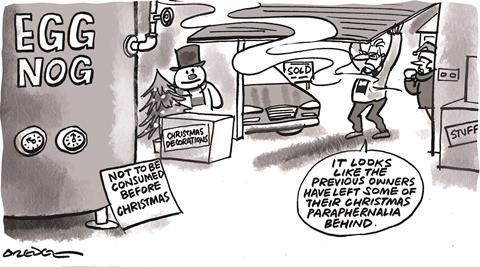
Then I was handed something called eggnog. Some Americans drink it with genuine devotion; I took one sip and wondered whether somebody had liquidised a custard tart and left it in the garage for a fortnight. In return, I offered a mince pie from the packet we’d imported, which prompted a nervous question about whether there was meat in it. (There isn’t. There used to be. It’s complicated.)
I’m still explaining that Boxing Day has nothing to do with punching people or flattening cardboard for the recycling bin.
Of course, none of these customs are wrong. They’re just local, and when you didn’t grow up with them, they’re baffling. Around my third American December, I realised this is exactly how church can feel to people. We stand up and sit down at moments known only to the initiated. We sing songs where everyone seems to know that the chorus repeats twice. We use ‘fellowship’ as a verb and pray for ‘travelling mercies’. The notices announce that the prayer meeting is in the Upper Room (which, confusingly, is downstairs) and that anyone interested in the men’s breakfast should “speak to Dave”. Who is Dave? Where is Dave?
We don’t mean to be confusing. But to a newcomer, church can feel like a party game where everyone else has read the rules and nobody thought to pass them a copy.
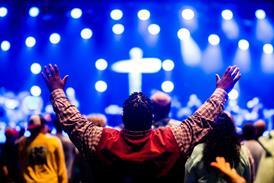
This matters most at Christmas. The carol service and the Christmas Eve gathering are when the neighbour who never comes to church finally shows up. They are nervous, unsure where to sit, whether to sing or what happens when the plate comes round. Will they leave feeling welcomed, or like the only person at the table without a paper crown?
It’s worth remembering who turned up at the first Christmas. Shepherds, who were hardly pillars of the religious establishment. And Magi from the East, foreigners so unfamiliar with local customs that they asked Herod, of all people, for directions. Yet they were among the first to meet God’s Son. The original Nativity was full of people who didn’t know the drill.
So, this Christmas, let’s banish some bewilderment. Explain what’s happening, briefly and without fuss. Say: “Please stand if you’re able,” rather than assuming everyone knows. Put signs up to direct people to the toilets. Look out for the person standing at the back, still clutching their coat. And perhaps give Dave a name badge.
Most of all, let’s remember that the heart of Christmas is this: God didn’t wait for us to figure Him out. He came to us, in a language we could understand, and made room for people who didn’t know the customs.
That’s the wonderful welcome we’ve received, and it’s worth passing on.























No comments yet