





Jeff Lucas reflects on his mother’s journey with dementia, the lessons it taught him about patience, care and the God-given dignity that remains when memory fades
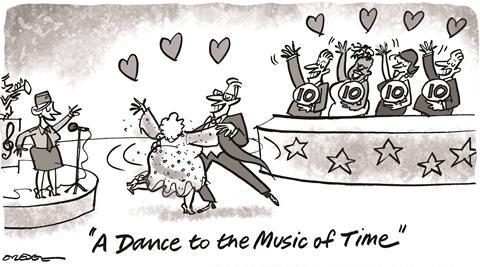
I’ve never been much of a dancer. My feet stubbornly refuse to cooperate with my brain. This usually results in some ungainly shuffling and minor bruising for whoever has the misfortune of sharing the dance floor with me. But I’ll cherish one dance forever.
My partner was my mother. She’d been navigating the uncertain pathway of dementia for a while. When the diagnosis finally came, we were shattered – but at least we knew the reason for the gradual shifts in her behaviour. She’d always been a nervous person, but living alone had become increasingly challenging. She thought her neighbours were spying on her; that they wished her physical harm. Everyday chores were becoming increasingly bewildering: we found unopened cans of food stored in the refrigerator.
Then we noticed the loss of her memory. She often had crystal-clear clarity about happenings from decades ago, but words spoken five minutes earlier escaped her, and so she would ask the same question, sometimes twice an hour or more. She gave birth to me, but couldn’t always recall my name. Conversation became more challenging as she searched for a word that remained maddeningly elusive.
Dementia is a disease that is painful for those who suffer and those who love them and feel so helpless. But that journey also had some strangely beautiful moments. My mum shed some of her natural reserve, and there were times when she poured out words and hugs loaded with love and affection. She learned to trust, to lean harder on others when the pathway was especially foggy. We discovered that life, love and learning can continue after that fearful diagnosis.
As a family, we adapted, with labels, reminder notes and time spent explaining what felt confusing to her. Slowly we learned patience with those oft-repeated questions. When she affirmed something that was just not true, we learned to remain in her world rather than insisting on dragging her into ours. We were reminded that she, like everyone ever born, was made in the image of God, and that dementia had not changed that: she deserved respect, gentleness, dignity.
When she finally agreed to residential care, we marvelled at the kindness of those who attended to her needs, day and night. They reminded us that God is a carer; the One who calls us to cast our cares upon Him, because He cares for us (1 Peter 5:7).
So let’s bless those who live with dementia, and let them know, with a touch, smile or softly spoken and oft-repeated word, that they are loved and cared for. Let’s pray that the Spirit of God, the One called Comforter, will caress them with His kindness. The Spirit needs no words, and can speak life where there is confusion, just as it was in the beginning, when all was “without form and void” (Genesis 1:2, ESV). Let’s give thanks for the carers; do not assume they are strong just because they act as if they are.
And let’s be grateful for Christian organisations like Pilgrims’ Friend Society, who combine best practice in dementia care with the spiritual understanding that those living with it can still enjoy a happy, fulfilled life.
The venue for my dance with Mum was the residential care home where she lived, as a guest vocalist sang wartime hits. I asked her to dance. At first, her usual reserve kicked in, and she refused. But five minutes later, she grabbed my hand, and said: “Come on, Jeffrey. Let’s dance.”
As we meandered around the dance floor, I realised dementia had not won. She could live and laugh and find joy in the moments that remained.
And she could still dance too. Far better than me!
























No comments yet