












While abusive leaders must always be held to account, most pastors are simply trying to shepherd their congregations faithfully. Jeff Lucas explains why they need our prayers, encouragement and support more than our suspicion

The Christian world has had more than its fair share of leadership scandals lately. Some have exposed genuinely abusive leaders, and those stories deserve to be heard. Spiritual abuse is devastating and should never be brushed under the ecclesiastical carpet.
But there is another danger: that we can start looking at every church leader as though they’re one sermon away from founding a cult.
I confess a vested interest here. I’m a pastor, and given the choice between spending time with warm, encouraging church members or critics who make piranhas look like goldfish, I’ll take the former every time. But church leadership is a tough call. Some congregants are skilled at noticing what their leaders get wrong, and rather less gifted at noticing what they get right.
Many church leaders deserve more kindness than they receive. For a start, they spend a surprising amount of time taking the blame for the Lord. God is invisible. He doesn’t have a complaints department, and so when life falls apart, prayers seem unanswered and heaven appears to have put us on hold for minutes (or months), some direct their disappointment towards the nearest visible representative: the pastor. Being punched in the emotional face on behalf of the Almighty isn’t a perk of the job.
Then there’s the awkward business of actually preaching the Bible. If leaders are to be faithful, they can’t just stick to comforting verses about green pastures and still waters. Eventually they have to wander into divorce, sex, money, forgiveness, politics – and all those other topics guaranteed to make at least one person fold their arms and mutter: “I didn’t enjoy today’s sermon very much.” Neither did the preacher. But they had to preach it.
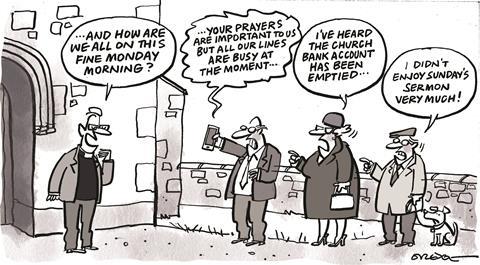
And then there’s gossip. Although, obviously, Christians don’t gossip, we share. “Please pray for our pastor, who is really struggling.” That may just mean they have the flu, but by the time it’s travelled at lightning speed through the church prayer chain, they’ve lost their faith, emptied the bank accounts and might be running a harem from the church office. Gossip has remarkable evangelistic powers. It spreads faster than the gospel. Don’t help it along.
Another myth is that pastors have some kind of premium subscription to conversational downloads with God.
They don’t wake up every morning to a personal FaceTime call from heaven. They wrestle with unanswered prayer, doubt, disappointment and spiritual dryness, just like everyone else. Sometimes they have to stand up on Sunday and speak about hope while wondering why God feels so silent.That’s not hypocrisy. That’s faithfulness.
And finally, despite what the internet sometimes suggests, most pastors are not plotting world domination. Spiritual abuse does happen and it must always be confronted. But bullies are the exception, not the rule.
Most pastors are ordinary people, which is just as well, because ordinary people are all God has ever really had to work with. They’re trying to love people well, explain scripture clearly, comfort the grieving, marry the hopeful, bury the dead, settle church squabbles over carpet colours, answer emails, attend dull committee meetings – all while producing a sermon before Sunday arrives again, which it does with alarming regularity.
So, make their day. Send an encouraging message. Thank them after a service. Pray for them rather than about them. Buy them a coffee. And every now and then, remind them that someone noticed they’re trying.
It won’t solve every problem in the Church. But it might just help one weary leader get up on Monday morning and do it all again.

























No comments yet