











With warnings of war, cyberattacks and climate disruption, preparing for disaster no longer seems the preserve of conspiracy theorists. As the UK government urges households to keep a few days’ supply of non-perishable food as part of its new ‘Prepare’ campaign, Rev Jules Middleton considers what the Bible says about preparedness, fear and loving our neighbours
Earlier in the summer I was sat in a field at a music festival when suddenly the air was filled with the discordant sound of thousands of mobile phones receiving the first ever National Emergency Alert. In the aftermath, conversations with friends and churchgoers showed me that fear is rising.
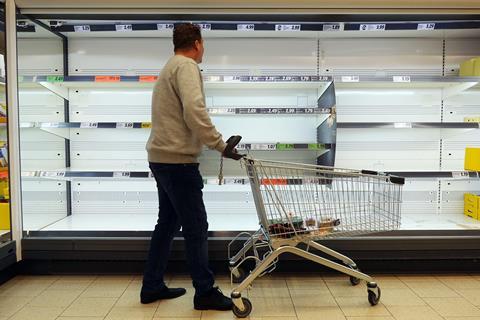
For many, the world has begun to feel rather unstable. The realities of climate change are more apparent each day. According to The Grocer, UK farms have had their worst harvest on record, and reliance on imports via the sea has been impacted by geopolitical events. Add into that worrying headlines about AI going rogue or cyberattacks from other nations and perhaps it’s not surprising that the UK government has launched a ‘Prepare’ campaign, including knowing what to do in a fire or flood, putting together a “grab bag” in case you need to leave home in a hurry, and even guidance on stocking up on essential supplies in case of disruption to power or water sources.
Church leaders have begun issuing warnings too. As previously reported by Premier Christianity, the leader of the 24-7 prayer movement Pete Greig, and Steve and Esther Uppal of All Nations Church in Wolverhampton, have used the language of “preparing for war” and needing a “wartime mentality”.
The problem is, this sort of language can put fear into our hearts in an era when mental health conditions and anxiety are already at an all time high. We know that the Bible tells us numerous times not to fear, a message so many need to hear right now. But if that’s the case, can Christians really stock up on beans and water? After all, in Matthew 6 Jesus tells us not to store up treasure for ourselves, and not to worry about tomorrow.
Some might write off this talk about looming disasters as paranoia or conspiracy theory. But dismissing all talk of preparedness may be too easy. Could preparing for disruption actually be an expression of Christian wisdom?
Take the “prepper” community as an example. Once written off as a lunatic fringe, this is now a growing network of social media groups, shops and organisations who are busy working out what to do in case of emergency. Many are sensible and organised people who are simply stockpiling a few key items “just in case”. Steve Hart runs the website UK Preppers Guide and argues that “modern preparedness is not about surviving the end of civilisation, it’s about handling disruption without immediately panicking.” He points out that preparing should make life feel calmer not scarier. Hart’s words fit with the wisdom of some of the Proverbs. The ant who prepares for harvest (Proverbs 6), those who store food and oil and don’t just eat it all (Proverbs 20), and those who prepare for danger are wise, and prudent (Proverbs 22).
Perhaps the best example of a biblical prepper is Joseph (Genesis 41). Warned of the coming famine via Pharaoh’s dreams he helps the nation prepare for seven years of lack during the seven years of plenty.
Rather than using our finances to stockpile in our own homes, perhaps the correct response is asking our churches how we can help our communities prepare together?
Some church leaders have asked whether stockpiling is simply the rich grabbing what they can, while they can, and it’s true that some preppers are taking steps to guard their supplies. Joseph’s plan however, fed not just the rich but the whole nation, and even those from further afield too. So rather than using our finances to stockpile in our own homes, perhaps the correct response is asking our churches how we can help our communities prepare together?
Rev Rachel Summers who works in children and families discipleship at Chelmsford Cathedral believes we need to become “community sufficient” rather than self-sufficient.
“We are creatures of community, and it’s by caring for each other, one to another, that we stay resilient. Your store cupboard may hold tins of beans and some pasta… but it may well also hold an invisible but strong web of relationships. And building that strong community is what in the end prepares us for all manner of more hopeful futures,” she says.
We’ve done this before of course. How many of us had local WhatsApp groups during the Covid pandemic to help each other out? How many churches distributed food to those in need? How many already run warm spaces and community cafés? Surely this is exactly the sort of preparation churches are already doing, and need to be doing more of in the months ahead?
In an era of division and individualism our prophetic role is to sow love not fear and to help our communities prepare in hope.
























No comments yet