




As rival protests expose deep tensions in London, East London pastor Tony Uddin warns that fear, identity politics and division are being exploited by both left and right. The Church must model a radically different way, he says

Last weekend, tens of thousands joined rival marches in London. On one side, Tommy Robinson’s Unite the Kingdom. On the other, a pro-Palestinian group.
The moment exposed serious divisions in the capital, and the nation in general.
Some are worried we’re now seeing the rise of Christian nationalism - evidenced by the sight of worship leaders and Pentecostal bishops who flanked Robinson. Others push back on the perceived failure of left wing politics to counter the growth of Islamist extremism.
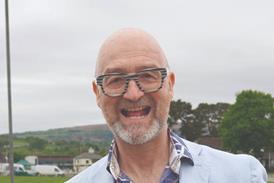
Tony Uddin is the pastor of Tower Hamlets Community Church. In his experience of ministering to people on both sides of this divide, he says genuine concerns have been twisted by both left and right, which is now creating a damaging environment of fear.
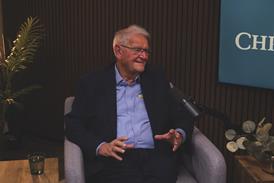
Reflecting on his own identity as a non-conformist, mixed-race man, Uddin recently spoke to us at Premier for our documentary series on Christian nationalism. This is a man who is passionate about building an inter-cultural and intergenerational church. So much so, that he expects any prospective leader in his church to intentionally build friendships with people different from themselves. His aim is for THCC to be a place where people can break out of their echo chambers and meet people from different cultures, races, classes, and ages.
For Uddin, the key question that everyone is grappling with surrounds identity: What does it mean for me to be accepted in this changing country?
You’ve described yourself as “half Bengali, half Scottish and 100% British”. As someone with mixed heritage, how have you felt seeing these marches in places where you live?
I’m from a working-class background and grew up on a large South London council estate, and I think these communities have come out worse in the identity politics game.
In Tower Hamlets, which is about 40% Bangladeshi and 25% White British, there’s a question of, ‘what does it mean to have an identity that’s distinct from an Islamic identity?’.
Even if you don’t have an active faith, identifying as a Christian or with Christianity has become a way of forging a separate identity for white working-class communities.
Do you think churches don’t understand people’s real concerns, or don’t do enough to show they understand?
Certainly, within evangelicalism. Working-class communities have benefited from immigration, but they’ve also borne the brunt of it and had to pick up some of the heavy lifting of it as well. There are concerns that if people voice them, they are seen as racist for having worries about the way immigration works out today.
Some Christian nationalists then use these concerns to express racist views. They are coming from a place of fear and dislike of other cultures.
Our church has lots of working-class people, including people who’ve come to the UK to claim asylum because they’ve suffered as Christians in Islamic countries.
The UK Church is enormously blessed by diaspora communities and refugee communities. We should learn from the experiences of people who’ve suffered for their faith in circumstances that were quite traumatic and difficult. We can do this while realising that in some of our inner cities, people struggle to get a GP appointment. So, where there is a burden of immigration, how’s that being shared?
Do you see this political divide playing out in your community?
I think this was created by the Labour Party. For years, they’ve worked on ethnic grievances to secure a block vote. But in recent years, it’s become adversarial, creating a kind of ethnic politics. Labour was the Frankenstein who created and used this monster, which is now turning on them.
The ruling party in Tower Hamlets is called Aspire. It’s entirely made up of Bangladeshi people. 33 councillors were elected, and every single one was Bangladeshi Muslim. There is no representation within their party, from the mayor down. I consider that a failure of community politics and a divisive ethnopolitics.
This has essentially erased working-class white voices, and that’s a big problem. It is then used by people to foment racial hatred and prejudice.
Do you ever see a way for a collective dialogue face-to-face?
The last big march that came into town was denied permission to march. They had an Anti-Racist March instead, which was almost entirely Bangladeshi, largely Palestinian flags, with the guy leading in a paramilitary style, barking into a megaphone about racist scum.
I stood beside the road and talked to an older White East End lady who was frightened by it.
The next day, I spoke to a refugee lady in our church from an Iranian background who said to me she’d spent the day indoors because of the Unite the Kingdom protest. She heard that she would be vulnerable and might be attacked.
Neither of those people should be putting up with that. The older lady should not be made to feel like she doesn’t have a place in her own community. And the Iranian refugees who have lived through terrible things - it grieves me that she would think I need to stay home.
This shows there’s a lot of work to do. Yes, there were some genuine Christians involved, but the use of Christian symbols and rhetoric was done in a way that’s designed to make people from migrant backgrounds feel unwelcome. That is not Christian.
In Romans 14-15, there’s this outworking of how Christians from different backgrounds share life together, and in that context, it’s Jew and Gentile, with the slaves and free. There’s this idea of acceptance of one another. There’s a difference between what happens in the church and outside the church, but the principles still apply.
As churches, we must be places of welcome and pursue what builds each other up. We must challenge divisive community politics wherever we see it, whether left or right.
What should the Church say to those who fear the UK’s Christian heritage is being lost?
People are looking for a sense of belonging. We’ve had people come into our church whose experience of another church has been on the back of this Christian nationalism, worried about where Britain’s headed. We’ve had to learn to listen, not reject people.
As followers of Jesus, we can introduce people to the living Jesus who changes lives.
The left wants to kind of build a utopian society of love and tolerance. The right wants to legislate the kingdom of God. Our point is that the more we make disciples who love people who are just following Jesus and changing lives, we’ll change places.
For the average churchgoer, what are the starting points you would recommend?
The Christian distinction in a society that is angry is forgiveness.
In his book Dominion, the historian Tom Holland points to the impact of Christianity and culture. Our culture wants equality, fairness, humility and selflessness. These are Christian values. Part of why our culture has so much anger is that we want Christian values, but without Christ as King.
There is a gap between the aspirations that we hold for our politicians and community leaders, which they won’t fulfil. It’s a gap between what our culture has inherited as values and what we hold as social good, but we can’t reach it. Because you cannot have Christian values without Christ as King.
What does ‘Jesus is Lord’ mean for how I live my life? What does it mean for how I love my neighbour? A huge part of that is forgiveness and loving your enemies. One of the privileged things I’ve seen in some Muslim-majority countries where Christians are persecuted is when Christians respond with love. Like one case in the Middle East where a church was burned down and the next day, they put up a sign saying, ‘We love you’.
On the grand scale, it’s an example of counter-cultural, enemy-loving, Christ-exalting. On a small scale, it’s choosing to value the person in front of us, not to categorise them as part of this community, but to really love people.
So, let’s become intentionally culturally curious. Find time with people who differ from you, both within and outside the church, and love them.
For more on this story, see the new documentary series from Premier Christian News, ‘Christian Nationalism: Faith and the flag in Britain’
Interview written with editorial support from Bukunmi Awofisayo






















1 Reader's comment