






Concealed beneath jigsaw pieces, twelve Bibles illegally crossed a border somewhere in North Africa. But it was the courage of the Christians waiting to receive scripture that left our journalist reflecting on what it truly means to give Jesus your all
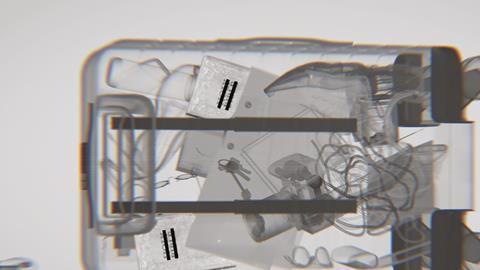
I try not to watch as my suitcase rolls through the airport’s luggage scanner. Inside it are twelve Bibles, concealed inside an empty Spider-Man toy box and beneath the pieces of a children’s jigsaw. On the other side, the customs officer stares intently at the screen.
Less than 18 hours earlier, back in the UK, my best friend’s living room had been remodelled into a makeshift Bible-smuggling operation.
I sat on the floor, surrounded by Spider-Man wrapping paper, overthinking whether wrapping the Bibles was more cunning or conspicuous. Across the room, my friend sat with Google Translate displaying short messages she had translated into Arabic: “Christ loves you.” “God sees you.” Holding coloured sticky notes against her phone screen, she traced the Arabic lettering before sticking each message to the inside cover of a Bible.
By the time I had returned home with the wrapped Bibles, it was 3:28am. I still had not packed.
My nephew had once owned a Spider-Man bow-and-arrow, the empty box that it came in now among that category of children’s clutter nobody quite knows what to do with. Almost providentially, six Bibles wrapped in Spider-Man paper fitted seamlessly inside the Spider-Man box.
In the same chaotic pile of my nephew’s belongings was a box of jigsaw pieces he had not yet found time in his five-year-old schedule to assemble. I emptied out most of its contents to make room for the larger Arabic Bibles. They were a tight squeeze, but I managed to arrange them and leave space for the remaining puzzle pieces on top. In the unlikely event that customs officers investigated my suitcase and then the jigsaw box, I hoped they would encounter the loose pieces covering the books and cease any further enquiries.
Ten Bibles were now hidden inside two boxes. Two remained. Having exhausted my capacity for conniving, I tucked one inside the leg of a pair of jeans and buried them beneath the rest of my clothes. I then placed the other inside my rucksack, as though it were simply my own personal Bible. If the others were discovered, at least this one would get through.
Illegally smuggling Bibles into a foreign country where Christians are oppressed is not something I’d ever daydreamed of, let alone seriously considered. But I had been invited by a Christian organisation which supports Christians in contexts where believers face resistance of varying severities. One of the ways that manifests is taking the word of God into places where access is restricted.
Their hour-long presentation walked us through the dos and don’ts of the trip, much of which could be categorised under the umbrella of “be street-smart and remain calm”.
Don’t lie, but don’t volunteer information. If they don’t ask for your hand luggage, don’t give it. If they don’t ask you why you’re there, don’t say. If they do ask, you’re a tourist here on holiday.
Beyond the customs gates
The thud of the plane’s wheels against the runway brought my in-flight nap to an abrupt end. It was time.
I realise now how much I had reduced the mission to a logistical task: I had been given something to carry and somewhere to be. Get there. Deliver the books.
That changed when my feet hit the ground. The weight of the task settled on my heart. There were Christians here desperate for the word of God they’d been deprived of.
At passport control, I remained relatively calm. Then one of the officers began banging against the glass of his booth. A boy on a video call had turned his phone around to share his location. The officer reprimanded him sharply in Arabic. I could not understand what he was saying, but the interaction made me sensitive to the severity on the officers’ faces.
When my turn came, the two men inside began speaking to one another. Unable to understand their conversation, paranoia provided its own irrational translation. There was already a problem. They knew why I had come.
After collecting our suitcases, we continued towards the scanners, breaking into pairs. Recalling my earlier instructions, I placed my suitcase on to the belt but left my rucksack on my back, hoping I would not be asked to remove it. I was not.
When he eventually received a Bible of his own, he said holding it felt like holding treasure
I watched my suitcase disappear into the machine and attempted a poker face that communicated indifference, as though the contents of my bag were of the upmost unimportance.
The suitcase emerged. The officer said nothing.
We reconvened beyond the final customs gate with every Bible entrusted to us still in our possession. And frankly, I had expected nothing else. Between my own prayers, those of the people I was travelling with and all our loved ones, I could not envisage an outcome in which God did not see us through.
Even now, I am unsure how much of that was faith and how much was entitlement – the assumption that, because this was God’s cause, He would favour our efforts.
There was no great eruption of emotion. Relief, rather than celebration, seemed to settle over the group. Maybe there was an undercurrent of restrained joy, visible in the smiles exchanged as we confirmed that everyone had made it through. But little more was said. The Bibles had crossed the border.
No ceremony
The following day, we walked along side streets to a small bookshop. Gospel resources, children’s stories and Christian books in Arabic lined a window display. We handed the Bibles across the counter, from where they would disappear into a network that would get them where they needed to go.
I had imagined that exchange would be dramatic – almost like a ceremony. I expected the moment to reveal something of the hunger for scripture in this country through a visibly emotional encounter. Instead, that education came later, through meeting the Christians who lived there and hearing what it cost to practise their faith.
The next morning, we had been due to meet some local Christians, but after a complaint was made about their religious activities, they were required to appear in court. Initially, we were disappointed. It was one fewer conversation that would help us understand the struggle of expressing Christian faith in this place. Yet the reason for their absence was, in its own way, indicative of that struggle.
Thankfully, our organisers were able to arrange for us to meet another group. We entered through a door between two food establishments on a busy street. The stairwell was unlit – deliberately, I presumed – and we followed our guide up to a small flat, where we met a couple who were part of a church plant.
The husband had grown up Muslim but was troubled by the idea that God’s love had to be earned. The answers he received only seemed to deepen the question: pray five times a day, give to charity, live as a good Muslim, visit Mecca and perhaps you could earn God’s favour.
In response to his growing uncertainty, his father sent him to a more intensive Islamic school, but greater exposure left him with more questions, and the teachers were increasingly intolerant of them. Eventually, the imams complained to his father, who withdrew him from the school in embarrassment.
With those around him either unable or unwilling to satisfy his questions, he decided to search for answers himself. At a local internet cafe, he would type variations of the same question into the search bar: how could he receive the love of God?
Initially, the results repeated what he had already been told. But as he continued searching, he began encountering Christian responses. From there, he discovered ‘the Injeel’ – the New Testament – and began reading the Gospel of Matthew.
Then Ramadan arrived. He put the Bible aside and returned to the faith and practices with which he had been raised. Seven days into the fast, however, he felt empty and spiritually exhausted and sensed a clear call to return to the Bible.
When he opened it, he encountered Jesus’ invitation in Matthew 11:28 to the “weary and burdened” to come to Him and find rest. The search was over.
He wanted to share what he had discovered but understood the consequences that could follow. So, he created a false Facebook profile through which he could evangelise his friends and family anonymously. The disguise worked – until one of his brothers borrowed his phone, discovered the account and alerted their father.
When his father asked whether his son had become a Christian, he boldly declared that he had and, when asked why, said that Jesus was the Son of God. At that point, he told us with tears in his eyes, his father began beating him with a shovel. Eventually, he was forced out of the house.
I have read several accounts of state persecution enforced through police and institutions, and of extremist violence carried out by armed groups – often in the pages of this magazine. But sitting in that flat, I was introduced to a more intimate form: persecution in the family home, through the hands of someone from whom you would ordinarily expect love.
Becoming a Christian had not only altered what he believed. It had threatened the closest relationships in his life. While living on the streets, he scavenged for food in the bins outside his former home. Yet when an emergency later required his parents to move house, he returned to help them. He responded to the father who had rejected him by displaying the very love of the Christ he had been ousted for proclaiming. Over time, that witness softened his father’s heart and brought reconciliation. It also reached his younger brother, who eventually became a Christian, too.
Conversations about Jesus had to be dulled whenever a waiter approached our table
When he received a Bible of his own, he said holding it felt like holding treasure. I thought of how often I had approached my own Bible as a burdensome task to be completed: another reading plan to keep up with, a daily discipline at which I had fallen short. For him, scripture was not routine nor readily replaceable. It was the book he had given up everything for, in order to discover the divine love of the God who created him.
I had helped carry Bibles into the country believing I understood why they mattered. Sitting across from him, I began to realise how little I really did.
The fruits of faith
His was the first of many stories to settle that realisation within me. Over the course of the week, we met Christians, predominantly over meals, to hear their stories and learn how we could pray for them.
In those moments, I caught only the faintest glimpse of the vigilance required of Christians in such contexts. Conversations about Jesus had to be dulled whenever a waiter approached our table. At a fast-food restaurant, we moved outside to hear the testimony of a man who had fled his community after facing threats of violence because he had converted to Christianity.
Even then, there was the question of who might be listening and whether the consequences of an overheard conversation would fall upon those who had come to meet us, long after we had returned home to safety.
At one of these dinners, we met a man who had been born into a Christian family, yet his story still spoke to the hostility believers could face. His grandmother had become a Christian through Western missionaries who had travelled to the country to provide medical assistance. He grew up Christian, but what he heard from Muslim teachers and classmates at school caused him to question what he had inherited. As a teenager, he decided to investigate Islam for himself.
Although a Christian, his father did not attempt to prevent him. There were books about Islam in their home, so the young man began reading them. Having examined the religion for himself, he emerged more firmly convinced that Christianity was true and made his own commitment to the faith. He recalled teachers telling pupils that, as a Christian: “his blood was of no value and could be shed”.
On one occasion, a figure dressed in traditional women’s clothing was seen standing outside the school. Students became suspicious after noticing that the person appeared to be a man and reported him. A knife was subsequently discovered, and he learned that he had been the intended target of an attack.
A God who is worthy
In our meetings, a recurring theme emerged: when we asked how we could pray for them, the reply was always: for increased unity among Christians. That Sunday, I caught a glimpse of what an answer to that prayer may look like, and why they are so desperate for more of it.
We entered a home church where an eclectic mix of people had gathered. American accents sounded from one side of the room, while I acquainted myself with a Scandinavian family who had emigrated to another North African country. At the front, a local brother led the service in Arabic, with an English-speaker offering translations for visitors.
The room held a picture of the body of Christ that I had heard of, but never really witnessed: people from different nations, speaking different languages and carrying stories marked by their own trials, tribulations and triumphs, whose paths had briefly intersected in a random home in a foreign country. What united us was not the route by which we had arrived, but the One we were all walking towards.
I helped carry Bibles into the country believing I understood why they mattered. Then I began to realise how little I really did
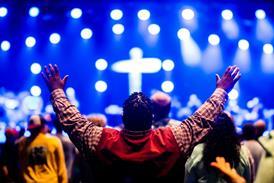
Leading the worship was the same man who had described searching the internet for the love of God and being beaten by his father for finding it in Jesus. Together, we sang an Arabic rendition of ‘Worthy of it all’.
During our devotional the next day, someone in our group observed that their “all” inherently carried a different weight to ours. For some in that room, it included the possibility of violence from those closest to them. It meant concealing their faith, losing the security of family and community, meeting other Christians cautiously and accepting that following Jesus could place almost every important relationship in their lives under strain – or even fracture it completely.
Every reaction I received from the few people I was permitted to tell about the trip carried a shock that made me feel like a daring superhero. I entered the country believing that the courageous part was carrying Bibles through an airport scanner. The Christians I met demonstrated that a greater courage could be found in receiving those books, believing what they contained and continuing to live by them when doing so could cost everything.
Sunday culminated in an experience that forced me to reckon with the question: “When you proclaim that Jesus is worthy of it all, what is the ‘all’ that you sing of?”






















No comments yet