








More than 95% of executions in the USA happen in the Bible Belt. After two lethal injections failed to kill the only woman on Tennessee’s death row, Shane Claiborne issues a call to American Christians to end their support of what he believes is state-sanctioned murder
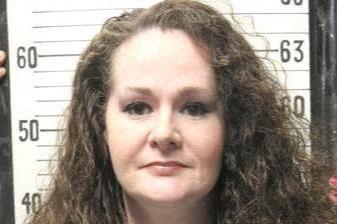
As I started writing this article, the only woman on Tennessee’s death row, Christa Pike, was about to be executed.
But last night she survived. This was despite two attempts to end her life. She is now in hospital, receiving medical treatment.
There have been a series of botched executions in Tennessee and around the country. In May this year, Tony Caruthers survived his execution by lethal injection, also in Tennessee.
In the case of Byron Black, the execution team failed to deactivate his implanted heart defibrillator, and it is believed that the device may have been shocking his heart back to life as he was being executed. He was still alive ten minutes into his execution but eventually died.
If Christ refused to kill, so should we
You can see why the late Supreme Court Justice, Harry A Blackmun declared: “From this day forward, I no longer shall tinker with the machinery of death.” He said that after 20 years of trying to make it work. But there is just no good way to kill someone.
Last night’s botched execution is the latest reminder that the death penalty is a cruel, gruesome, failed experiment in America – and the people keeping it alive are Christians.
The Bible belt
Tennessee is my home state. I grew up in the foothills of the Smoky Mountains, the same hills as Dolly Parton. I fell in love with Jesus in the Bible Belt. There are so many things I love about Tennessee. And yet it is also one of the few states still executing people on a regular basis.
It is also worth noting that the Bible Belt states are also the formerly confederate states; the places that held on to slavery the longest are the ones still holding on to the death penalty. Where lynchings were happening 100 years ago, executions are happening today. And sadly, that history leaves a mark.
More than 95% of American executions happen in the Bible Belt. The death penalty has survived in America not in spite of Christians, but because of us – and that should trouble anyone who genuinely loves Jesus – the Prince of Peace.
It is Christians who are driving the machinery of death – Christian governors, legislators, parole board members, even up to the Supreme Court. If Christians decided to abolish the death penalty in America, it would end overnight.
Guilt and grace
Christa Pike’s crime was horrific. Unlike many death penalty cases, there is little question about her guilt. And yet, at the heart of the gospel, is the deep conviction that no one is beyond redemption. Where sin abounds, grace abounds. Mercy triumphs over judgement. That’s what the Bible says.
And it is worth remembering that Moses murdered someone (Exodus 2:11). David murdered Uriah to cover up his rape of Bathsheba (2 Samuel 11-12). Paul oversaw the torturous execution of Stephen (Acts 8:1). If murderers are beyond redemption, we can rip out most of the Bible, because it was written by them. The Bible is a love story, a grace story; one of the central themes is that God is good even when we are not.
I was raised Methodist, and the United Methodist Church have a powerful statement of on capital punishment: “The death penalty denies the power of Christ to redeem, restore, and transform all human beings.”
The death penalty does not heal the wounds; it only creates new ones
Christian support for the death penalty in America is a theological and spiritual crisis. In the iconic story of Jesus interrupting the execution of a woman caught in adultery, he says: “Let any one of you who is without sin be the first to throw a stone” (John 8:7).
It is Jesus who blesses the merciful (Matthew 5:7) and promises that as much as we forgive, we will be forgiven (Matthew 6:14). And, of course, he didn’t just preach it. He lived it up to his last breath, as he pleaded for forgiveness for the people who were killing him (Luke 23:34). If Christ refused to kill, so should we.
The early Christians understood this. For the first few hundred years, the Church was a steady voice for life on all fronts, including the death penalty. Cyprian, a third century bishop, found it utterly absurd that we would denounce murder by an individual but sanctify it when done by the state: “Murder, considered a crime when people commit it singly, is transformed into a virtue when they do it en masse.”
My friend Sr Helen Prejean often says: “Sometimes the question isn’t whether someone deserves to die, but whether we deserve to kill.” After all, weren’t we all deserving of death but given the gift of life by the love and grace of God?
Healing and hope
When people say of someone like Christa Pike: “She is sick”, I cannot help but remember the words of Christ: “It is not the healthy who need a doctor, but the sick” (Luke 5:31). Pike is also a child of God, made in the image of God. In the words of death penalty lawyer, Bryan Stevenson: “We are all more than the worst thing we have ever done.” No one is beyond redemption, even someone who has committed murder – not Moses, David, Saul, or Christa Pike. Grace gets the last word.
I am glad Christa Pike is still alive. And two things can be true – I also wish her victim Colleen Slemmer was still alive. She too is a child of God. But another murder will not bring her back.
To be against the death penalty does not mean we are against justice or numb to the suffering of murder victims and their families. We must remember the victims, but not with more killing.
The death penalty does not heal the wounds; it only creates new ones. It simply mirrors the evil we are trying to heal the world of. As Dr Martin Luther King said: “Capital punishment is society’s final assertion that it will not forgive.”
Violence is the disease, not the cure. It is time to abolish the death penalty, once and for all – let the Church say: “Amen.”





















No comments yet