











The Passion Translation (TPT) has enjoyed significant popularity in charismatic and Pentecostal circles. But in recent weeks a number of influential pastors and churches have been quietly distancing themselves from the project, citing alledged plagiarism and disputed translation methodology. Rev Dr David Instone-Brewer, who sits on the NIV translation committee, takes a look at the issues and shares his own perspective
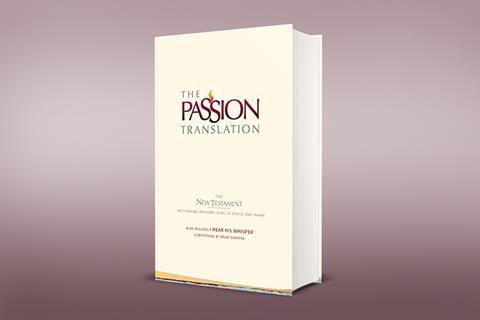
Many people love The Passion Translation (TPT) of the Bible and many hate it.
I would love it, but only if the name changed to The Passion Paraphrase. It is written to bring out the passion of the text and has sold over one million copies, but it has also provoked a lot of passionate criticism.
Asking different questions
I’ve just returned from Nashville. Instead of listening to bands, I spent the week in a committee room from 8.30am until evening, enjoying a rather unusual form of Bible study with some of the world’s leading Hebrew and Greek scholars.
This NIV Bible translation committee meet every year to discuss possible improvement to the NIV. It’s expensive to bring scholars together from Africa, India, Australia and Europe to examine a translation that we all agree is already excellent. Every decision has to be almost unanimous, and the discussions are painstakingly detailed. I remember spending half an hour debating a comma. A few of us were unconvinced that it represented the flow of the Hebrew, so nothing changed. Sometimes, as on that occasion, a representative from Biblica, who own the text and fund the committee, sits in on the discussions. I remember glancing at him guiltily, wondering what he was thinking. He didn’t seem concerned.
The Passion Translation has no committee to challenge individual interpretations or theological leanings. On the NIV committee, I’ve never heard anyone argue: “This shows God’s sovereignty”, or “We need to avoid/emphasise egalitarianism.” I’m not even sure who would be on which side of such issues, because our discussions are never about promoting a theological viewpoint. They are simply about expressing, as accurately as possible, what the text says. What I do hear are comments such as, “That isn’t in the Hebrew,” “Leave that for commentaries,” “The Greek is ambiguous, so we need a footnote,” or “But how does that translate into natural English?”
Brian Simmons, the author of TPT, appears to be asking himself different questions: “How can I convey the passion implied in this verse?”, “Can I include this word’s other meanings?”, and “Can I help the reader interpret this?” These are all good aims – but they belong only to a paraphrase, not to a translation. That approach has produced valuable works such as The Message, The Amplified Bible, and The Living Bible. These Bibles are proud to be paraphrases: engaging, explorative, expansive and enlivening. TPT, however, misleadingly describes itself as a “translation of the Hebrew and Greek”.
Misleading
One interesting experiment in TPT is including insights from the early translations of the New Testament into Syriac. The Syriac-speaking church was established in Antioch from where (according to tradition) Thomas was sent to India and Thaddaeus to Turkey. They translated and merged the Gospels as the Diatessaron, only a century after they were written. Because Syriac is somewhat similar to the Aramaic spoken by Jesus, these early translations might preserve clues as to how his words were originally understood.
Unfortunately, TPT presents this in a misleading way, with footnotes such as “The Aramaic literally states…”, implying that the later Syriac translation preserves the original Aramaic wording. Many of these are very similar to notes in Victor Alexander’s self-published Aramaic Bible. Simmons has not acknowledged this, which has resulted in accusations of plagiarism. It is very difficult to translate the Bible without using phrases found in other translations, and, he has, as might be expected, done this – although perhaps too often from The Message.
The extent and creativeness of his paraphrase is clear in a familiar passage such as Matthew’s version of the Lord’s prayer. Here are two paraphrases, from TPT and The Message. Which do you think is which?
| Our Beloved Father, dwelling in the heavenly realms, may the glory of your name be the center on which our lives turn. Manifest your kingdom realm, and cause your every purpose to be fulfilled on earth, just as it is in heaven. We acknowledge you as our Provider of all we need each day. Forgive us the wrongs we have done as we ourselves release forgiveness to those who have wronged us. Rescue us every time we face tribulation and set us free from evil. For you are the King who rules with power and glory forever. Amen. | Our Father in heaven, Reveal who you are. Set the world right; Do what’s best— as above, so below. Keep us alive with three square meals. Keep us forgiven with you and forgiving others. Keep us safe from ourselves and the Devil. You’re in charge! You can do anything you want! You’re ablaze in beauty! Yes. Yes. Yes. |
|---|
You’ve probably guessed that the shorter version is from The Message – though The Message often also expands the text (eg Acts19:2). I’ve underlined words in TPT that are not implied by the Greek. I do like some of its interpretations – for instance, unpacking the Jewish idiom of ‘debt’ and ‘debtors’ as referring to being wronged and offering forgiveness. However, I don’t like the way the prayer asking for daily food has become an expectation as if we will never go hungry; or the lack of a prayer for Jesus to “come” again – although alternatives are acknowledged in the footnotes. Its footnotes also mention that “evil” could refer to “the evil one”, as in The Message.
The problem with puns
Simmons likes ‘playing’ with words, rather like the rabbis did. In a footnote he says: “The Aramaic for ‘name’ is shema… It can also be translated as ‘light’, ‘sound’ or ‘atmosphere’ …”. I suspect he is referring to similarities between the Hebrew words shem (‘name’), shama (‘to hear’) and shemayim (‘heavens’) and punning these in a playful way. In that case, this is factually problematic because these similarities do not work in Aramaic; and I don’t find the resulting interpretation helpful.
The ending of the Lord’s prayer is omitted in the earliest Greek manuscripts, rather like a dictated letter might end simply with “Yours etc”. Scribes added a suitable ending in the later manuscripts that were available to the King James Bible translators. Modern translators usually follow the earlier Greek manuscripts which do not include this doxology, just like the Syriac translations in the Diatessaron and early Peshitta. However, a footnote in TPT misleadingly states that the ending is “translated from the Aramaic”, even though only the later Syriac manuscripts have included it. I suspect that Simmons inserted this doxology in an attempt to satisfy readers who prefer the traditional ending.
Overall, I do like the liveliness of the TPT – but I don’t regard it as a translation. Simmons himself sometimes described it as a paraphrase in interviews. The accusation of plagiarism should be addressed by acknowledging the work Alexander and perhaps others in the introduction. Also, the description of its “translation philosophy” must be revised, since comparing it with translations such as the NIV are misleading.
Nevertheless, I congratulate Simmons for the creativity of his paraphrase, which encourages readers to re-explore the implications of the Bible text and brings passion to their devotional reading. But please stop calling it a ‘translation’ of the Bible.

























5 Readers' comments