












The family is the first form of government God established, yet both sides of the Christian nationalism debate seem to have forgotten it. Rather than fighting over the balance of power between Church and state, Christians should focus on strengthening marriages and restoring parental authority, argues Dr Tony Rucinski
The topic of Christian Nationalism is dividing many Christians.
On one side are those who think Christianity should have a greater say in what goes on in the country. They emphasise our Christian heritage and history, and see no problem mixing faith and politics. On the other side, some fear what that Christian Nationalism might look like in practice. Would it lead to a dialling down of democracy?
Both sides make points worthy of respect, but I think they’re overlooking something which, if acknowledged, might let them get back to bickering over baptism and rock music.
The row centres on two often conflicting authorities: should the secular state have more power than the Church or vice versa?
But God didn’t establish only two authorities for mankind. He set up three.
Three governments, not two
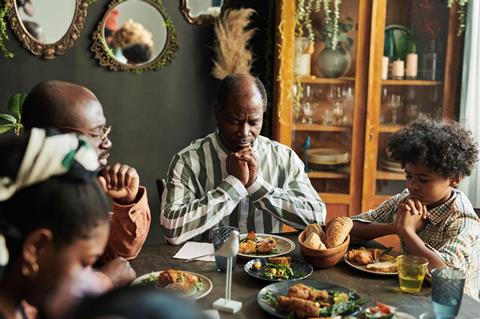
The third authority God institutes is the family – except God puts it first.
God sets it up in Eden - before any Church or official existed. “Therefore shall a man leave his father and his mother, and shall cleave unto his wife” (Genesis 2:24). He hands the teaching of children to parents, not officials: “thou shalt teach them diligently unto thy children” (Deuteronomy 6:7). “Train up a child in the way he should go” (Proverbs 22:6) is said to a father, not a Department for Education. He gives children a commandment of their own - “Honour thy father and thy mother” (Exodus 20:12), the only one with a promise attached.
And of that family (husband, wife and children), Jesus said that what God has joined together, man must not separate (Matthew 19:6). He was including Parliaments in that injunction. Hands off.
Why the smallest matters most
A household is the state in microcosm, the smallest form of Government. It is where a person first learns she is of infinite worth, yet she’s not the centre of the world.
It’s where being a citizen begins. A child who learns to accept a decision she doesn’t like, from someone who knows and loves her, has learned what every functioning society runs on. Nobody has any use for an unruly adult, and a country full of them has to be managed by force, not governed by consent.
There’s another thing only the family does. A child is tied to her mother by birth itself. She is tied to her father by a promise. Marriage is the best way anyone has ever found of making that promise hold.
It was never the law of man that originally made or held that promise in place. But as social norms changed and faith waned Parliament found it could say whatever it liked.
60 years of demolition
Strong families don’t need big Governments. And that’s where the trouble began. Last October a Justice Minister said what the State now thinks a parent is. “Being a parent is a privilege not a right,” said Baroness Levitt. A privilege is something somebody else grants you, and can take back. Nobody ever voted for that. We got there one reasonable-sounding change at a time, over 60 years.
The promise went first. Nobody thinks a wife should be stuck with an abusive husband, but once the culture changed, the obligation to stay began to go. The Divorce Reform Act 1969 let a marriage end because it had broken down, whether anybody had done anything wrong or not. Then in April 2022 the State said you need no reason at all to end a marriage. That destroyed the lifelong meaning of the vow, for everybody.
Then the Gillick judgment of 1985 gave the doctor authority to give your 15 year old daughter contraception and you may never know. Gillick took that decision away from her parents.
The courts took the last word on life itself, whenever a hospital asked. Charlie Gard’s parents wanted to try America, and Alfie Evans and Indi Gregory had a hospital in Rome waiting. Each time the judge decided the child’s “best interests” against the parents, then forbade them to take their own dying child abroad. Nobody had to prove neglect or abuse, only that the parents disagreed with the doctors.
Then Parliament changed who counts as a parent. In 2008 it replaced a child’s need for a father with “supportive parenting” in the rules for fertility clinics, and let a second woman go on the birth certificate. In 2013 it redefined marriage to include same-sex couples, and in principle separated marriage from having children. Civil partnerships had already given those couples broadly equivalent legal rights, so the 2013 Act was about something more fundamental. It changed the meaning of the word marriage itself.
And it didn’t stop there. If marriage no longer needs a man and a woman, parenthood doesn’t either, and the law no longer recognises a child’s claim to a mother and a father. Surrogacy is next. In September MPs debated a petition to make the two men who commission a baby its ‘parents’ from the moment it’s born.
All this leaves a question nobody has answered. If anyone can marry anyone, and walk out whenever they like, why should the State keep a record of who happens to like whom at any given time? Parliament never got into marriage to note people’s feelings, but it did step in to tie a man to the woman who bears his children. Take that away and there’s nothing left for the State to be doing.
Then there’s the Courts and Tribunals Bill, which does what Baroness Levitt announced last October. It would, in its own words, amend section 1 of the Children Act 1989 “to remove the presumption relating to the involvement of parents in the life of a child”. In plain English, the law will stop assuming a child is better off with both parents, and the parent who loses out will usually be the father.
Then there’s who teaches your child, and what you’re allowed to know. The Bible teaches that parents have the responsibility. But our legislation contradicts this. You can’t take your child out of relationships lessons at any age. If your daughter tells her school she’s a boy, it should involve you “as a matter of priority”, unless it decides telling you would put her at greater risk, and then the guidance never says it has to tell you at all.
The draft Conversion Practices Bill would catch the undefined “use of psychological or emotional pressure” aimed at a child’s sexual orientation or “transgender identity”. Nothing in the wording of the draft Bill exempts a parent or a minister. The government has yet to make a convincing case for why existing laws are insufficient to protect people from abuse.
Some Christians ask what could be wrong with a law against serious harm. The simple answer depends on who decides what counts as harm - and you can be fairly sure a parent or preacher telling a young person they’re sinning will be caught by it.
The state has stopped deferring to the family and started managing it as a caseload.
What has followed Parliament’s plundering
In 1972, 84 in every 1,000 unmarried men in England and Wales got married. By 2023 it was 18. Those who did marry got to it a decade later - nearly 35 for men and 33 for women, against 26 and 23 in 1980. Births outside marriage have gone from one in ten in 1977 to about half, the birth rate itself fell from 2.93 children per woman in 1964 to 1.39 now.
Children are the ones paying the price as the fall in marriage brings much less stability. Cohabiting parents are about three times more likely to split by a child’s fifth birthday, and of parents still together when their child is 14, 84 per cent are married. Now before anyone says that’s just who marries: the poorest married parents are more stable than the richest cohabiting ones.
Encouragingly, young people have not turned against marriage. Ask unmarried 18 to 24-year-olds whether they want to get married and a significant majority still say yes. Are our churches encouraging and helping them?
What I’d say to both sides
We know that married families tend to be more stable and have more children. And we know that stable citizens come from stable families. And so whether a country gets to run itself by agreement rather than by force, is decided at kitchen tables up and down the land, years before anybody votes.
So what has any of this got to do with Christian Nationalism? Quite a lot, because both camps have been arguing over the wrong two governments. Put the first one back where God put it and the question changes. It stops being how much say the church should have over the country, and becomes how much say the state should have over your children. And the answer to that one is easy. Hand the governing of children back to their own families, in everything short of real neglect or abuse, and let the church get back to making families and keeping them together. That’s Christian nationalism in action, and I can’t see how either side can turn it down.
The Church should stop arguing about how much say it ought to have over the country, and get back to marrying people and standing by them, long enough for the promise to hold. No Act of Parliament is going to make marriage mean something again, so we’ll have to.
Do that and we’ll find more Christians in public life, raised in homes like that, without anyone having to capture anything. And then both sides of this argument win.























No comments yet