






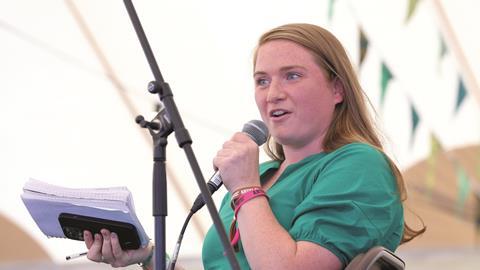

The Christian climate activist known as @LessWasteLaura has garnered more than 100,000 followers on social media. Caring for creation is not a side project for the Church, but a central gospel issue, she says
In 2018, as she entered the final months of her degree in geography and environmental science, Laura Anderson decided to set herself a challenge. She was passionate about climate care but wondered whether she was doing enough to put her beliefs into practice.
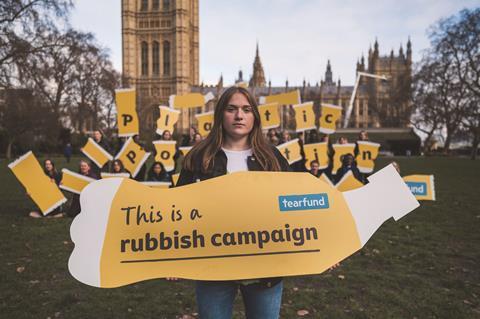
So, she made a new year’s resolution: to take what she was learning in the classroom and make small changes to her own everyday student lifestyle, such as swapping disposable products for reusable ones, or trying to buy more local, seasonal food. She began documenting the journey on social media and soon, people started asking her for advice and to share more of her learning. @LessWasteLaura was born. Eight years later, Anderson is an award-winning climate activist, environmental scientist and ethical influencer. She’s won Scottish ‘Influencer of the Year’, been named in the King’s Foundation’s ‘35 under 35’ list and sits on multiple boards and committees. Alongside completing a PhD, she campaigned heavily for a ban on disposable vapes and regularly appears in the media to speak on environmental issues.
Anderson traces her love of the natural world to her early years growing up in the beautiful Scottish countryside, and her Christian faith to a family who loved going to church. But she hasn’t always found it easy to integrate these two areas of her life. When she went to university, she felt “disconnected from the church bubble” for a while and started to wonder what her faith had to say about climate change or the impact of environmental destruction on communities around the world. “I’d never heard my church speak about that. I’d never heard any church engage in these issues,” she says.
It was a time when her beliefs were “put to the test” and, like many young people, she even stopped going to church for a while. Then her mum sent her an invitation to a Tearfund event that changed everything. “That was the first [time I realised]: These two worlds do collide. They just don’t collide everywhere. I wanted to be part of changing that.”
Her own story is partly why Anderson is so passionate about getting churches involved in climate care – and why she believes that most people can do something – whether buying less stuff, reducing our waste or choosing ethical, sustainable options when we do need to make a purchase.
How does your faith intersect with your work?
Quite often, if you get the privilege of sitting on a panel, people ask why you are passionate about this issue. It’s a great opportunity to say: “My faith is a huge driver.” Obviously, in some spaces, that’s easier than others, but a lot of people do find it interesting.
Life is more than what you’ve got in your cupboards, on your shelves, in your wardrobe
When I say: “I’m a Christian, and when I read the Bible, or when I’m thinking about my faith, I see the call for all of us to be caring for creation and caring for our neighbours,” quite often people are like: “Oh, I don’t see the Church involved in this space.” Or: “That’s unusual, that’s not something I’ve heard before.” Broadly speaking, the environmental movement don’t see Christians as a strong part of the work they’re trying to do. I don’t think the Church has been that vocal.
What would you like the Church to do to rectify that?
As an easy win, we can all make small changes that, at scale, can have a huge impact. A lot of churches have big buildings that use a lot of energy and create a lot of waste. I’m in a conversation with my church around single use plastic communion cups. It shocked me to learn that we throw away up to 10,000 a year, just in my church!
I’ve seen churches do great sermon series or run great courses. I don’t just mean as a tick box exercise: We’ve got an eco-group, and they sort out the recycling. I mean everybody understanding how this all links together. How are we engaging locally with these issues, and what role could our churches play?
Do you think that the Church’s lack of engagement in climate care puts some people off Christianity?
Absolutely. I know it puts people off. When you look at people who use Christian faith as a reason not to act for climate change, what message does that send to people in this movement who are curious about spirituality? The Church has done a lot of damage. Often, people say: “Well, you talk about being a Christian, but I saw this church did this,” and I have to defend that. But I’ve also seen churches and Christians doing incredible things. There are amazing organisations that step faithfully into this space and take on the battles from all sides, and that’s something we need to encourage.
When we read news stories about rubbish dumps in Africa or clothing dumped in the desert in Chile, it can seem very far away. How do we bring those issues closer to home?
Don’t disconnect when you see news stories flash up on your screen. That clothing dump in Chile – all the clothes are from places like Marks & Spencer and Primark. They’re our clothes. It’s stuff that has been shipped from here.
Part of it is about consumption. I would love people to reduce the amount of stuff they’re buying, because a lot of it is made from plastic; it’s not good for us or the planet. For so many people, it’s a habit to go out and buy stuff. But why do we feel the need? Is that where we see worth and value?
When we do need stuff, it’s asking: “Is there a way of buying this product that supports a small business or a cooperative somewhere?”
What would you say to someone who would love to buy organic, local food, shop sustainably, buy from local makers, but just can’t afford it?
It’s important to talk about the economics, but it’s also a bit of a red herring. When we buy something that’s cheap, somebody is paying that cost. Somebody is being exploited in a supply chain. That’s something we have to reflect on.
I do acknowledge that for many people in the UK, budget constraints are an issue, and we need government intervention to help with that, but people also hide behind that. For the majority of people I have this conversation with, that’s not a conflict. They have more than enough resources. If you’re looking to continually buy new stuff that is sustainable, of course it looks expensive. You need to take a step back and see the full picture. Across my whole lifestyle, I am saving money.
The climate movement really needs to hear the Christian message
I started this when I was a student. Yes, there are individual items that cost more, but you are saving money in other places. For example, I’m now at that age when everybody’s getting married. A few years ago, that would have meant buying multiple new outfits at a huge cost. Now, I rent occasion wear. Instead of buying something that’s £60 or £70, you’re only spending about £20 to rent it for a month and send it back.
When I was a student and moved into a new flat, I needed a power drill to do some DIY. A colleague said: “Have you heard of the Dundee tool library?” I didn’t have to buy a power drill to use it for five minutes. I was able to support a community initiative and save money. Things like this challenge the need for us to own everything ourselves. I also got a lesson in how to not electrocute myself, which was priceless!
Have there been areas you’ve found more challenging to change?
Loads! Food is a big one because it’s social, and if you want to change your diet and be a bit more sustainable, cutting out certain products can feel limiting, particularly when navigating family life and social opportunities. Travelling is also a big one. Ironically, I travel internationally to climate conferences. You feel like a hypocrite jumping on a plane to talk about climate change. There are things I want to do better but it’s not about perfection; it’s about trying.
What is the vision behind your campaigning? What big changes would you’d like to see?
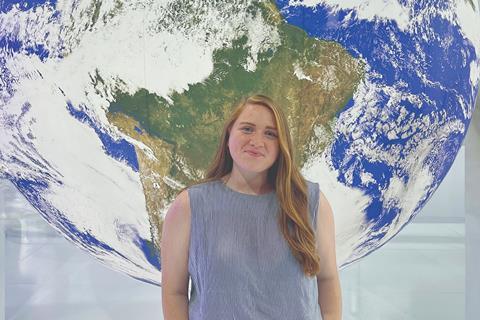
I hate the term ‘net zero’ because it’s become a slogan, but I want countries to create clean energy industries where young people can work.
I’m also passionate about protecting green spaces. Having safe places to enjoy nature, even in the middle of a concrete jungle, is so important for our wellbeing.
When we buy something that’s cheap, somebody is paying that cost
In terms of cultural change, I want people to recognise that life is more than what you’ve got in your cupboards, on your shelves, in your wardrobe. There are ways to express yourself and enjoy things such as fashion without contributing to harmful industries.
In the middle of political polarisation, wars, a cost-of-living crisis, what is it that you’re hopeful for?
The environmental space can be hopeless. It can be driven by anger and negativity. But there are local community groups, volunteers giving up their time to litter-picking teams, nature and biodiversity projects, or organisations such as tool libraries and repair cafes. That gives me hope, because it shows people are willing to help combat not just environmental issues but community cohesion.
The Church could do more. It could open its doors, offer its spaces, ask: “How can we be different? How do we live for God in this world, with all these things happening? How do we contribute well?”
It’s about getting the Church to see this isn’t a secondary issue but part of the gospel. This is living out what God has called us to do. It’s about church leaders, congregations and communities reflecting on their sphere of influence. There are lots of organisations you can support, like Tearfund, doing work around the world to make a difference. If nothing else, we can give, support charities and pray. There’s so much we can do to make a difference.
What would you say to Christians who argue that the Church must focus its time and money on the gospel, not climate care?
This is something I come across all the time, and I sometimes wonder what gospel they’re reading.
When you read the Gospels, it’s not just about me, it’s about all people, all of creation, the reconciliation of all things. It can be frustrating, because I speak about my faith more within the climate movement than anywhere else, and I see exactly how sharing the gospel and being a Christian links to this issue. Unfortunately, that’s not where everyone is, and I’m constantly trying to figure out the best way to have that conversation.
Ultimately, this is not trying to replace the gospel; it’s part of the gospel. I think a lot about how we talk to people about Jesus. The world sees how we live as Christians and how we do the work of the gospel. The climate movement really needs hope, it needs to hear the Christian message. If you’re opting out of that space, it’s a lost missional opportunity.

To hear the full interview, listen to Premier Christian Radio on 20 June at 8pm, or download The Profile podcast premierchristianity.com/theprofile
Laura Anderson will be speaking at Scotland’s leadership summit, The Calling on 2 October. For more information visit thecalling.scot























No comments yet