








Joel Muddamalle’s new book explores spiritual warfare, dark powers and the victory of Christ. He speaks to Sam Hailes about the heroic faith of his missionary grandparents, the dangers of celebrity culture in Christianity and how you can discern the unseen battle
“There are two equal and opposite errors into which our race can fall about the devils,” CS Lewis wrote in his introduction to Screwtape Letters (Collins). “One is to disbelieve in their existence. The other is to believe, and to feel an excessive and unhealthy interest in them.”
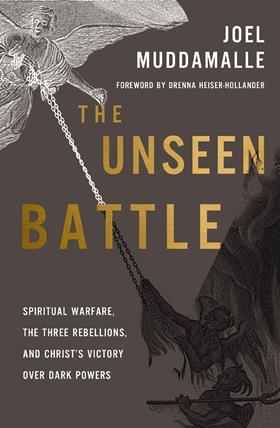
There are echoes of these iconic words in Joel Muddamelle’s new book Unseen Battle: Spiritual Warfare, the Three Rebellions, and Christ’s Victory Over Dark Powers (Thomas Nelson). Drawing from his mentor Dr Michael Heiser’s work on the Divine Council, Joel seeks to provide a biblical overview of spiritual warfare, stressing that it remains real today but yet ultimately defeated because of Jesus.
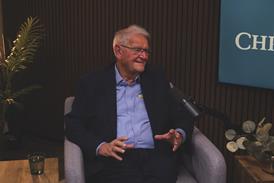
Joel is director of theology and research at Proverbs 31 Ministries and theologian in Residence for Haven Place Ministries. He’s on the preaching team at Transformation Church in South Carolina, USA and co-hosts the Therapy and Theology podcast with Lysa TerKeurst.
In this fascinating discussion, we chat about the influence of his grandparents, the subtle dangers of celebrity culture, discerning spiritual warfare and what our greatest weapon against it is.
Tell me about your early life and how you came to Christian faith.
My ethnic background is Indian. My parents immigrated to the US in the late 1980s, and I was born in the Chicagoland area.
I was familiar with Jesus, yet there is a stark difference between being aware of the story of Jesus and understanding how that personally impacts you.
I owe a lot to my grandparents. They’ve been missionaries in India for over 60 years. When I think of the most heroic, faithful followers of Jesus – for me, it’s them. I lived in India while my mum was finishing her nursing school, and I remember getting up super early and travelling to rural villages with my grandfather as he preached the gospel. That had a lasting impact on me.
In the West, Christians sometimes have a tendency to hold up the megachurch pastor, the author, the podcaster, the influencer. I find it really interesting that your hero is your grandfather.
With spiritual warfare, you have the overt stuff, like demon exorcisms, but the enemy also loves to work in covert ways – and one of the ways he’s laid a trap for us is through social media, particularly through an infatuation with celebrity culture.
There’s a great phrase that wrecked my life some years ago: “a long obedience in the same direction” (the title of a book by Eugene Peterson). Who are these folks that have taken the long road of obedience who I can know? Watching my grandparents fight is one of the best things ever, because it reminds me of their humanity. I watch them have to reconcile and say sorry, to own their own sin. That’s something so incredibly important for us today.
the enemy loves to work in covert ways – he’s laid a trap for us through social media and an infatuation with celebrity culture
When we elevate celebrity figures, who we see one dimensionally, and then inevitably something happens and the bottom falls out, we’re devastated. I don’t think it’s wrong to see people that God has given influence, but it’s imbalanced if they’re the only people whom we hold in high esteem.
Your parents moved from India to the US. What prompted that and what are your childhood memories?
Like most immigrants in the 80s, it was the opportunity for a better life. My experience as an Indian kid on the outskirts of Chicago was very uncomfortable. I had an identity crisis – I didn’t quite know where I fitted in. Ironically, the place where I found belonging was in my extremely multi-ethnic youth group. It was beautiful, because what knit us together, regardless of our backgrounds, was Jesus.
The biblical narrative tells me where I belong and it’s not to do with ethnicity. It doesn’t erase who I am as an Indian kid growing up as an immigrant in the US; it has everything to do with a celebration of who God designed me to be.
The Bible is a miracle – the scriptures are an actual miracle
Do you think there is a positive story going on in the US around ethnic reconciliation that’s happening through churches?
100%, but I think that there are dark powers that absolutely want to hide and limit its visibility.
There is a quiet story of faithful, local churches worldwide, and definitely in the States, that believe in being a community of faith that is representative of all families and ethnicities.
We ought to see the tactics of the enemy for what they are – we shouldn’t ignore the reality of those things – but I don’t think we ought to live in a place of defeat that presumes that there is no good that’s happening.
You’ve studied theology at PhD level. At what point in your life did that love for the Bible capture you?
Actually, it didn’t start with the Bible, but with literature in general. In high school, we read things like The Iliad (Penguin Classics) and To Kill a Mockingbird (Arrow), and were taught how to question the author’s intent. There was a moment when I realised that I can apply the same methodology to the Bible.
I’m a nerd and, simultaneously, the Marvel movies are exploding. All these stories seem to be echoes of an ancient story. I concluded that the best narrative is always the biblical narrative, even if it’s perverted, even if it’s twisted. The thing that makes it appealing, even in an untrue sense, is that it holds vestiges of what is actually true.
I remember being mesmerised by John Piper’s vision of the glory of God when he spoke at Passion Conference one year. Who is John Piper reading? He’s reading a lot of Jonathan Edwards. Who’s Jonathan Edwards reading? He quotes a lot of Paul. Let me pick up Paul. What is Paul writing about? He’s kind of plagiarising Jesus’ Sermon on the Mount. What is Jesus? Oh, wait a minute: Jesus is reliving and retelling the entire story of the Old Testament. I realised that the Bible is a miracle – the scriptures are an actual miracle. And that was what really dovetailed me into it.
What’s the big idea you’re putting forward in your new book on spiritual warfare?
Dr Michael Heiser argues that the Bible presumes a Deuteronomy 32 worldview, which is where God is a king and he holds counsel, has a family, and this comprises both angelic and human beings. In Eden, it was normal for supernatural beings to be present, but it was uncommon for any of them to defy Yahweh. This is the framework that Mike built, pointing to passages like Deuteronomy 32:8-9, which says the sons of God were allotted to the nations of the world as stewards until the time that God would re-inherit them and bring them back into the fold.
I care deeply about seeing the Bible as one cohesive story, the Old Testament being echoes of what is being fulfilled in the New Testament. One of my questions is: Does Paul hold a Deuteronomy 32 worldview? The context of Ephesians 2:18-22 is those who are on the outside – strangers, sojourners, foreigners – now come inside and become citizens. But not just citizens – children, members of the household of God. The Jew-Gentile distinctions originate with the Tower of Babel (Genesis 11). This idea of those who are on the outside coming back in is telegraphed in Genesis 12 – the Abrahamic covenant, right on the heels of Genesis 11.
How do we make sense of Paul’s language of powers, principalities and authorities, these systems and structures that are working to deceive humanity and to create chaos? It’s Deuteronomy 32:8-9, the gods of the nations, which is the foundation of Deuteronomy 4:19: “do not be enticed into bowing down to them and worshipping things the Lord your God has apportioned to all the nations under heaven.”
My work in Unseen Battle aims to advance what Mike worked on from an Old Testament context, to show that it’s not an isolated idea. I’m building on his foundations – the first half expands on the pastoral, biblical, theological framework of some of what Mike taught, with the second half jumping into some New Testament work that needs to be explored further.
On Instagram, you said that you faced a battle in seen and unseen ways, even in the process of launching this book. What happened?
The day before launch, we heard that my dad needed a triple bypass heart surgery in Dallas. Everything on my schedule had to change, just when an epic snowstorm hit the US. We get to Dallas and the surgery is delayed because they found that he needs valve replacement, too, and there are pre-conditions that complicates things further. I’m processing that.
The thing that believers are tasked to do is not demon exorcism – it’s to go and make disciples of all the nations
I’ve got an event in Nashville that I can’t miss for the book launch deal. I have to fly back and forth to meet surgery times. Finally, I get home and roll right into chaos in our house. The kids are sick, my dog has thrown up all over the place. What is happening?
People can be, “Well, that’s just life.” Yeah, sometimes that’s just life, and when we think about spiritual warfare, both seen and unseen, I think that we have to recognise that there can be inflection points. My personal belief system isn’t, Oh, my dad was given this heart condition. No, there were signs of this for a long time. This is the result of a fallen human world. Our bodies are decaying because of sin. But the enemy loves to whisper into your brain resentment – that this isn’t fair, why is this happening to me? Resentment left unattended can be so destructive to your soul.
But amidst everything, there are unchanging truths: Christ’s victory over sin and death, the dark powers have been stripped and disarmed, and the gospel is the best news we could ever hear.
Let’s say I’m preaching at church next week. All sorts of stuff goes wrong in my life. How do I discern whether that’s just normal life, or a spiritual attack?
That’s one of the things I’m trying to do in Unseen Battle – I’m trying to push away hyper-sensationalism that can happen, like a demon being around every corner. I even don’t prefer using the language of Satan, because Satan is a limited, created individual being, who cannot be in all places at all times.
For me, there are real spiritual beings out there and they absolutely hate you. The most deceptive thing they will do is make you think that they love you. They’ll feed into all your vices, all of your fleshly desires. They’ll even give you the things that you think that you want, taking you from dependence on God and into self-dependence. This is all spiritual warfare.
In terms of discernment, spiritual warfare shows up in three areas. One is real, demonic, malevolent, evil, spiritual beings that are working in the world, either through two ways: systems and structures, or personally oppressing and attacking individuals. Then you have the presence of sin and evil in the world, and the third is our own human flesh.
In discerning what’s going on, I think of it as percentages. What percentage of this is my own fleshly sinful desires? What part is the reality of sin and death in the world? What part is dark powers that are at play in systems and structures to really elevate the other parts?
Are evil forces behind things like wars, individual politicians or entire nations?
In the Old Testament, you have a tripartite relationship: gods or a God, land, and people. In Deuteronomy 32:8-9, because of humanity’s rebellion, God comes down with the sons of God, this Divine Council, and He gives delegated authority to the angelic beings to be guardians and protectors of the nations. In other words, he doesn’t want them to be left alone, to go into their own chaos.
The problem is, as Deuteronomy 4:19 lets us know, these spiritual beings go into total rebellion. Instead of guarding and protecting the people, they entice them to worship them to loyalty, not to Yahweh, but to themselves.
People are migratory – they come, they go. What’s not migratory is the land. You have this deity and land relationship, and then you have the people. The goal for the deity is to protect the land and to consume the people who are on that land into their own worship. If you’re one of these national deities, what do you want to do? Expand.
Then you have the people of Israel, who are in living in the Ancient Near Eastern world. Their call is be a holy witness to the nations of the world – not to be part of their family, but to invite the nations to be a part of God’s family. What happens at the victory of Jesus on the cross? The powers have been disarmed. There’s still a connection between the deity and the land, and they still want the people. They are still active today, still living in rebellion. But now they have been disarmed, they can no longer lead the people astray and blind them from the truth the gospel.
This is why, with spiritual warfare, the thing that believers are tasked to do is not demon exorcism, it’s not to seek out dark powers, it’s not to look for demons – it’s to go and make disciples of all the nations (Matthew 22). Why? Because people live on land, and the more that the people come to know Jesus, the land will come underneath the kingship of God. This is the ministry of reconciliation (2 Corinthians 5). While the dark powers are still active today, they have been severely wounded, and they can no longer blind the nations to the truth of Jesus. That is why our task, our holy vocation – to proclaim the goodness the gospel – is still our primary weapon.
How do you want the book to impact people?
I hope it leads to two approaches: posture and perspective.
Firstly, that they would learn to approach spiritual warfare with a posture of humble confidence – humble first, because your confidence is not rooted in and of yourself, and your confidence is rooted in the victory of Jesus on the cross. We don’t have to live in fear. No, we come with humble confidence, because we come as representatives of the King.
Secondly, we have a unique perspective that is untrue for the entirety of the Old Testament and up until Jesus: an empty grave and the cross of Christ. It’s a perspective of victory.
I could summarise it in one word: dependence – a deeper dependence on the Holy Spirit to lead them, a deeper dependence on the Son of God who is victorious, a deeper dependence on God the Father who loves them.
The Unseen Battle by Joel Muddamelle is out now
Listen to the full interview at 8pm on Saturday 8 August or download The Profile podcast
























No comments yet