








Read through the lens of a three-act story—rules, repentance and relationship—the Old Testament reveals the same message as the New: a God who calls His people back, forgives their sin, and restores them to Himself, says Dr David Instone-Brewer
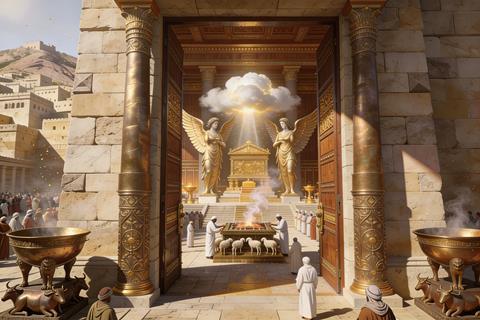
While the Old Testament is often viewed as legalistic and condemnatory, it actually reveals a message surprisingly close to that of the New Testament. The key to this lies at a pivotal point in Israel’s history: the dedication of Solomon’s temple.
The Jews divide the Old Testament into three parts: Torah (the first five books of Moses); Prophets (the ‘former’ history books and the ‘latter’ prophets from Isaiah to Malachi); and the Writings (the rest, especially Psalms and Proverbs).
Christians tend to think of these three sections as: Law, Armies and Worship. But the Old Testament is better understood as three acts in God’s plan for redemption: Rules, Repentance and Relationship. This was certainly Jesus’ own understanding of the Old Testament message. He began His ministry by respecting the Old Testament rules: “anyone who sets aside one of the least of these commands…will be called least” (Matthew 5:19). Then He preached a message that Matthew encapsulated as “repent” (4:17). And His favourite Old Testament laws were love for God and for one another – the foundation of all relationships.
The word Rules certainly summarises the first five ‘books of Moses’. In Genesis, we see God expressing very tough love: excluding people from paradise, sending a flood, confusing their language and sending the Israelites to be slaves in Egypt. At Sinai, God revealed Himself in lightning, fire and glowing smoke (Exodus 19:16-18; 24:17; Deuteronomy 4:11-12). He gave the Israelites a set of excellent laws, and yet they fell into idolatry even while those laws were being inscribed (Exodus 32). Soon they were quaking with lack of faith when they saw the size of the enemy in the Promised Land (Numbers 13-14). Like listless and rebellious teenagers, they needed rules.
Repentance took a long time to come. Even after Joshua’s victories, the Israelites’ attitude was summed up as “everyone did as they saw fit” (Judges 17:6; 21:25). They asked for a king and got a dud – King Saul was tall enough to lead, but foolish and faithless (1 Samuel 10:23; 1 Samuel 13:13-14; 1 Chronicles 10:13-14). It was King David who changed the trajectory. He was a flawed man with a great vision: to unite the people round a temple for God. He prepared the plans, building materials, and even worship teams (1 Chronicles 22-26,28-29), and his son Solomon built it.
Turning back to God
The dedication of the temple is the central point of the Old Testament and the pinnacle of Israel as a nation. They went through a rough childhood in Genesis, then a rebellious adolescence and a self-centred struggle in the wilderness and Promised Land. Now, in early adulthood, the Israelite nation turned back to God.
Solomon’s dedication prayer (1 Kings 8:22-53) marked a theological revelation because it introduced a new concept: turning to God in ‘repentance’. Previously, the word shuv simply meant “to go back”. It occasionally had spiritual overtones meaning “turning back to God” (eg Deuteronomy 4:30; 30:2,10; 1 Samuel 7:3) but, in Solomon’s prayer, it is used with a completely new meaning. We now find that one can ‘repent’ of sins, and that God promises to forgive them (vv35,47-50). This new concept continued to grow in the Old Testament, especially in Jeremiah and other prophets.
The physical presence of God’s glory was seen rarely in the Old Testament. It was present in the wilderness when Israel received the law, then again at the dedication of Solomon’s temple (1 Kings 8:10-11) when God promised to forgive the sins of those who repent. After this, His glory was seen twice more: at Isaiah’s calling when he is told his ministry will fail to make Israel repent (Isaiah 6:10), and at the end of Ezekiel’s ministry when the glory of God returns to the temple (Ezekiel 43:2). It is then that we get the best description of what God means by repentance: “that they may be ashamed of their sins” (v10).
Healed and restored

The third part of the Old Testament, the Psalms and other Writings, reveal the restored Relationship with God that follows repentance. Among them is the wonderful love song of Solomon which has been interpreted as a depiction of God’s relationship with His Bride. These texts are written largely by and for Israelites who had learned to humble themselves before God. They said sorry for their sin and meant it, so their broken relationship with God was healed. Now they were able to enjoy His presence and worship His wisdom.
Both Testaments reveal the same gospel: though we are sinful, God forgives us when we repent and our relationship with Him is restored
Solomon’s prayer is a pinnacle because it looked back at the law presented in the first act and looked forward to the healing of the Israelites’ relationship with God. It begins by remembering God’s faithfulness to “keep your covenant of love” (1 Kings 8:23) and ends (as the parallel in 2 Chronicles 7:3 tells us) with all Israel joining to chant: “He is good; his love endures for ever.”
No wonder, when Jesus came, His message was summarised as: “Repent, for the kingdom of heaven has come near” (Matthew 4:17). He didn’t need to remind people about the rules they’d broken – the Pharisees made everyone, except themselves, very aware of their guilt. So he told them to repent and said that if they did, they would have a relationship with God in the kingdom.
Both Testaments reveal the same gospel: though we are sinful, God forgives us when we repent and our relationship with Him is restored. In the New Testament we see how this works: Jesus died for us so that our repentance could be turned into redemption.
The Old Testament is not a story of a ‘different’ God. It is the long, patient unveiling of the steadfast love of God for His people. From beginning to end, the Bible reveals the unchanging heart of a loving Father, which is exemplified at Easter.

























No comments yet