


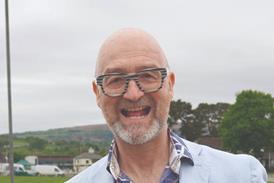


Rich Johnson is championing a vision of renewal rooted not in celebrity, but in what he calls “gloriously ordinary” local churches. Speaking to Sam Hailes, the vicar of All Saints Worcester reflects on leadership, cultural change and why New Wine has stopped advertising their summer gatherings on the basis of ‘big name’ preachers
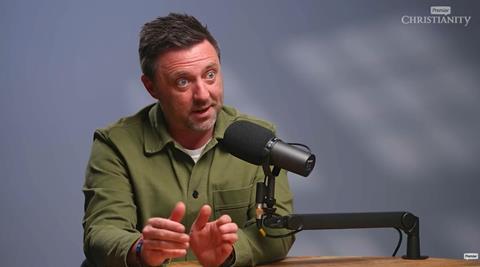
Introduced to locals by Worcester News as ‘Rev Rich’ in 2009, he was celebrated for having a passion for coffee, red wine and changing the world. Sixteen years on, Rich Johnson’s conviction that Church must be ordinary, accessible and embedded in the community has only grown.
The vicar of All Saints, Worcester has overseen impressive growth in recent years - from 120 to 600 people - including new congregations planted. Not that you’d necessarily know it. Johnson shows zero interest in bragging about success. It’s just as well, given he’s just written a book which espouses humble leadership.
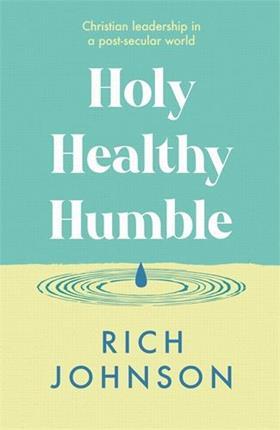
It’s a brave move to write a book on Christian leadership in the current climate - there are too many examples of toxicity. Rich does seem to be providing a much needed positive example - both in Holy Healthy and Humble (IVP) and, more importantly, his everyday interactions. This is a leader who is down-to-earth, transparent and friendly. In other words, he’s exactly what you might hope a CofE vicar would be.
I genuinely think I’ve got the best job in the Church of England!
In recent years, Rich has been charged with steering one of the UK’s largest church networks through a season of change. New Wine has an impressive history and heritage - it was at the forefront of the UK’s charismatic renewal in the 1980s and 90s. But what does the future look like? I sat down with him to find out.
How did you come to faith?
Faith came alive to me in my third year at Cambridge, where I was reading Geography. I loved sport – rowing in particular – but I got injured at the end of my second year. It was a big deal for me and had become a large part of my identity.
The college chaplain – Paul was his name, but we all called him ‘Rev’ – asked me out for a curry. He was brilliant and we all loved him, he was super sporty – always on the touchline, in the college bar or on the towpath. I remember him telling me that rowing didn’t define me, and he asked me who I was. Then he told me about Jesus. It was the perfect way to engage me and I’m super thankful for his intervention in my life. He’s still a very good friend of ours today.
I did a kind of ‘secret’ Alpha course after dark – sneaking away from being rowing captain to learn about God. It really helped, but to be honest it was more of an intellectual conversion. I didn’t grasp the personal relationship of Christianity until I met Kath in my third year.
Kath and I had a lot in common. We were both Geography students, both loved sport, and both recovering from injury. She had recently encountered God during the Christian Union mission week, but she was so alive because she had encountered the Holy Spirit. This made her beyond amazing (which she was in every other way!), so, I went off to her church. Then we moved to Cheltenham for my postgraduate studies and I got stuck into a big New Wine congregation where I did another Alpha course and became filled with the Holy Spirit. I was soon baptised, and I guess the rest, as they say, is history.
How soon after this did you sense a call into ministry?
I had the opportunity to pursue a funded PhD, which was both rare and exciting, but I had always assumed I would go on to become a teacher. A couple of months after coming to faith, I began to sense that I might one day be called to Christian leadership. I told no one because, if I’m honest, it wasn’t something I wanted. But over time, through prophetic words and reflection, I realised my desire to teach came from a deeper calling to invest in people. I later discovered that teaching is also a spiritual gift, so it didn’t have to be one or the other – I could do both.
After my PhD, I was asked to join the staff team at our New Wine church in Cheltenham. They were amazing at raising up younger leaders – and my journey went from there.
Do you have any stories in your own life where God has felt particularly real?
I vividly remember my second year at Cambridge; I was in my flat struggling with to come to terms with my injury. I started to weep uncontrollably – which I hadn’t done for a long time. If I’m honest, it was an identity crisis. Suddenly out of nowhere, I felt the heat of someone’s hand on my shoulder. I looked round, and there was no one there – but it felt so real. Then I heard a voice say: “It’s OK. I am with you.” Years later, I realised it was God.
Another story was from New Zealand, when Kath and I were helping plant a church. We sensed God was uprooting us – and five Sundays in a row different people had the same word: “Pack your bags, I’m sending you to the Faithful City.”
This didn’t mean anything to me – but out of nowhere, a girl from my university days got in touch. She was working in Worcester and said they were looking for a new vicar. It was a long shot – and a long distance, but we put down some fleeces.
At the top of the job proposal, it said: ‘Worcester is known as the Faithful City’ because it stayed faithful to the King back in the civil war. I said to Kath, “Honey, I think we might be going to Worcester!” Later we found out that the parish had been praying for someone to come “from the ends of the earth”. We knew God was calling us.
All Saints Worcester has grown from 120 to more than 600 over the past 16 years. How have you fostered that growth?
We’ve always been very intentional about having young people and families at the centre of who we are, which has been imperative for growth. We nurture young life and new generations, but we have a holistic Kingdom vision for every walk of life. I want people to get up on a Monday morning and go to work as part of the Kingdom – Church isn’t just for Sundays.
Over time, we’ve built deep relationships, trust and a strong local reputation. We’re now woven into the life of the city through the food bank, schools and other community initiatives. I know Worcester would miss us if we left, and to me that’s a sign of the Holy Spirit working through us in a meaningful way.
What do you love and struggle with as a vicar?
What I love is creating a community that can pursue Jesus together. Christianity is never meant to be a solo project: at its best is welcoming people to come as they are, but not stay as they are; seeing the Kingdom of God expand and achieve extraordinary things when we come together and loving people back to fullness of life.
The hardest thing is seeing so much pain, mess and brokenness walk through the doors every Sunday. Suffering isn’t God punishing us, it’s the consequences of a broken world. Sitting with people in their brokenness is very hard. But we have seen lots of people recently be baptised in the midst of their mess.
Another challenge is living with the frustration of practical constraints – we’ve got an ancient, listed building, but we can only do as much as our God-given resources allow. There is so much more we could do!
God has been trying to wake us for a while, but now he needs to shake us
What is New Wine?
It’s a family of churches, and network of leaders in the UK which began in the late 80s by a group of various denominations who wanted to see the Church renewed by the power of the Holy Spirit.
John Wimber sparked a summer gathering in 1989 – which has continued every year since (except during lockdown when people gathered online). It’s a family festival with great teaching, great kids work and amazing worship and it reminds us that we are part of a bigger tribe.
Our leadership conference brings together around 2,000 people leading what I like to call “gloriously ordinary churches” across the country. I mean that as a real compliment – the Kingdom is not about being big or flashy, but about faithfully serving where God has placed us.
Even though New Wine started as a ‘radical’ movement, we’ve always wanted to remain about renewal. Jesus wanted to pour his Spirit in new wineskins back in the 1980s, and he still wants to do that today. We’ve navigated many challenges including covid and financial pressures, but New Wine is still all about the renewal of the local church.
As Mark Sayers puts it, “revival is what you get when renewal goes viral”. We don’t want to chase after revival; we want to chase after a renewed life. And we need personal, spiritual, social and cultural renewal now more than ever. That’s when the world will come alive.
We don’t want to chase after revival; we want to chase after a renewed life
There’s been a lot of claims about renewal happening in the UK Church lately. What are you seeing?
Our churches are definitely growing in lots of contexts – not just city centres. Recently five teenagers walked off the streets into a Baptist church in rural north England having started reading their Bibles. It seems to be happening where the people of God are praying, and God is sending people where He knows they will be welcomed in.
I was privileged to lead a funeral recently of a vicar who ushered in renewal during the 70s. He told me shortly before he passed that “these are not ordinary days”. It’s made me want to believe it and pray for it. It’s humbling to see that growth is happing despite of what we’ve been doing. People are having supernatural encounters with God and reading Bibles. It’s so exciting.
Behind the scenes there has been competition in the past – but now festival leaders are coming together to pray, share food and have friendship
What did you glean from your recent 2026 New Wine leaders’ conference?
We are in an important cultural moment within history, and I believe God is dealing with the internal life of our leaders. This year, we asked what it means to suffer with and for Jesus and have a passionate pursuit of Him. We talked a lot about posture. We went from kneeling to standing – kneeling in consecration, standing for Him.
I also feel that God is bringing us together in a powerful spirit of unity. Behind the scenes there has been competition in the past – but now festival leaders are coming together to pray, share food and have friendship. We go to each other’s events, bless and cheer each other on. It’s really beautiful.
You don’t seem to be getting well known American speakers coming to the summer New Wine festivals anymore. Are you deliberately moving away from that approach?
Kath and I want New Wine to model humility – and celebrate being gloriously ordinary. It’s a very deliberate policy of ours not to sell tickets based on a big name, you can listen to them for free online. We want people to come to encounter Jesus, not to hear a speaker.
It’s not that content isn’t important – but we want people to find connection with the Lord, your Church and yourself. It’s a pilgrimage and a chance to find space and time to breathe.
The title of your new book on Christian leadership is Holy, Healthy and Humble. Why did you choose those three words?
My real conviction is that God wants to move powerfully through the Church, but we need sorting out. He’s been trying to wake us for a while, but now he needs to shake us. There have been numerous high-profile awakenings, and I believe God needs a Church that is not that does. It’s about who we are, not what we do.
Firstly, leaders need to take seriously a radical call to holiness. For too long there has been a pressure to grow our churches with a big focus on activities, events and programmes. We don’t need more books or events – these have become a distraction. We need to look at who we are before God first, and that is a witness and source of power.
Secondly, we need to deal with our stuff holistically: emotional health, physical health and relational health. They are all so important – science has shown we are integrated beings – and the Church needs to acknowledge that more. We should all be in permanent therapy in my opinion! Even though I didn’t come from a traumatic, unhappy past, I’ve lived in a broken world my whole life and received spiritual abuse over the years. Counselling is such a blessing – and I believe it makes you a better leader. I’ve had tons of it and it’s great. If we don’t let God transform our pain, we will transmit it.
As the saying goes, “true humility is not thinking less of yourself but thinking of yourself less”. Humility is a posture, and my book ultimately points to Jesus. That is the posture we need to choose each day: making others bigger rather than ourselves. Social media can be full of tension, and many leaders I respect are not on it at all. I want to use it, where I do, to champion others rather than myself.
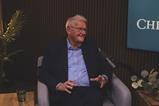
Watch the full interview on YouTube, or listen on The Profile podcast
Holy, Healthy Humble by Rich Johnson (IVP) is out now
This article was produced with editorial support from Jo Lamb





















No comments yet