












More than 1,000 people from five churches have gathered on Bournemouth beach to celebrate 132 mass baptisms over two weekends. Rev Tim Matthews says there’s no special secret to the growth they’re seeing - just ten years of church leaders learning to love one another as Jesus commanded them to
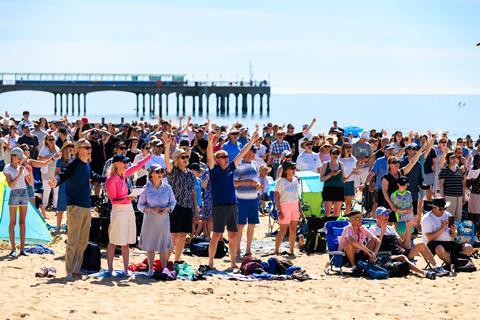
It was another stunning summer morning on Bournemouth beach. By only 9:30am, a big crowd had already formed - about 1,200 people laughing, singing and dancing in the sunshine. Arms were raised; kids sitting on shoulders. We were all here for the first of this year’s BCP (Bournemouth, Christchurch and Poole) Church Collective beach baptisms.
Last summer, five churches joined together and baptised 92 people. This year, the baptisms have been spread across two Sundays to cope with the crowds.
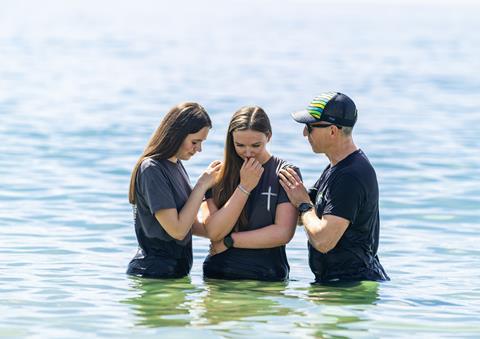
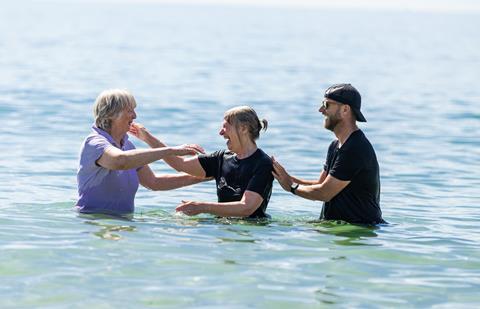
The first weekend, a loud “amen” reverberated after the prayers. A local pastor gave a short, compelling gospel message. Then, 43 people of all ages and walks of life waded into the sea, beaming from ear to ear, some crying with joy. The following weekend followed a similar pattern. This time, 89 people were baptised. It was glorious, and I loved every second, but I was also wondering: What’s going on here?
Slowly, we began to accept Jesus’ challenge that we could hardly expect our evangelism to be effective if we didn’t really love each other
Mass baptisms are nothing new. They occurred in Kent and Northumbria during early Anglo-Saxon times, though usually at secluded river spots. There were a few held in the sea during the Welsh revivals last century, and I’m told there’s a years-old annual event at Cromer, Norfolk. But for an island nation, there are fewer than one might expect.
Perhaps we’re still inhibited by Edwardian and Victorian reserve. But we’re getting over it. Bournemouth beach is a very public place, yet there’s no sense of embarrassment for those getting baptised. Quite the opposite; everyone present is revelling in the unashamed, public joy of the spectacle.
A quarter of an hour before the service begins, an enormous black Rolls-Royce pulls up. Out hops a family staying nearby. They don’t come from a church background, but they’ve been reading the Bible and faith has been growing. Two pastors talk with them, discerning a genuine decision to repent and follow Christ. Filled with joy in the Holy Spirit, and recalling the New Testament story of the Ethiopian eunuch, the pastors baptise them on the spot.
In prayer and unity
Amid the celebrations, another local pastor leans in and yells in my ear: “This is what happens when the Church gets together and prays.” Intercession groups across town have been praying for renewal and revival for years. Once a term, there’s a town-wide prayer gathering where many churches join together. I know the same is true in many other towns.
Perhaps more unusual is the growing sense of genuine togetherness among our churches. Church unity can mean many things: institutional structures, sacramental participation, missional partnerships or doctrinal agreement. All good. But relational unity seems the rarest, hardest to accomplish, and perhaps most valuable.
To nurture true love, we realised we needed time, honesty, and the discipline to hold our activist instincts at bay
About ten years ago, a small group of local pastors began meeting for a monthly breakfast. As we listened to one another, it became clear we shared a common problem. We all wanted to see revival and were maxed-out trying to lead our individual churches. But something wasn’t working. There was a disconnect between our effort and our fruitfulness.
Slowly, we began to accept Jesus’ challenge that we could hardly expect our evangelism to be effective if we didn’t really love each other (John 13:35). I cringe even as I write this because it’s so obvious: since we didn’t really know and trust one another deeply, we could hardly claim to know much about philia - the loving, trusting friendship commended elsewhere in scripture - let alone agape, the divine, self-giving love that Jesus was referring to in these verses.
Loving one another
To nurture true love, we realised we needed time, honesty, and the discipline to hold our activist instincts at bay. We deliberately resisted branding, promoting or organising anything. We committed not to push or promote our own events or ministries. As cliché as it sounds, our only goal really was love.
Ten years later, we’ve developed philia, and we’re slowly learning agape. It has not been a straight path and we’ve made plenty of errors on the way. We’re growing in numbers and thinking deeply about how to partner in mission without snuffing out the trust we’ve built. This is our second year organising beach baptisms, and last autumn we ran a successful three-venue evangelistic tour with Bear Grylls. These events have renewed the confidence of the wider Church here in Bournemouth.
We now gather daily via WhatsApp, weekly for online prayer, and monthly for breakfast. But what’s unusual isn’t the pattern of our meetings; it’s the quality of our friendship. Banter is plentiful, vulnerability is real and the focus is on spiritual health rather than size and success. We challenge each other, disagree amicably and preach in one another’s pulpits.
An hour after the baptism service ends, I wade out of the sea having baptised several young people. A large, loud guy in a sweaty vest grabs me. Initially misreading it as aggression, I realise he is gripping my hand in thanks. He is just out of prison, where he met Jesus while praying in his cell out of sheer desperation. He isn’t asking for help; he just wants to encourage me that God is at work. It crosses my mind that he might just be a visiting angel.




















No comments yet