










Veteran record producer and friend to countless worship leaders, Les Moir shares the stories behind the songs which have shaped the faith of millions
1. Oh happy day
Writers: (Philip Doddridge), Edwin Hawkins
Dates: (1755), 1969
“Oh happy day / When Jesus washed / My sins away”
The 1960s were exciting times, but not just for the reasons that made the mainstream news! The Holy Spirit was being poured out. There was an explosion of creativity, a new generation of leaders were stepping up and, to complete the decade, a gospel praise song made it all the way to the top of the charts.
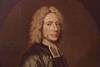
The Edwin Hawkins Singers went to number one in 1969 with Edwin’s reworking of a hymn written by English clergyman Philip Doddridge in 1755 called ‘O happy day that fixed my choice’.
‘Oh happy day’ went on to sell 7 million copies worldwide. In the UK the song resonated with a Caribbean population that had been growing over the previous 20 years, beginning with the arrival of the SS Empire Windrush. It signalled a moment of historic transformation: the beginning of the mass migration that would have such far-reaching effects on Britain over the next half-century.
2. There is a redeemer
Writer: Melody Green
Date: 1982
“There is a Redeemer / Jesus God’s own Son / Precious Lamb of God Messiah / Holy One”
Melody had written ‘There is a redeemer’ five years before it was recorded on her husband Keith’s Songs for the Shepherd album. She came across her lyrics written on a piece of paper and amazingly could remember the melody – even though she had not recorded it. When Melody sang it to Keith, he loved it and wanted to include it on the album. On the way to the recording session Keith wrote the third verse, taking the song from thanking God on earth to seeing Him face to face in heaven.
Only a few months later, Keith’s added verse seemed sadly prophetic when a plane crash claimed his life. Along with him were two of their children – three-year-old Josiah and Bethany, aged just two. Melody was at home with their one-year-old and six weeks pregnant with their fourth child.
‘There is a redeemer’ was a pioneering contemporary hymn in that it established the structure of three verses and a chorus: verse one about who God is, verse two about what God has done and verse three about future hope. The song contains the pattern of revelation and response, inhaling the truth of the verse and exhaling our response of thanksgiving in the chorus: “Thank you O my Father for giving us Your Son”. The song is a congregational favourite at Easter.
3. The Servant King
Writer: Graham Kendrick
Date: 1983
“From heav’n You came helpless babe / Enter’d our world Your glory veil’d / Not to be served but to serve / And give Your life that we might live”
Graham Kendrick began his career seeing himself quite firmly as a performing artist. He initially resisted the suggestion of becoming a worship leader, but soon realised that God was doing something new in the area of worship and many of the skills that he had learned in performing had prepared him to serve in what was happening in the nation.
Graham was invited to lead worship at the first Spring Harvest, which took place in Prestatyn, North Wales in 1979. It drew 2,700 people, but by 1990 had grown to around 80,000, making it probably the largest residential event of its kind in the world, drawing people from every church background imaginable.
Each year Spring Harvest has a theme, and in 1984 the theme was ‘The Servant King’. Over the coming years, I had the joy of working on 16 albums with Graham and discovered that he works well when given a theme. He studies it and gets inspired – writing pages and pages of lyrics.
Graham wrote ‘The Servant King’ from the piano in his little music room at home. In a sense it’s a modern hymn, with four verses and a chorus, bringing revelation in the verse and a response in the chorus. Graham brings beautiful poetic imagery to his worship songwriting. ‘The servant king’ includes the line “hands that flung stars into space to cruel nails surrendered”. He also displays his love of alliteration in the song and uses it effectively in lines such as “the scars that speak of sacrifice”.
Matt Redman says that “every song I’ve seen of Graham’s seems to be crammed full of poetic, divine, biblical truth”. He’s a master craftsman equipped to restore to God’s house heartfelt worship in Spirit and in truth.
4. Lord you have my heart
Writer: Martin Smith
Date: 1992
“Lord You have my heart / And I will search for Yours / Jesus take my life and lead me on”
When the summer of 1989 arrived, Martin Smith was working as a sound engineer for a recording studio in Eastbourne called ICC, where I also often worked. Part of Martin’s job was to attend Bible conferences around the country, record the music and compile live albums of the worship times.
One of the worship gatherings was New Wine, which was held in Shepton Mallet, Somerset. Martin told me: “As I sat with headphones on, in the middle of the hall, surrounded by 5,000 people singing to God like I’d never heard before, I realised that somehow these people had more than I did – their faces were radiant with love for their God. Something was happening to me and I knew I needed what they had but didn’t know how to get it!
“On the last night someone asked me if they could pray for me, so there I stood with my headphones on, arms open, saying once again: ‘Take my life and use it.’ Nothing really happened, but I knew something had changed, and I went to bed that night with a strange sense of peace and excitement rolled into one, not knowing that the next day I would write my first-ever song of worship.”
Borrowing a guitar, Martin put his prayer to music: ‘Lord, You have my heart and I will search for Yours / Jesus, take my life and lead me on.’ Martin sometimes led worship at his local church, Frenchgate Christian Fellowship, in Eastbourne. He first taught the song there and was amazed to see the response. Martin soon played me a demo of the song, which I knew was the start of something very special. From this initial spark, Martin would go on to spearhead the modern worship movement from Britain.
5. Shout to the Lord
Writer: Darlene Zschech
Date: 1993
“My Jesus my Saviour / Lord there is none like You”
Darlene was raised by arts-minded Australian parents, who encouraged children in music and dance. She started singing at three years old and appeared regularly on a children’s TV programme. Later, she toured as a background vocalist and gained considerable studio session experience, as well as putting together choirs for the Australian tours of Michael Bolton and Barry Manilow.
Darlene was part of the worship team at Hillsong Church, Sydney. In 1993, she wrote ‘Shout to the Lord’ in 20 minutes and was initially embarrassed to play it to anyone. In fact, when she first introduced the song to her fellow worship team members, she made them turn their backs on her while she played it at the piano. An under-confident Darlene played the song, section by section, expecting requests for changes, but received an overwhelmingly positive response.
‘Shout to the Lord’ became the title track of Hillsong’s first album with Integrity Music. At that time, to have a woman leading the live album recording was a potentially controversial decision.
It went on to become the trailblazing song for worship from Australia and opened the door for many more songs to come from Hillsong and other movements.
6. Days of Elijah
Writer: Robin Mark
Date: 1996
“Behold He comes / Riding on the clouds / Shining like the sun / At the trumpet call”
In 1994 in Belfast, Robin Mark was watching a TV programme reviewing the year. He was despairing over the state of the world and in prayer began asking God if He really was in control and questioning the days he was living in. Robin felt in his spirit that God replied to his prayer saying that He was very much in control and that the days Robin was living in were specific times when the world needed Christians to be filled with integrity and stand up for Him, just as Elijah did in his day with the prophets of Baal. Robin began to write this in a song, with the verses containing the themes of declaration, righteousness, unity and worship.
These words were in Robin’s heart when he went to church one Sunday in early 1995. In the first of two services for the morning, the pastor spoke from Ezekiel about the valley of the dry bones. Robin took a prompt from this and in the 30 minutes between the services he wrote down more lyrics in the kitchen of the church building. ‘Days of Elijah’ was created by the end of the second service!
My Irish-born colleague and friend Adrian Thompson had a visit from Stephen Doherty, who at the time was running a Christian music store in Coleraine, Northern Ireland. Stephen played Adrian some of Robin’s songs, including ‘Days of Elijah’. Something immediately struck Adrian; these songs were powerful and carried a substance that was rooted in Old Testament theology. Apart from references to psalms, this wasn’t high on the subject list in worship at the time. Adrian can clearly remember driving home some days later and being caught up in worship with ‘Days of Elijah’. He felt there was an anointing on that song in particular and that God wanted it to spread to the global Church. He had no idea of the significance that the song would go on to have, including being sung at the 9/11 memorial service in New York in the days following that terrible tragedy.
This was a song of hope for the Church and the world in times of great trial, also pointing to the true hope of Christ’s return.
Writers: Stuart Townend, Keith Getty
Date: 2001
“In Christ alone my hope is found”
At the end of the 1990s the modern hymn movement was about to burst into life. The ancient Celtic hymn ‘Be Thou my vision’ had seen a resurgence, and ‘Before the throne of God above’, with a new melody by Vikki Cook and a contemporary Celtic arrangement by Stuart Townend, became a standout track on the final Stoneleigh Bible Week album.
Keith Getty and Stuart Townend had been introduced to each other at an early Worship Together conference in Eastbourne. Keith was the conductor and arranger for the New Irish Orchestra. He handed Stuart a CD containing four melodies, one of which Stuart was inspired to set his lyrics for the modern hymn ‘In Christ alone’ to. It was the start of a partnership that has gone on to create many classic modern hymns, combining Keith’s talent for melody with Stuart’s powerful and poetic lyrics.
‘In Christ alone’ has since been translated into 34 languages and has become an anthem of hope throughout the world. In 2013 the song was sung at the enthronement of Justin Welby as Archbishop of Canterbury, and in 2019 it was named by the BBC Songs of Praise survey as the third best-loved hymn of all time.
8. 10,000 reasons
Writers: Jonas Myrin, Matt Redman
Date: 2011
“Bless the Lord O my soul / O my soul / Worship His holy name / Sing like never before / O my soul / I’ll worship Your holy name”
I remember visiting Matt Redman’s house and seeing a bookcase of old hymn books. I knew that he was studying hard, trying to understand the heritage of hymns and working out how to join that to the knowledge of God.
‘10,000 reasons’ was inspired by the hymn writer Charles Wesley and by Psalm 103:1 which says “Bless the Lord, O my soul” (NKJV).
If you’ve ever listened to Matt give a seminar about songwriting, you’ll probably have heard him teach about the verses of modern hymns: verse one looks at where we have been, verse two explores where we are, while verse three describes where we are headed: yesterday, today and forever. This works well and there’s no need for a bridge. This is the model used for ‘10,000 reasons’.
I don’t think there’s another song from that era that has resonated with the global Church like this one. From funerals to prison executions, ‘10,000 reasons’ has helped to draw out praise in the midst of some of the most painful and fearful situations imaginable.
In 2013 the song won two Grammy awards. Fellow Brit Ed Sheeran went over and congratulated Matt. It was also amazing to see Matt become the first-ever Brit to have a number one album with 10,000 Reasons on the US Christian Soundscan and iTunes Christian album chart. It is such a significant song.

9. Way Maker
Writer: Osinachi Kalu Okoro Egbu (known as Sinach)
Date: 2016
“Way maker / Miracle worker / Promise keeper / Light in the darkness / My God / That is who You are”
‘Way maker’ is the trailblazing worship anthem from Nigeria, where it is now nationally the second most listened to song of the past decade across all music genres. Sinach also became the first African songwriter to rise to the top of the US Billboard Christian Songwriters chart, where she stayed for twelve weeks.
The song has been translated into more than 50 languages and was sung in many nations to bring hope and faith during the Covid pandemic. The original YouTube video has now had more than 200 million views.
My personal involvement with this song came after visiting Lagos in 2014 at the invitation of my friend and station director of Premier Gospel, Muyiwa Olarewaju, to speak at a seminar for 200 young creatives. During my visit, I met Wale Adenuga, who would regularly send me compilations of African worship songs. This led me to ‘Way maker’ by Sinach, which I was able to include on two compilation albums for Integrity Music during 2018-19. At this time, exposure and momentum for the song was growing. Leeland was recording a live album in Dallas and was featuring worship songs from other nations, including ‘Way maker’. Michael W Smith recorded it as a single, which went to number one in the Christian radio charts in the USA.
It would soon become the number one CCLI song globally. Sinach was greatly encouraged and also believes that when you write a song, you want the whole world to sing it, because the song is not really about you. ‘Way maker’ announced that the worship of Africa had arrived!
10. The blessing
Writers: Chris Brown, Cody Carnes, Kari Jobe Carnes, Steven Furtick
Date: 2020
“May his favour / Be upon you / And a thousand generations”
In early March 2020, Kari Jobe Carnes and her husband, Cody, were at Elevation Church in Charlotte, North Carolina, for the weekend. It was arranged that they would write with worship leader Chris Brown and pastor Steven Furtick.
These gifted songwriters had spent the afternoon working on a completely different song. After eight hours Steven began to hum a new melody along with some of the words from the priestly blessing God instructs Aaron to use in Numbers 6:22-26 (familiar to many in traditional settings as the Benediction).
After many hours the team were tired and weren’t even sure if the new tune was worth pursuing. It was only after they led the song at the Elevation Sunday service that they began to realise its power. After seeing the response from the congregation, they knew they had to release it to a wider audience quickly, so within ten days of writing, leading and mixing it, the YouTube video was released.
A week or so later the pandemic began to put countries around the world into lockdown. ‘The blessing’ was a song for this time and gave Christ’s followers something tangible to hold on to in a season that felt so hard and unknown.
The YouTube video was soon seen in the UK and, after encouragement from 24/7 Prayer network leader Pete Greig and church leader Nicky Gumbel, Tim Hughes – spurred on by his wife, Rachel – recorded a UK version. Tim called me and we began to (remotely) gather the UK worship community to record and sing ‘The blessing’ over the UK.
Recording engineer Trevor Michael played a key part in gathering 130 files from different worship leaders. Because of lockdown they all filmed on their phones and sent in their videos. Josh Lee did a masterful job of piecing all the footage together. The video inspired other nations to gather their worship leaders and record their own versions. The video became a viral sensation and Tim Hughes was even given a Points of Light award by then British prime minister Boris Johnson, who wrote: “Your sensational singing masterpiece ‘The UK Blessing’ is truly uplifting and has touched millions around the world with its message of hope and its beauty.”
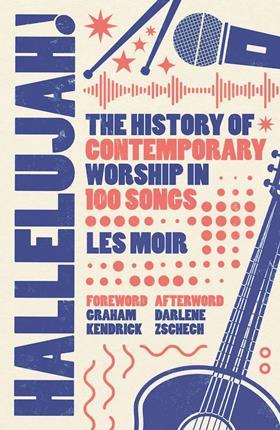
This article has been adapted from Les Moir’s new book Hallelujah: The history of contemporary worship in 100 songs (SPCK)






















No comments yet