




Wicked: For Good has sparked controversy among Christians over its spell-casting and sexual content. Despite the concerns, Rebecca Chapman chose to watch it with her son - and found positive as well as more concerning themes along the way
Trying to book seats for my son and I to see Wicked: For Good last weekend felt like trying to get my hands on a pair of Oasis tickets - it certainly took me considerably longer than a clock-tick!
The film has been a box office record breaker, taking $226m globally in its first few days and eclipsing the opening weekend for the first Wicked launch. But it’s also a film that has been highly controversial in Christian circles. Influencer Sara Burnett made headlines when she walked out because of spell casting and sexual scenes. So why did I take my nine-year-old to see it? And do I regret it?
As Christians, we know that we don’t need to make other people seem more wicked to make ourselves appear better
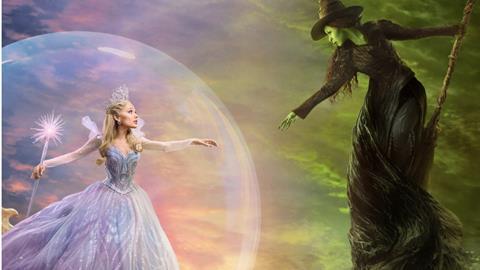
Having seen Wicked, we knew we wanted to see how the story ends on screen. The original musical had two acts, which have been turned into two well-produced films, complete with stunning sets, costumes and musical numbers. Prequels to The Wonderful Wizard of Oz, the classic book that in 1939 became an iconic Judy Garland movie, these more recent films are the story of two ‘witches’ in the magical land of Oz. Elphaba, who has green skin and magical power and Glinda, who is popular and ambitious, begin by disliking each other but go on to form a deep friendship.
The seond act
Wicked the musical famously has second act problems – it races to the end, forced to retrofit the story to match the original Oz tale. The second film has some of the same problems, and is far darker than the first - both visually and spiritually. It has more spells and portrays a magic that is not fully controllable. Even when magic is used for ‘good’, it has unintended consequences. I appreciated the recognition of this - magic is not a care-free add on.
Ours is a household that loves CS Lewis’ Narnia series and JRR Tolkien’s The Lord of the Rings, so magic per se isn’t a blocker for us. However, Wicked: For Good was a bit darker than I expected for a PG film. There’s brief but intense violence and a blood thirsty mob. And the ‘sex scene’ that led Burnett to walk out was mild, but arguably unnecessary.
Despite this, there remains a lot to love about Wicked: For Good. At the heart of the story is friendship – between ‘good’ witch Glinda and ‘wicked’ witch Elphaba, played by Ariana Grande and Cynthia Erivo. In a modern world that feels increasingly polarised, this film provides the chance to discuss how not to get carried away by an us vs them narrative. For Dana Fox, the film’s co-writer, Wicked continues to be relevant because “certain people are still othered in our society, or made to be the bad guys so other people can gain power”.
If the first Wicked film tried to show us that people are inherently good; the second one shows us that we must each strive to overcome our sinful nature, to be more than the world believes us to be. As Christians, we know that we don’t need to make other people seem more wicked to make ourselves appear better. We need Jesus to help us be better.
Truth and lies
What worried me most about Wicked: For Good wasn’t the implied sex scene or the magic spells, but how it presents ideas about truth. The Wizard sings: “The truth is not a fact or reason. The truth is just what everyone agrees on”. Near the end of the film, Elphaba explains to Glinda that “They need someone to be wicked so you can be good”. What is true or real seems to no longer be the issue.
Influencer Sara Burnett made headlines when she walked out because of spell casting and sexual scenes
So, I’m conflicted about Wicked. This is a story about a redemption of sorts – about a girl who makes a sacrifice to make other’s lives better. It is about the need to include, not exclude, those who are different from us, and to think about why people who are ‘evil’ might act the way they do. But it plays fast and loose with the idea of truth and the risks of propaganda.
What did my nine-year-old take away from it? Unbothered by any spells, barely noticing the implied sex scene, he had a little cry as ‘For good’ was sung, missing his best friend from a previous school. And that focus on friendship is what I’ll remember, too. “Because I knew you, I have been changed for good” says the song that gives the film its name.
Proverbs 27:17 tells us that “a friend sharpens a friend” (NLT). I won’t ever be able to sing like Ariana Grande or Cynthia Erivo – but I do want to work to be a better friend. For good.

















No comments yet