







David Olusoga’s three-part BBC series on the British empire has provoked widespread debate. UK Christians should honestly confront their past without trying to balance the scales, suggests Dr Daniel Johnson
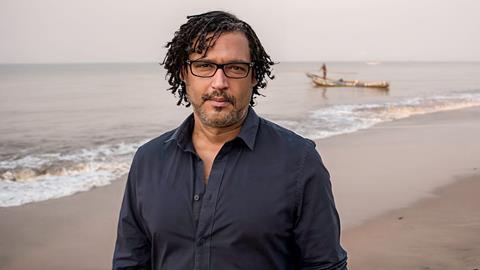
First of all, and I’m sorry to say this, but David Olusoga was rubbish on Celebrity Traitors. It felt like he could walk into a hen house, see a fox with feathers in its mouth, and not be sure where the chickens were. Arise, Sir Alan Carr.
But this piece isn’t about Celebrity Traitors. Professor David Olusoga is an academic historian, of mixed Nigerian and British heritage. He is an expert in the history of the British empire, and has recently made a three-part series for the BBC which examines some of the forgotten – but never fully hidden – chapters in the story of our nation’s past.
The episodes examine the rise of British involvement in the transatlantic Slave Trade. We’re shown how the East India Company, under the leadership of Robert Clive, slowly took hold of the country in 1765 and how the public outcry at the Great Benghal Famine did nothing to diminish Clive’s legacy, as his 3-metre-tall statue in Whitehall shows. In Tasmania, we’re shown how the British committed genocide against the indigenous Aboriginal peoples. Olosuga concentrates on the fate of a young woman, Truganini. Even in death, against her dying wishes, her body was exploited by Darwinian race scientists who dug up Aboriginal bodies to prove their theories of racial hierarchy.
The reviews are – predictably – mixed. The New Statesman wrote that the series is “scrupulously even-handed, and searching without bearing an agenda”. Alternatively, The Spectator wrote that, “this series is not a balanced history of the empire, but rather a collection of some of its most controversial and violent episodes”, going on to call it “slanted and biased”.
Olusoga knows his subject material. He interviews experts who help him study archival materials. He visits the locations. While some will criticise Olusoga for being selective – he doesn’t visit the sites of hospitals or missionary schools or ask if the British empire made positive contributions to these countries – one cannot criticise his subject knowledge.
But are the critics right? Should Olusoga be more “balanced”? To answer that, let’s consider the example of a Christian hero, John Newton.
A wretch like me
John Newton was the 18th century evangelical who most famously penned the words to ‘Amazing Grace’. Prior to his conversion, Newton had been a slave trader. He was, by his own account, utterly debauched in every way. Newton wrote the inscription for his memorial to be put up after his death. It reads, “John Newton. Clerk. Once an infidel and libertine. A servant of slaves in Africa. Was by the rich mercy of our Lord and Saviour Jesus Christ preserved, restored, pardoned and appointed to preach the faith he had long laboured to destroy.”
Newton gives Christians a helpful framework for engaging with these complex legacies. Firstly, he is honest about his worst failings. He hides nothing. He tells the truth, without qualification. He also takes no credit for his change – any transformation has come through Christ.
When Christian Britain has been the weapon of oppressions, Christians must respond with repentance
He also, crucially, doesn’t try to balance the scales. While Newton was widely held in high esteem as a minister who provided wise pastoral counsel to many, as well as being the writer of some of the Church’s most beloved hymns, he doesn’t point to these. He very honestly confronts his worst failings, and leaves the rest to the mercy of Christ.
Those who want to defend the British Empire quickly point to her role in ending the Slave Trade. But even these stories are told selectively. The British weren’t the first abolitionists. The first to oppose the evils of slavery were the enslaved peoples who were subjected to it. But their only available method of protest was self-harm – they weren’t valued as people, so they were forced to impact the profit margins of the traders and owners by starving themselves, jumping overboard as they crossed the Atlantic, or undertaking rebellions and revolts, despite the inevitable certainty of death. Even when evangelicals like Wilberforce and More joined the Abolition Movement, they were responding to the work of emancipated slaves such as Olaudah Equiano.
Destructive theology
From a Christian perspective, there is an argument to be made that Olusoga doesn’t paint a bleak enough picture. Christians actively perpetuated theologies that enabled racialised exploitation to take place. The ‘Curse of Ham’ theology, popular during the early modern period, taught that the curse Noah placed upon his son Ham in Genesis 9:25 was fulfilled in the enslavement of Africans (purportedly descended from Ham).
The “wash the Ethiop white” theology, taken from Jeremiah 13:23, argued that those with black skin were “doubly damned”, needing to have the darkness of sin washed from their hearts, and the darkness of their skin washed away to make them – in all senses – white.
Christians initially refused to even tell enslaved peoples the gospel – how can a slave also be my brother? – but when they did, it was to make enslaved peoples more obedient to their masters.
Christians must reckon with these ways the gospel was so horrendously exploited and manipulated. They must engage with the theological complexity that – through the evils of the empire – many have come to meaningful and autonomous faith in Christ, even when that gospel was spread with motives that are wholly antithetical to the message they preached.
Repentance
How then do Christians reckon with the evils of the past? The gospel itself gives us the tools to do so. In Luke 4:18-19, Jesus announces what his gospel was and what it would do: “The Spirit of the Lord is on me, because he has anointed me to proclaim good news to the poor. He has sent me to proclaim freedom for the prisoners and recovery of sight for the blind, to set the oppressed free, to proclaim the year of the Lord’s favour.”
The good news – the gospel – that Jesus came to preach is one of freedom for the prisoner and the oppressed. When Britain – Christian Britain – has not only failed to do this, but has been the weapon of oppressions, Christians must respond with repentance.
While we aren’t responsible for the sins of our forebearers, we can acknowledge them without qualification. The Bible is also clear that – without repentance – sins can cascade down through generations. But repentance is not about feeling bad over the past, so much as changing towards a new path. Olusoga shows some of Britain’s worst failings, but only Christ can show our nation a better path forwards.
As debates rage around our identity as a “Christian nation”, the gospel calls us to be a nation of justice and righteousness. Every person is made in the image of God. The sins of racism, oppression, and colonialism break the first and second commandments – to despise another person for the colour of their skin or for their country of birth is to despise the image of God. And the story of the Good Samaritan shows us who our neighbour is – anyone, like us, made and known and loved by God.
Ironically, those who try to defend Britian’s past empty the gospel of its power – they use the fig leaves of good works to cover the worst sins of empire. Instead – like John Newton modelled for us – the gospel frees us to tell the truth, and to cast ourselves on the mercy of Christ.





















No comments yet