


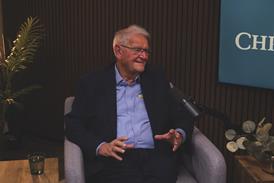









When Rachel Turner was a child, her friendship with an older man named George was her favourite part of church life. Decades later, his example became a blueprint for her faith – and a powerful reminder of why intergenerational friendships matter
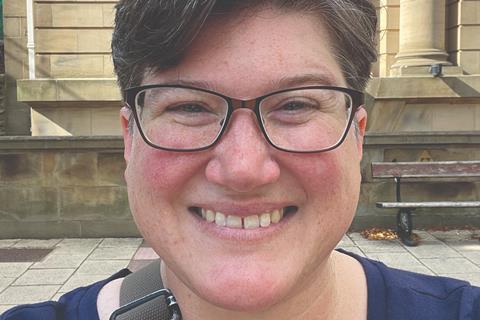
Rachel Turner grew up in a small suburban church in southern California. With fewer than 100 people in the congregation, everyone knew one another, she says. Her overriding memories of her childhood church are not of Sunday school or children’s activities, but of the people she knew and loved – and one man in particular.
Ten-year-old Rachel only knew George by his first name. He was a kind, older man who always made time to talk to her after services, she says. “All the conversations happened sitting in the front row of church or while we were moving chairs or doing something.”
Looking back, Rachel says she has no idea how old George actually was. “He was definitely retired – I’m guessing he was in his 70s or 80s, but I don’t know!” Nonetheless, despite the age gap, the pair would chat regularly. George would share stories from the war or talk about his sons. Rachel would tell him about her week at school and what was going on with her friends. What struck her the most was that George treated her as an equal and always remembered what she said, asking her for updates the following week.
But their conversations were not just surface level. Rachel recalls that George would also talk about his emotions, sharing his pride in something his son had done, or appropriately letting young Rachel in on concerns he had for another of his children. “It let me see what the emotional life of an older person was like,” she says. “And it also made me aware of what kind of daughter I was, because I didn’t realise that what I did could impact my parents’ emotions. It was really cool.”
A cancer conversation
Then, one Sunday, George shared something more serious. He had visited the doctor that week and had been told he had cancer. Rachel recalls “feeling a bit scared” but, as he had done with every other part of his life, George shared simply and honestly with his young friend. He told Rachel that while he was “a bit worried about it”, he also knew that God was with him. Each week, he’d give Rachel an update, sharing a Bible verse that had brought him comfort, or a worship song that had helped him remember that God was in control.
When George became too sick to come to church, he would ask the pastor to update the congregation – and often sent a special message for Rachel, too.
Before he died, George asked the pastor to share the story of what God was doing in his final moments. Rachel remembers it clearly: “The pastor said his family was singing hymns. Before George lost consciousness for the last time, he smiled a little bit and said: ‘Jesus!’
“George wanted us to know what it looked like to die with Jesus. He didn’t want it to be a mystery or a worry to people,” Rachel says.
Years later, the insights that George shared would steady Rachel as she faced her own cancer diagnosis. In her mid-30s and with a young son, Rachel acknowledges that being told she had stage three uterine cancer was a shock. But the model George had provided would prove to be invaluable. “One of my first thoughts was: I know how to do this, because George taught me. And so, I wasn’t overwhelmingly afraid. I had a blueprint for how to do the most important thing, which is to navigate it with God. Even if it ended in death, [I knew] it would be surrounded by the word of God, with Jesus’ name on my lips.”
Her childhood memories also gave her a roadmap for how to navigate the experience with her own seven-year-old. “It really helped me figure out how to do this with my kid. I was like: OK, what do I want him to take away from this, if this is it?
“We didn’t know what the journey was going to look like. I remember thinking: The gift I can give my kid is to show him where God is in this and show him how I’m navigating it with God. It positioned me to be like: OK, how do I tell my kid? How do I update him? How do I help him see this not as a scary thing, but as an opportunity to see who God is in it? Because that’s the most important thing to me.”
Across the generations
Fortunately, Rachel’s treatment was successful. Ten years later, she remains deeply grateful to the older man who became her friend and taught her how to walk with God even through the most difficult of times.
“It wasn’t like we were super close. We didn’t talk outside of Sundays,” Rachel says of her relationship with George. “But he was part of the community who made me who I am – and laid the foundations for how I see God.”
One of my first thoughts was: I know how to do this, because George taught me
There are very few places where different generations can spend time together in appropriate ways, she reflects. “I think that’s what’s beautiful about church community – the opportunity to have healthy, beneficial, intergenerational relationships.”
In the modern world, where relationship breakdown is high, and many people live far away from their biological family, this is more important than ever. Yet concerns around how to relate to children and teenagers can cause fear among some older Christians. Rather than worrying about being “cool or relevant”, what younger people most value are role models who are “unapologetically themselves”, says Rachel. “It’s so appealing to a younger generation who are still figuring out who they are.
“The gift you have to give as an older person is that you’ve got wisdom and stories to tell,” she adds. “And they don’t have to be good stories. It can be: ‘I remember when I was suffering from depression and this is who God was in it, for me.’ That will equip young people. When they face a challenge, they will be able to say: ‘Joan taught me how to do this.’”

























No comments yet