










As the tallest church in the world, Sagrada Família, finally reaches its full height after 144 years of construction, Noël Tredinnick reflects on the sacred beauty of Christian art
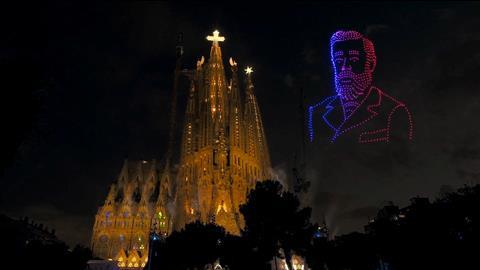
Over these sweltering summer days, you may prefer the comparative coolness of Cambridge’s King’s College Chapel to the bustling heat of Barcelona’s Basilica de la Sagrada Familia for a visit – which is it: the Chapel of Kings, or the Cathedral of the Holy Family? Both buildings are total icons of artistic incredibility, grandeur and sheer beauty – in sunlight or in shadow.
What King’s Chapel is to Cambridge, it could be said, the newly completed Sagrada Familia is to Barcelona.
Both buildings soar upwards to heaven, and indeed represent the glory of the firmament above. Both are of sheer grandeur and architectural splendour, rarely surpassed. Both have glass that throws pools of colourful light on their stone floors, light the moves its image across a drenched floor as the sun moves around. Both have a hushed opulence and holiness.
Icons or idols?
One is in the British Medieval 15th century perpendicular design at its most developed and rarefied; the other originated in the 19th century and was designed in 1882 by Antoni Gaudí, who only lived to see a quarter of the building ever constructed in his lifetime. But now, after 144 years in waiting, Sagrada Familia has been declared open and completed.
How exciting is that? The Basilica not only boasts the tallest church spires in the world, but it is more than amazing in its design, conception and beauty. Never has there been better stone gargoyles to ward off evil spirits!
But should we be impressed with these monuments both to man’s achievement, even if dedicated to God’s holiness? How much inspiration and wow-factor should we cultivate and expend on these wonders of human creation and beauty?
Can we be drawn closer to the presence of a living God by extolling, even visiting and admiring, these colossuses? Should we be moved and have our breath taken away as we gaze in wonder at these artistic constructions and edifices? When does admiration stop and wonder and worship take over?
Do these fabulous buildings teach us something of God’s infinite creative power, and do we sense His presence and beauty inside these holy spaces more? Are these massive structures monuments to the living presence, or mausoleums to the dearly departed? Are they special, holy ground, indeed?
Of course, you don’t need to say it, we must not venerate, worship, or fall down before works of art, lest to us they become idols to us. Most of us read the Old Testament narrative and observe the First Commandment. An icon is different from an idol.
Art that moves wonder to worship
An icon is something, in both art and religion, that shines its light, that stands out to impress and reassure you, as well as draw you in. An icon is a beacon that points the way ahead, that stands tall and is admired, yes something to be both admired and venerated. Frequently icons are specifically blessed by priests, and stand tall and stand out, for us to take inspiration from them. Worship is different from admiration.
So, we can admire art, and certainly be blessed by its nourishment, brilliance and creativity – yes by its existence and availability to all mankind: whether the subject in question is a beautiful painting, a piece of music, or a building (like a famous chapel or cathedral).
Yes of course we gain massive influence and inspiration from delving into the Bible. That’s our primary source. Where do we gain this other, this further, inspiration – from what men and women, made in the image of God, have created for us to richly enjoy?
A painting or a statue might be an icon for us – something we’ve brought back from a pilgrimage maybe (I treasure a small, budding, olive branch, picked up in the Garden of Gethsemane). Something artistic that might be an inspiration to us can also be a precious visual aid – or, yes, it might just be simply very beautiful in its own right – I’m thinking of a painting, like Rubens’ Adoration of the Magi, which sits attractively behind the communion table in King’s College Chapel.
Many churches, similarly, have a painted reredos, or special carvings of St John or Mary, and you’ll know where you’ve seen wondrous stained glass windows with their own messages.
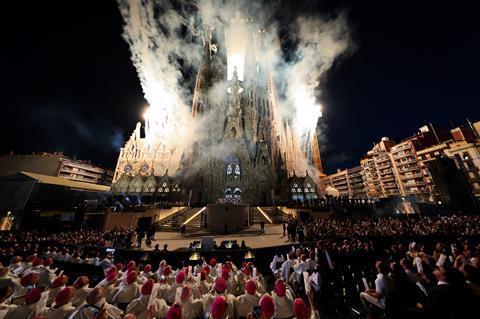
Whatever the medium, art often speaks loudly into our hearts searching for an expression, a reminder, of God’s Holy presence.
Indeed, the Chapel of King’s College in Cambridge seems to incorporate into the one space, so many moving artistic concepts and pieces: stained glass filling soaring heights, beautifully carved stone and fan vaulting above, Grinling Gibbons’ wooden furniture and of course the echoing and heavenly melodies of its world-famous Choir: all combining together, into a glorious whole of breath-taking reminders of God’s very presence, His glory and His gospel call out to our world.
Speaking as an active musician, I can certainly testify, over and over, as to the Holy Spirit coming down and inspiring both a composition and its performance as an act of worship. The Holy Spirit transforms, inspires, and indwells pieces of art. Over the centuries, from the monks of the 12th century engraving and ornamenting their biblical manuscripts, through to the builders of our great church buildings and cathedrals, from sacred paintings that festoon our art galleries, to statues that honour humans of faith, to great musical tomes, like the works of Handel or (if you prefer) Kendrick or Redman, all these are artistic endeavours, and works of devotion and worship in their creation.
Whatever the medium, art often speaks loudly into our hearts searching for an expression, a reminder, of God’s Holy presence. The creator God, uses His Emmanuel call, to show us His reality and presence through these wonders that the Spirit of the loving God has enabled human beings to create.
And so we come to the latest piece of artistic grandeur that’s hitting the headlines, that now finally is displaying the grandeur and the glory of God in breathtaking splendour. What King’s College Chapel is to England, now, finally completed, is Gaudi’s Sagrada Familia, dominating the Barcelona skyline. A house of prayer that fuses with spiritual power and presence, that’s breathtaking in the extreme.
Can we rejoice? Can we sense the living presence of God and His Christ in this edifice of wonder and beauty: in endless carved stone and stained glass? As it rises to the heights, let’s pray that, as in Cambridge in earlier centuries, this now-complete house of God may stir and stimulate deep and lasting faith in a Saviour, far beyond the confines and reaches even of Barcelona.
























No comments yet