
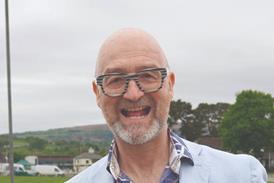



Seven prime ministers in ten years is a problem, notes the leader of Christians in Politics. Andy Flannagan argues we need to ask how 24-hour news media and social media soundbites are making an already tough job even harder
“To lose one parent, Mr Worthing, may be regarded as a misfortune; to lose both looks like carelessness”. So wrote Oscar Wilde in his 1895 play, The Importance of Being Earnest.
131 years later, the same allegation might be rightly directed at the population of the UK: To lose one Prime Minister may be regarded as a misfortune; to lose six in ten years looks like carelessness.
In a consumerist age, rather than embracing our responsibility (and, at times, culpability) as citizens, we seem much more likely to run towards the novelty of change. If we become unhappy with our mobile phone provider, we switch. The same with our broadband, our energy supplier and our bank.
This mindset has even made its way into our churches. If we fall out with the leadership, or they do not provide what we think we deserve, we shop around for another spiritual home rather than do the hard yards of conflict resolution.
And in recent years, it seems the UK is increasingly tempted to regularly switch its governmental services provider, too.
The cost of constant news
If it turns out there is an importance to being earnest, then here is my earnest plea to you.
Running a country has always been incredibly difficult. Towards the end of the last century, with the advent of 24-hour news media, it became even more difficult. Not only do governments have to govern but also give a near-constant account of how, why and what they are doing.
Anyone who leads a church, school or business knows how challenging that can be. The Wild West of the online space means that speed and story now trump truth and integrity. The myriad botfarms, unattributable accounts, lack of journalistic sources and fact-checking render a fair representation almost impossible. And that’s before we even factor in the nefarious intention of foreign actors.
Whether or not you agreed with Tony Blair’s politics or policies (I for one was on the streets disagreeing with him vehemently about the Iraq War), the era of Blair and Brown now looks amazingly stable compared to the chaos of the last decade. That period demonstrates, for better or worse, why modern politics requires a story-teller setting the narrative, while someone else makes sure the train runs on time.
For Blair, that man was Gordon Brown. Successive leaders have since realised that it is almost impossible to simultaneously govern and also establish the narrative in the public square of what you are attempting to do through your legislation.
When too many people fall for novelty, we will be sorely disappointed when it turns out that new service providers are just as flawed as the old ones
The online world rewards proactive storytelling, whether it is true or not. The people with the new campaign or current outrage will always beat the calm, measured manager, whether they are competent or not.
The algorithms of social media know that we are addicted to novelty. But what makes the online world of news and social media so addictive? I am sure there are myriad reasons, but here is my own personal confession.
For myself - and I suspect many others - the underlying question I’m subconsciously asking is: “What’s happening?” There is a visceral aspect to checking in with the latest news, my social media feed, a cricket score, family WhatsApp group or how my article is performing. My thumb is so practised in the art of accessing this information that my conscious mind no longer has to lead it.
In our best moments, we can claim that our desperate need to know what’s happening is because we love our friends, and we long to know what is happening in their lives (mediated by Facebook) so we can understand them better and pray for them more intelligently. But you were probably as far through that last sentence as I was before crying: “Yeah right!”
We can claim that we need to check social media for work, but the 30 seconds we might justifiably require can leak into 30 minutes without much of a challenge. We could say we need to be abreast of world events to be an engaged citizen, but do we need to know about them all right now?
The people with the new campaign or current outrage will always beat the calm, measured manager, whether they are competent or not
Are we planning to launch our own personal disaster response team to an earthquake zone? Will the world be worse off because it lacks another moment of my outrage at whatever Donald Trump has said today? Will you be writing to your MP or standing for parliament in response to what you’ve just read?
Probably not – we just want to know. And apart from us being more informed in a superficial click-through kind of way, what has really been achieved? It reminds me of the classic line used to excuse a good gossip about someone or something in church - we lean over to whisper: “This is just for your prayers…”
A better connection
I think my need to feel constantly connected to everything that is happening everywhere speaks of a vacuum in my own connectedness to the One who is longing to connect with me. I get my status and satisfaction from consuming information before anyone else, and it compensates (badly) for the status and satisfaction I am designed to glean from God alone.
If the majority of my incoming information stream is: “What’s happening”, then my thought processes - and resulting actions - will flow from that information. The breadth of information available at our fingertips can lead to paralysis rather than meaningful action, so it’s not surprising we have compassion fatigue from all the causes we feel we should be involved in. But if my primary question is: “God, what are you doing?”, and “What am I called to as a result?” then my actions develop in an altogether different direction.
Obviously, things aren’t as black and white as I describe here. I don’t think most of us are designed for a monkish existence, avoiding and ignoring current affairs. But I do think the pendulum needs to swing back in that direction. Perhaps then I might “do only what I see the Father doing” (see John 5:19) in the way that Jesus did.
The author Alain de Botton said ‘news’ now occupies the place in society that ‘religion’ once held. That’s a fairly startling thought. So, how do we balance our reading of the world with the reading of scripture? How do we make sure that, as John Stott called it, our “double reading” is well weighted towards ancient wisdom rather than the immediate dopamine hit of novelty?
If we spent more time considering these questions, perhaps we would appreciate how hard it is to govern. Perhaps we would be more inclined to lend a hand rather than criticise, practising our Genesis 1 mandate to image His rule and reign in the breadth of creation.
When too many people fall for novelty, we will be sorely disappointed when it turns out that new service providers are just as flawed and overworked as the old ones. In other words, they are just like us.
Perhaps instead, we could start to see ourselves as participants and defendants in the trials of life, rather than the jury, hovering over it all, offering our passionately held opinions.
The truth is, we forget that those passionately held opinions may well have been gleaned from a video that was not intended to inform but inflame us; not to educate us, but harvest our attention and interest. We take the seat of the consumer but, often, it is us who are being consumed.
Let’s stop losing parents. As a nation, we may end up as orphans.


















5 Readers' comments