









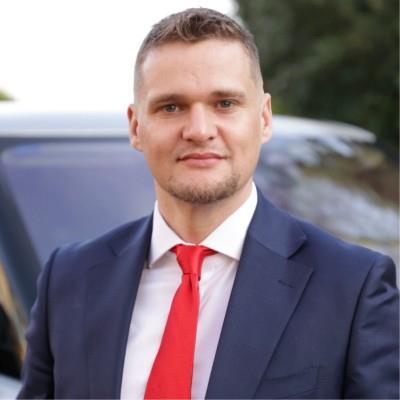
When Samuel Leeds announced plans to buy vacant church buildings and rent them to congregations for free, many Christians applauded the vision. But his growing prominence has also led to increased scrutiny, with some accusing him of profiting from vulnerable people and running a fraudulent “get rich quick” scheme – allegations he strongly contests. Is he a generous visionary or a dangerous guru? AJ Gomez meets him
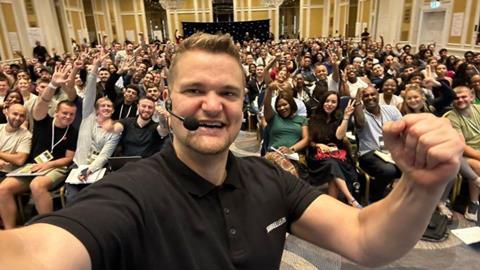
3,500 British churches have closed in the last decade, and the National Churches Trust anticipates that a further 2,000 could cease being used as places of worship within five years. Amid this climate of closures property developer Samuel Leeds has attracted significant attention.
That’s because Leeds recently unveiled a daring plan to help save British churches. Speaking to his 400,000+ Instagram followers while standing outside a derelict church he said, “I want to buy churches like this that are shutting down across England.”
“If it was built as a church, I believe it needs to stay as a church… I love making profit, but when something’s been built as a church to honour God, that’s a no-no. There’s a revival coming in England, and we need to keep our churches open, ready.”
Leeds tells me he was repeatedly offered opportunities to buy former church buildings and redevelop them into flats. But he’s choosing a different path, vowing instead to buy a church building in order to take it off the market - then immediately rent it out to a local church…free of charge.
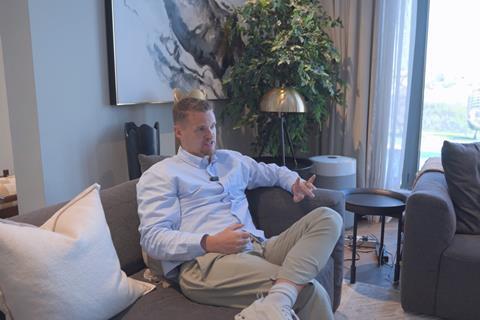
Property purchases like these, he tells me, can take time, dragged out by legal checks and paperwork. So, in what he describes as the symptomatic impatience of his severe ADHD, Leeds says he has already begun testing the model elsewhere. He is already converting one of his existing houses into what can become a church and he’s started a soup kitchen in partnership with Bethel Lighthouse, in his hometown of Walsall. Rather than renting the property to tenants, he says, it is being used to house homeless people.
But Leeds’ prominence has also brought scrutiny. The 35-year-old has faced allegations of scamming linked to running mentorship courses which can cost thousands of pounds. He’s been investigated by BBC Radio 4, who ran a series promising to “expose the new generation of get-rich-quick gurus and the social media smoke and mirrors some use to shield themselves from criticism.”
He’s also faced accusations of tax avoidance from prominent Labour MP Stella Creasy, who believes Leeds is a “charlatan” should be held to account.
In this interview, we discuss the criticisms he has faced, what it means to be a Christian in business and the risks and temptations that come with it.
When you look at the current state of church closures in England, what do you think society is losing?
When Jesus came, his example to us was helping people who were poor, people who were in need.
As Christians, we believe in feeding the hungry, clothing the naked and setting the oppressed free.
Churches are not just buildings, they’re hubs of hope for people that have no hope.
Where do you go if you are absolutely at ends meet emotionally, spiritually or are on the verge of homelessness? Where do you go? You go to your local church, and people will share the burden.
So having churches closed down, especially in villages and in towns, I think that we are losing a lot by letting it happen. And it won’t be long before we’ll wake up one day and just be like, “Wow, what the heck happened?”
You want to buy church buildings which are up for sale, but then give them back to the community rent free, so they can continue to operate. What would success look like for this kind of a project?
Normally in a property development deal, success is making money. But in this type of a project, success is impact. Success looks like transformed lives.
How many lives were changed? How many people were fed? How many people came to Christ? How many people have had their lives transformed? I think that’s what this is about.
Tell me about your own faith. How did you come to believe in Jesus?
When I was 14, I got stabbed, and even though I’m from a Christian home, that was the point where I’m like: Nah. I’ve been a good person. I’ve always been nice, gone to church. Now I get stabbed in the head for nothing.
I was quite angry at God. I was angry at the people that did it. I wanted to get revenge.
It took me a long time physically to recover from it. I had headaches for years. It set me back at school. It was hard. Suddenly you don’t feel safe just leaving the house or even going on the bus.
When I was 17, I was in my bedroom on my own, and I felt the Holy Spirit say, “Come to me. You need to follow Jesus.”
I was like, “I can’t, because I got all this anger.” I told God, “I can’t be a Christian, but if you want to change my heart, I give you permission to change my heart.”
And in a moment, I was suddenly overwhelmingly forgiving of the people who had stabbed me. I picked up a Bible, and for the first time ever, even though I’d read the Bible before, it just came alive.
I went to church that Sunday, and the pastor did an altar call, and I walked down, got baptised, professed publicly in front of all my friends, school friends and everybody that I was a Christian.
Everything that I’ve built is off the foundation of my faith. It’s extremely important to me. I’ve now got a wife and four kids, and we are not a perfect family – I’m certainly not a perfect person by any stretch of the imagination, but I love Jesus very much, and I’m saved by His grace.
How did you get into property investment?
When I first left school at 16, I worked for my dad. My dad was a children’s entertainer, so he used to do discos, magic shows, balloon animals.
When I gave my life to Jesus, I said to my dad, “Hey, I want to go to church on Sundays.” And he wouldn’t let me because he said, “No, Sundays is the busiest day. We got these parties and stuff, so you can’t.”
That was when I realised I need to find an exit strategy, because if I continue working for my dad, I’m not gonna be able to go to church.
I actually Googled the situation, and I came across a book by a guy called Robert Kiyosaki called Rich Dad Poor Dad. Robert Kiyosaki talked about property investing and business, and that inspired me to go to a networking event.
I got my first house in 2009, which I rented out room by room, and that then gave me the financial freedom to travel. I then started travelling with my church.
I went and worked in a drug rehab centre in Spain. I spent a month in Zambia aged 18 years old. But what I realised was I couldn’t do anything to help because I had no money.
That’s what got me into business in the first place. I got into business to be a blessing to others. I’ve got a duty to myself and to God — to Isaiah 58, “loose the chains of injustice, feed the hungry, clothe the naked, set the oppressed free” — that’s always been on my heart.
When I was in Uganda, I ended up breaking my leg and going to hospital, and the state of the hospital was not great. So I built a whole new 64-bed hospital ward, which is the biggest development I’ve ever done. I built two schools which have got 2,500 pupils in Uganda.
My wife is from Zimbabwe, and we’ve done a lot of stuff in different countries, but I actually feel like on my heart now is the UK. There’s people suffering in the UK, and that’s my home country. So that’s what I’m wanting to spend more effort on.
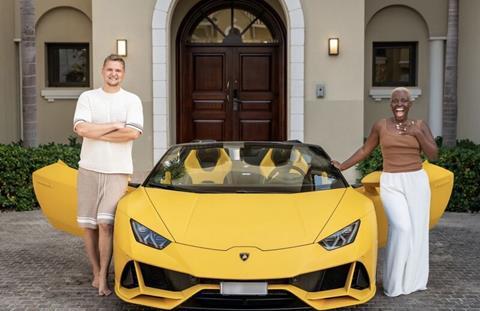
Your social media depicts you on a private jet, infront of a lavish car or house etc. What is the intention behind that?
I guess it’s really the heart behind it. I came from nothing. I came from Walsall, the rough part of Birmingham, I failed in school and didn’t have anything, and now I’ve got a successful business.
I’m able to provide a really good life for my family and for my children. That’s something I think should be celebrated, and I think to share aspects of that in an aspirational way, I think is fine.
The problem is the moment you think that defines you.
And even in churches, it’s really interesting, because there’s some churches that believe in that heavy prosperity gospel, where they think that if you have a lot of money, that means that you’re blessed by God, and that means that you’re doing something right.
But then there’s the other extreme, which is, if you’ve got a lot of money, it means that you’re a bad person or you must have done something unethical, because God says “blessed are the poor in spirit”. So we’ve almost got like a poverty gospel.
And I think the truth is, there’s absolutely no correlation between your bank balance and how good you are as a person. You could be a really generous, lovely person that’s got a really good relationship with God and be rich or be poor. It makes no difference. Money won’t define anything. It’s no metric. If anything, having money will just expose who you actually are.
There’s been a lot of conversation around this idea of the manosphere lately. Some men have been accused of leveraging an image of wealth on social media and telling their followers, “You can do this too. Pay this amount of money and I’ll teach you how.” Are you part of that scene, or not?
I market from my students’ success, not my success. My success — I generally don’t really talk about that much. I showcase my services from the results, namely from the hundreds and hundreds of people that have become financially independent through my training.
I’ve invested in properties, been successful, and I market that. And every week I make a documentary, not about me, not about my supercars. I make a documentary about one of my students, one of my mentees, about what they have built, about what they have done.
So that’s generally the way that I market my business: through the results, because results don’t lie.
There’s absolutely no correlation between your bank balance and how good you are as a person
The Labour MP Stella Creasy, has been a significant critic. She believes you are “ripping off vulnerable people” and has stated so in the House of Commons. She also referenced the case of a man who attended one of your seminars and later took his own life, with his family also being very critical of you. How do you respond to that?
Well, for a start, Stella Creasy is extremely anti-Christian, so I would look at the source and then secondly, I would objectively look at the facts of what the person’s actually saying and just use critical thinking when you hear things.
Do you dispute that Danny Butcher took his own life after taking out loans and credit card debt in order to pay you £13,000 for training?
I would say, look at the inquest.
Is that as much as you’re willing to say?
Yeah, use your own critical thinking. Look at the facts.
You’ve produced videos explaining how people can pay no tax. How do you respond to the argument that tax avoidance is morally wrong from a Christian point of view, given Jesus says, “Render to Caesar what is Caesar’s.” (Mark 12:17)
It’s a really, really good question, and the answer is very simple. “Pay to Caesar what is Caesar’s” means you have to pay your taxes that are due. That’s what it means.
So if I was telling people to just not pay your taxes, not only would it be really reckless advice, but it would also be unethical and it would be anti what Jesus said.
That’s not what I’m saying.
What I’m saying to people is learn how to pay as little tax as you possibly can. There are things in place that wealthy people use, which brings their tax bill down considerably, which middle-class and poor people don’t even know exist.
Poor people and middle-class people are getting blasted with taxes. Meanwhile, wealthy people aren’t paying anywhere near the same amount of taxes. I mean, it really is unfair, and what I’m doing is I’m putting the message out there and telling people, “here’s how the system works.”
I do get a lot of stick for it, mostly from the media and mostly from very rich people. All I’m doing is enlightening the masses as to what the rules are. I’m not telling people to break the rules. I’m telling people to learn the rules.
How does your faith inform your business?
Running a business can be very cutthroat. I have to make tough decisions. I definitely mess up all the time, and I’m 100% a flawed human being.
The Apostle Paul says he’s “the chief of sinners”, so I have no shame in saying I’m co-chief sinner. But I think the big thing for me is trying to just rep Christ in my business. Every opportunity. I’m not ashamed of the gospel. Every opportunity I’ve got to rep Christ, not to try and make myself look good, or to make myself look like I’m something special. Actually, the opposite: to say, no, I’m not perfect. I’m a flawed human being, but through Christ, I’m saved.
What are the areas where you feel you’re prone to messing up?
Just forgetting why you started. Generally, the purpose of a business is to grow your business, to make money, to hit targets. That’s just the reality. I spend way more time thinking about my brand than I do thinking about sharing Jesus. I mess up all the time. I’m quick-tempered, impulsive. I say things and then regret it.
I’m not about pretending that I’m something that I’m not. I really love Jesus. I’m saved by His grace. Without him, I’d be nothing. I’m not ashamed to talk about my faith. I’m a successful businessman, and I give generously to the poor. But ultimately, I am definitely in need of continual repentance.



















No comments yet