










The new documentary about rock and roll’s warring brothers is not a tour movie, but a moving tale of reconciliation, says Martin Saunders - with a surprising cameo from their local priest. If Noel and Liam can forgive, there’s hope for us all
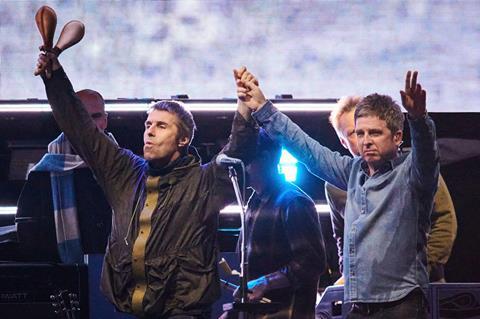
“I have a fatal flaw,” Noel Gallagher confesses. “I can’t forgive people.” It’s a line, spoken near the beginning of Oasis documentary Don’t Look Back in Anger, which sets the theme and tone for the whole movie. It is also, as the film gradually demonstrates, a lie.
Oasis didn’t just split up; they tore apart. The chaotic energy between brothers Liam and Noel was often the driving force behind the most dynamic band of the 1990s. Until, eventually, it overwhelmed them.
The details have never been entirely clear but when Liam, the wild child front man, and Noel, the frustrated musical genius, came to blows before a show in Paris in 2009, it was one fight too many; they didn’t speak again for nearly 15 years.
Let there be love
So, in 2024, when an Oasis reunion tour was announced, a jaded world seemed united in proclaiming that their fragile peace wouldn’t last. I was certainly part of the doubting media ensemble, writing in this very magazine that “there’s an in-built sense that, even in the attempt, it will fall short, that it needs help; that human brotherly love isn’t quite enough. Mortal things don’t live forever.”
Well, how pious; how cynical those words now look after the events documented in this film. Because Don’t Look Back in Anger isn’t really a tour movie, or even a celebration of a successful comeback. It is a story about what happens when people stop, notice what is broken in their lives, and choose to mend it rather than break it further.
It’s the story of how Oasis’ 2025 world tour was an instrument of reconciliation between two estranged brothers, and how it became a kind of redemption story - both for the band’s legacy and for the millions of fans who had been so sadly disappointed by its 2009 meltdown. It’s a story about the power of the one thing Noel claims he’s incapable of. Because of course, Noel did forgive.
That’s not a forced, Christian reading of the film; it’s the entire point. The deliberate moments that provide both the centrepiece and the ending of Don’t Look Back in Anger are not show-stopping stadium performances but extracts from a Catholic sermon.
Some might say
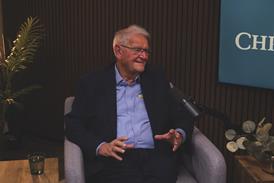
Father Luke Bradbury, the priest at St Bernard’s in Burnage (the Manchester church where the Gallagher‘s mum still worships and where the boys reportedly appeared in a nativity play) is filmed speaking to a slightly smaller crowd than those we see swelling stadia across the world to see the brothers perform.
Yet his homily to a handful of faithful parishioners becomes the vital message of the entire film. He connects the story of the warring rock star siblings to Jesus’ command to Peter to forgive his brother “seventy-seven times” (Matthew 18:21–22). “Forgiveness is hard - it costs us something,” he says, before imploring us that what the world needs is for us to forgive each other…and ourselves.
We live in a world where the language of conflict is easier to reach for than the language of reconciliation
Forgiveness is hard. Forgiveness costs. Sometimes, like Noel, we don’t believe we’re capable of it. Yet when we end cycles of anger, bitterness, resentment and hatred by choosing it, extraordinary things can happen.
The extraordinary thing here is the tour which – against all predictions – not only went without a hitch, but sees the brothers return to musical heights not charted since their heyday.
Watching Oasis in the late 2000s was akin to spending time with that one relative who can’t drink sensibly at Christmas: Liam was often so affected by drugs and alcohol that his performances became incoherent.
In 2025, by contrast, the voice is back: that unmistakable, nasal, sneering sound that once made him an icon. He sings brilliantly. The band plays beautifully. Cigarettes and alcohol are nowhere to be seen. Not since I took my then three-year-old to see the Curious George movie have I enjoyed a cinematic experience so lacking in dramatic tension.
All around the world
And that, rather wonderfully, is exactly the point. In the interviews which intersperse the tour footage, both Noel and Liam make heavy reference to the state of the world, and the escapism that their music (and by extension this film) brings.
Yet what we really see in their performances is a kind of transcendence, and hundreds of thousands of fans engaged in it, looking up, singing together, weeping, embracing strangers – behaving, at times, as if they are in a kind of church, worshipping at an altar to an unknown God.
Not just because they love the music, but because what was broken has been restored against all the odds. They never thought that they’d get to see this day, and now it feels like the world has been put back together. Perhaps, Liam opines in one of the only lines in the film that doesn’t contain a swear word, there’s something bigger behind it all that makes sense of that transcendent feeling.
Prophets and TV shows seem united right now in spreading rumours of wars: the ultimate extension of what happens when the brokenness between people and nations is not mended. We are living in a world where the language of conflict can sometimes seem easier to reach for than the language of reconciliation.
In contrast, the final frame of this film displays its title in huge letters, as if that song has become a plea to all of us: Don’t look back in anger.
If Noel Gallagher can find it in his heart to forgive, perhaps the rest of us can at least begin to imagine that forgiveness is possible. And perhaps, in a world defaulting to conflict, Christians should be preparing for something else: not for war but for peace; not for revenge but for reconciliation; not for the triumph of one side over another but for the possibility that broken things can, sometimes, be made whole.
The beauty of this film is found not in stadium spectacle, but in the humble human idea of two people deciding that their past does not need to define their future. And that is true for all of us.
Don’t Look Back in Anger is in UK cinemas now

























No comments yet