







Saturday Night Live has spent half a century skewering politicians. But does satire actually change anything?
The iconic opening words of one of the world’s most enduring TV comedy programmes have launched the careers of some of the most famous entertainers in history: “And live from New York, it’s Saturday Night!”
First broadcast in 1975, Saturday Night Live, or SNL for short, is a long-term staple of American television. Now, thanks to the popularity of short-form video on social media, it is also enjoying a global renaissance. Last year, a UK edition launched on Sky One to broadly positive response; a second series arrived last month.
The cultural impact of SNL in the US is enormous, and since the whole world looks to that nation for so much of its entertainment, the impact has reverberated everywhere. There are the stars that the show has made: Eddie Murphy, Will Ferrell and Tina Fey to name just three. The spin-offs and cultural memes that have transcended their beginnings: Wayne’s World, The Blues Brothers; even the phrase “Debbie downer” all started life in SNL sketches. And then there’s the aspect of the show that feels more important – more serious, even – its willingness to satirise leaders and governments and speak truth to power.
In the age of the political strongman, the role of the satirists feels instinctively important. Yet Christians might reasonably ask if poking fun at our leaders really aligns with the various New Testament commands to honour and submit to them (see 1 Peter 2:11-17). Even if it can, there’s probably a more basic question to ask: does satire actually make any difference?
Live and laughing
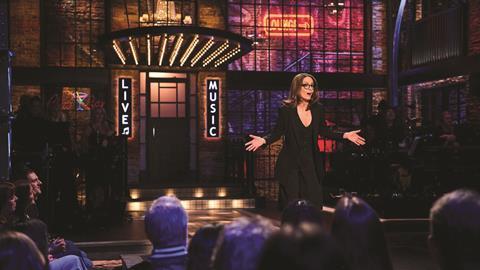
Created by TV mogul Lorne Michaels, SNL has broadly followed the same format through every episode of its five decades and 51 seasons. A celebrity host and musical act join the regular ensemble cast – comics recruited from the nation’s most prestigious comedy and improvisation groups – to perform a series of freshly written sketches. The themes and styles of these can vary wildly, and while a few are pre-recorded, most are performed in front of the live Rockefeller Center audience. Both the jokes and the sketches are hit-and-miss, and the live aspect adds an element of risk and uncertainty which amplifies the best and worst moments.
The political focus is usually concentrated in two parts of the show. Before the credits roll there is almost always a lengthy ‘cold open’; a satirical sketch normally focused on recent events involving key government figures. These have given rise to some of SNL’s most famous exports: political impressions such as Tina Fey’s Sarah Palin, and Alec Baldwin’s original Donald Trump, which infuriated the then-presidential candidate so much that he launched a tirade of criticism against SNL, calling it a “terrible show” that no one watches anymore.
Then, in the second half of each episode there’s Weekend Update, a mock news show-within-a-show which reports and simultaneously makes fun of global events. The segment takes aim at and often eviscerates political targets, mainly reserving its most acerbic lines for Trump and others holding political power. They are heavy-handed and often crude (an overall issue for a Christian engagement with the show), but they are also prepared to say the almost unsayable. In America right now, few mainstream shows would go anywhere near their level of scrutiny or critique.
Live issues
This, depending on where you stand politically, is where SNL feels to be doing its most important work. Over the last three presidential terms it has lampooned both Trump’s bombastic bluster and Joe Biden’s doddery confusion (with some degree of cruelty). Clearly if the former’s responses on social media are an indicator, the show succeeds in hitting and hurting its targets, at least on the level of a bruised ego.
However, if the veteran British comedian Harry Enfield is to be believed, that might be all it achieves. The creator of the iconic ‘Loadsamoney’ character was thought in the late 1980s to be a constant thorn in the side of Margaret Thatcher and her government as he sent up yuppie capitalists with his grotesque alter ego. Loadsamoney, an obnoxious and opportunistic tradesman who constantly boasted about his newfound free market wealth, actually made his first appearance as part of Saturday Live, a much earlier attempt to launch the SNL format in the UK.
The Christian response to satire isn’t to ask if it’s OK to laugh at our leaders, but whether doing so makes any difference
This ultimately proved unsuccessful and Enfield’s reflection is that the character was also a failure. The comic hoped it would turn the public against the selfish, money-grabbing Thatcherism that he felt was enrapturing young professionals, but instead audiences loved the character’s despicable catchphrases. Thatcher herself even quoted him in Parliament. Interviewed in 2016, Enfield told a podcast that he felt satire made no difference at all: “It’s great fun to do, but generally…it doesn’t ever change anyone’s mind.”
This perhaps explains why powerful politicians choose only to criticise rather than crush it. Satire is a strange kind of slacktivism, akin perhaps to liking a social media campaign post in lieu of actually donating. We might like to believe that the powerful are being held to account. But are they really? Our laughter doesn’t strip power; it merely trivialises it; allowing us to think less seriously about serious things. Humour doesn’t embolden protest but replaces it.
There’s also a major issue with much anti-establishment comedy: often, those who lead its charge are themselves embroiled in privilege. In his fabulous London Review of Books essay ‘Sinking Giggling into the Sea’, the author Jonathan Coe explores the awkward history of British satire, quoting Peter Cook’s biographer to describe the comedian and his contemporaries as “young men questioning a system they had been trained to lead”. Coe points out that luminaries of British satire such as Private Eye’s Ian Hislop and writer and producer Armando Iannucci are wealthy Oxbridge-educated rebels who still enjoy much of the privilege they poke fun at (including, in Iannucci’s case, earning a CBE). This is also a charge that could be levelled at SNL, which is backed by wealthy broadcasting network NBC, and is also often scripted and staffed by graduates of elite Ivy League universities.
Live from London
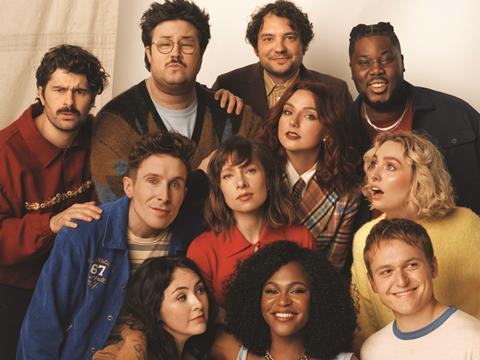
Saturday Night Live UK is effectively a franchised rebuild of its US parent, with a near-identical format. That means the political elements are all replicated, with comics Ania Magliano and Paddy Young fronting a British Weekend Update (pictured above), and various cast members giving impressions of public figures including King Charles and Andy Burnham. The standout performer of the UK cast, George Fouracres, seems to have hit an immediate stride with his impersonation of the latter, appearing in the first sketch of the new series with a wide-eyed admission that: “I need people to like me!”
Rarely has there been such a collective sense of cynicism about the arrival of a new TV show, as when SNLUK was announced last year. Critics and keyboard-warriors seemed united in hope that the franchise would fail, and when early sketches from an understandably nervy cast were a bit more miss than hit, it looked as if they’d get their wish, given what Sky were spending per episode. Yet, as the show began to assemble a small catalogue of memorable, funny sketches (see box), it became clear that the import was defying expectations. SNLUK might just be here to stay.
Live from Nazareth
What might Jesus have made of comedy, or political satire? We know that He was misidentified in Matthew 11:19 as “a glutton and a drunkard”, so it feels like a safe suggestion that He would have often been found laughing and joking with friends. He might well have enjoyed observational – and even alternative – comedy, the like of which makes up much of SNL. There’s also a strong argument that He used humour in His own teaching.
Andy Peck, my great friend and former deputy editor of this magazine, who sadly died this year, was fascinated by Jesus’ use of comedy, even writing his master’s thesis on the subject. Although some of the effects are lost in translation, Andy believed that Jesus used wordplay and puns (eg “the eye of a needle” in Matthew 19:24), irony (“you strain out a gnat but swallow a camel” in Matthew 23:24), and even biting sarcasm (“you…whitewashed tombs!” three verses later). In fact, much of Jesus’ use of humour seemed to be directed at the Pharisees – religious, if not political leaders.
The 3 best SNL UK sketches so far…and how to reference them in your next sermon
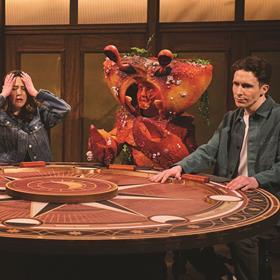
1. The great big crab man – A ridiculous Traitors parody which cuts straight to the heart of one of that show’s most awkward aspects – the disproportionate suspicion offered around global majority heritage contestants. A great discussion-starter around unconscious bias.
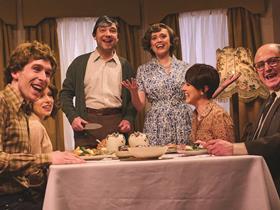
2. British pork – It’s always huge fun when SNL cast members break into spontaneous, infectious laughter. The cast barely hold it together during this bizarre reimagining of the famous 1970s advert by the British Pork Marketing Board. Sometimes joy in community is more important than perfection – a word to the megachurches there.
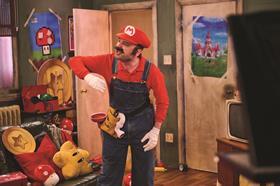
3. Mario – Breakout star Fouracres and host Aimee Lou Wood play out the story of Super Mario’s return home, after a hard day, to the cramped Brooklyn apartment he shares with Princess Peach, as if it’s a scene from a Martin Scorsese movie. If you want to illustrate the idea that we often have no idea of the load a person is bearing, look no further.
Live forever
Arguably then, the Christian response to satire isn’t to ask if it’s OK to laugh at our leaders, but whether doing so makes any difference. There’s a kind of comedy – perhaps the brand delivered by the casts of SNL on both sides of the Atlantic – which simply makes us feel clever yet doesn’t go any further; it doesn’t inspire us to put those wrong things right. Instead, we mistake mocking injustice for challenging it and move on with our lives.
Jesus offers something more interesting. As the occupied people of Jerusalem waited for a Messiah, they fully expected a kind of supernatural military power; instead, they got a servant King. He spoke truth to power by inverting what it meant to be powerful, arriving in humility as a baby born in a backwater town. Then as He began to teach the ways of a kingdom that would ultimately usurp all earthly ones, He proposed mind-blowing ideas: love for enemies, grace and peace.
His humour, where we can glimpse it, wasn’t simply there to make the audience feel better about themselves. It exposed the absurdity of religious hypocrisy. It punctured the pretensions of people who thought they had life – and God – neatly boxed up.
Christians don’t need to be suspicious of comedy. It’s great to laugh, and well-written satire can unsettle and challenge us. We just need to keep thinking, acting and speaking truth to power after the laughter stops.




















No comments yet