










Newspapers have reported that the future monarch does have a faith, despite not attending church regularly or expressing it as loudly as his grandmother or father. But what does it mean to have a ‘quiet faith’ wonders Rev Jamie Sewell, and how should Christians respond to the comments
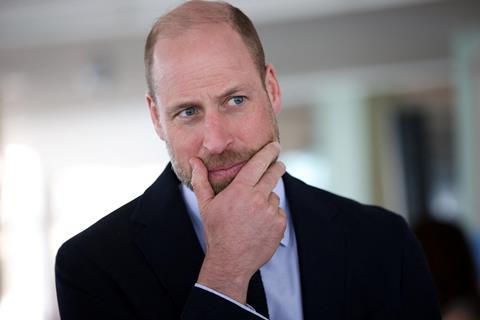
Prince William fosters a “quiet faith” and sense of commitment to the Church of England, a source close to him has revealed. While the future King “doesn’t go to church every day”, a spokesperson told The Times he has a deep appreciation for the CofE’s role in British society.
These comments have, as expected, drawn mixed reactions since they were reported in the press this past weekend. For some, it is encouraging, a reassurance that the future head of the Church of England does indeed have a personal faith, even if it isn’t loudly expressed.
For others, it raises concern. Shouldn’t faith, especially in such a public role, be more visible, more vocal, more clearly declared?
It’s a fair question, and it’s one the Bible holds in tension.
In Matthew 5, Jesus tells his followers that they are the “light of the world”. A city on a hill cannot be hidden. Faith, it seems, is meant to be seen. And yet, just a chapter later in Matthew 6, Jesus warns against practising righteousness in order to be noticed by others. When you pray, he says, go into your room and shut the door.
Faith, it seems, is also something deeply personal, even hidden.
To boldly go
So which is it? A faith that proclaims, or a faith that stays quiet?
Perhaps the answer is both.
When I came to faith as a teenager, there was nothing quiet about it. I was full of zeal and urgency; I wanted to tell the world they needed Jesus. Nowhere did I feel this more strongly than with my older brother. I was 12, he was 15, and I made it my mission to call out everything he did. If he had a drink with friends, I told him to repent. If he had a girlfriend, I questioned his choices and warned him of moral failings.
I thought I was standing for truth. But looking back, I can see that while what I said carried good intent, the way I said it often didn’t reflect Christ. In my loudness, I pushed him further away. My faith was visible, but it wasn’t loving, wise or effective.
Our whole lives should speak of the good news of Jesus, not just our voices
As I grew older, I stopped trying to win arguments and instead focused on building relationships. As my approach became quieter, something began to shift. Conversations opened up. Respect grew. And while my brother still wouldn’t describe himself as a Christian, he’s now more open, supportive and engaged. I sometimes think he’s even proud that I’m now a priest.
But while a loud faith can be abrasive, performative, even damaging, one that is too quiet can become so private and safe that it’s ultimately invisible.
Living like Jesus
Ultimately, the issue isn’t one of volume; it’s whether our faith reflects the character of Christ.
Scripture gives us the example of Moses standing boldly before Pharaoh, loudly demanding freedom for God’s people. By contrast, Esther works quietly within the structures of power, using wisdom and courage at just the right moment to speak and act.
Neither approach is presented as more faithful than the other. What matters is obedience, and knowing when the moment calls for boldness and when it calls for being quietly patient.
There’s a well-known saying, often attributed to Francis of Assisi: “Preach the gospel at all times. When necessary, use words.” It’s not a perfect summary, but it captures something important. Our whole lives should speak of the good news of Jesus, not just our voices.
Pray first
When it comes to Prince William, perhaps the more helpful question is not whether his faith is quiet or loud, but what it means to follow Christ in a role like his. It’s impossible for us to understand the pressure he carries, or the weight of responsibility he is preparing to inherit.
To live publicly, under constant scrutiny, while holding together personal conviction, national expectation and future leadership of the Church of England is no small task. Few people are better prepared for that role than he is. But preparation alone is not enough. As Christians, our instinct should not be to critique from a distance, but to pray.
Faith that is too quiet can become so private and safe that it’s ultimately invisible
To pray that his quiet faith would continue to grow, and that he would be rooted ever more deeply in his relationship with Jesus Christ. To pray for the wisdom to know when faith is best lived quietly, and when it must be spoken aloud.
The story of Esther reminds us that faith is not always loud, but it is always ready. And that is the real challenge, not just for Prince William, but for us.
Is this a moment to raise our voice in critique, or to take a more honest look at our own faith, posture and witness? Is this a time to speak loudly about someone else’s faith, or to respond quietly in prayer?
In a world quick to judge and even quicker to speak, perhaps the more Christlike response is not to loudly question the quiet faith of Prince William, but to quietly lift him up in prayer.
























1 Reader's comment