





What does it look like to put Christian faith into practice in the competitive world of selling cars? Businessman and philanthropist Peter Vardy reveals what happened when he put biblical principles before conventional wisdom – and why a remarkable answer to prayer left his family with no doubt that God still works miracles
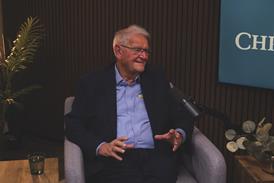
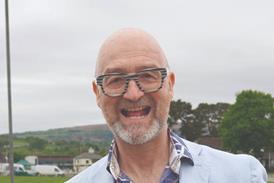
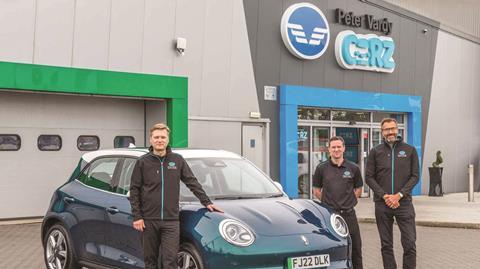
The Vardy name has been synonymous with the automotive industry for more than a century. But as much as the eyes of third generation entrepreneur Peter Vardy light up when describing his favourite car (“BMW 507 – the nicest car ever made. Elvis had two of them”), you can tell his Christian faith means even more.
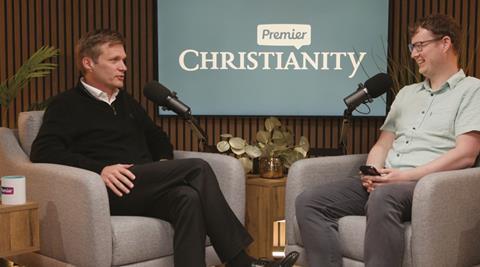
“I’m not a very complicated Christian,” Vardy tells me when we meet. “Love God, love people” seems to be his motto – repeated at least six times in the course of our hour together. I’m fascinated to discover how he’s applied that principle to selling Porsches.
Every member of staff at his car dealerships – from CEO to cleaner – wears the same uniform. It’s a policy that stems from Vardy’s theological convictions. “Whether you’re fixing the car or answering the phone, you’re highly valuable. You learn that from the Bible – about the value God sees us in.” Not opening their car showrooms on Sundays was another faith-based decision. While initially contentious, the policy later paid dividends.
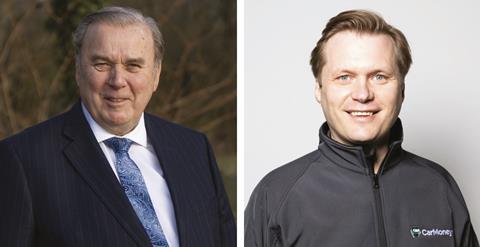
The 47-year-old is the son of Sir Peter Vardy, who according to The Sunday Times Rich List, is worth around £140m. Father and son are both well known for their philanthropy – the Peter Vardy Foundation delivers grants to numerous Christian charities, including Premier, Alpha and The Message Trust.
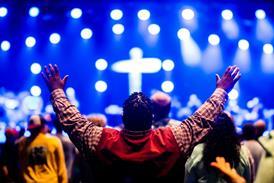
Vardy’s latest project will see thousands of Christians unite for worship and prayer at the SEC Armadillo arena in Glasgow. But bringing Christians together isn’t always straightforward, as Vardy admits when opening up about the division and disunity he’s witnessed in the Church. “I’ve been to a lot of things where Christians look as if they’re working together and, at the last minute, the devil gets a wedge out,” he says.
Over the course of our conversation, we cover alot of ground, from selling his first car as a teenager to a remarkable answer to prayer. I can only dream of having the kind of wealth the Vardy family has earned, but I find Peter’s Christian faith deeply relatable. Beneath the millions, the motor dealerships and the ambitious plans lies a disarmingly simple conviction: trust God, love people and don’t be afraid to tell others what Jesus has done.
Your family have been in the car industry for 100 years. Take me back to the beginning.
My grandfather was Reg Vardy – people might know that name as it was on the front of Sunderland [football club] shirts. He didn’t want to go down the mines, so he had a hand cart and delivered coal to people’s houses. He was a grafter and did whatever he needed to do to look after his family.
God does answer prayers – and nobody can argue with that. That’s a testimony of what God’s done
That work ethic – and his faith – was shared with my dad, and then with us. My dad was a bit of a genius in terms of the motor trade. He was one of the first guys in the UK to work out how to sell cars on finance. He grew the business from six people to 6,000 – an incredible story.
Am I right in thinking you sold your first car aged 15?
Yeah, I did. I’m sure this is illegal, but Dad put me to work when I was 14, serving petrol!
The first car I sold was a Mazda 323 in brown with power steering. I was sat in the showroom and there was an older couple – I think they knew I was 15 and they played along with it, but they bought the car. Afterwards I leaned back on the chair, and it snapped. I fell on the floor – much to the amusement of the entire dealership!
What are your memories of growing up in a Christian family?
At church, Dad played the piano, my brother Richard played the drums and [my sister] Victoria sang. I sometimes played the drums. We were committed on a Sunday. If we didn’t turn up, there was no music.
I’ve always had a real trust in Jesus, and I really believe that God’s plan is the best plan. So, if I could just get on His plan (I wish He would send me an email with a plan sometimes!) we’d be alright. I became a Christian when I was 13 at a Billy Graham conference in Scotland. I was baptised when I was 19.
Your father, Sir Peter Vardy, is one of the wealthiest people in the UK. At what point do you remember becoming aware that he was an incredibly successful businessman?
We had great examples of Mum and Dad being grounded, generous, understanding the value of money. They weren’t bent out of shape by the money thing. They knew it was God’s money, and they just had to look after it.
We witnessed lots of people in the house over the years – missionaries and people coming in and out who mum and dad were able to support – they didn’t make a big thing of it, they just kept being faithful with what they were given. The three of us have had a great example, which I’m now trying to copy. Hopefully my kids will say the same thing about me.
What have you learned about making sacrifices in order to grow a business, while also ensuring you don’t neglect your family?
I’d love to tell you I got that right.
One thing I learned quite early is about managing your time well. A friend of mine told me: “If you looked at your diary, Peter, is that the way Jesus would arrange his diary?” It was a real challenge.
I was taught by one of my mentors to understand that you’re going to let people down sometimes, but it’s far better to tell them early and be upfront about it. So maybe I’ll say to my wife, Anna: “In this season, I’m not going to be able to do X, Y and Z,” rather than disappoint her later.
You don’t always get the balance right, but you can try to mitigate the large mistakes, and work through the ups and downs better if you realise how important your time is.
How would you describe your faith?
I’m not a very complicated Christian. I like to keep things really simple. It says in the Bible, “love God and love people” [see Mark 12:30-31], right?
I’m probably not allowed to say this, but coming out of the showroom recently to spend time with more Christians – there are some fabulously talented and gifted Christians doing amazing work – you can see how sneaky the devil is, because I’ve been to a lot of things where Christians look as if they’re working together and, at the last minute, the devil gets a wedge out and smashes it in, and stops them working together.
I’m not a very complicated Christian. I like to keep things really simple
It could be: “We don’t have that music in our church”, or “that person’s a bit too Holy Spirit-ish”, or hats, or women, or something. Just as the Church is getting together to work on telling people that Jesus loves them, the devil gets in the way and ruins it.
I struggle with that, because there’s loads of things I don’t understand in the Bible, but I do understand that He loves me. And that’s really the only thing that is important: love God, and tell people that Jesus loves them.
How has your faith influenced the way you run your business?
Business isn’t really the place to preach to people, but I can try to set an example. I can try to be a reflection of Jesus. Asking: How do I become the best place to work? is loving people at work. How do I become the best place to buy? That’s loving people who walk through the front door. And: How do I look after the community where I’m at?
So, we built the company upon a vision of being world-class in those three areas. Everybody liked that. They thought: That’s worth joining.
We had some brilliant people join the company because it has values and a purpose. On the first day of induction, I gave a new employee a cheque for £100, which they could give to any charity they wished.
I’ve tried to take what it says in the Bible and apply it to what was important in the company. And funnily enough, it made good money, because people want to work in the best place and people want to buy from the best place. We were one of The Times best 100 companies to work for because of that ethos.
One Christmas, I said to our company chaplain, Martin Belshaw: “We need to give Christmas presents away [to the community]. We could buy 250 gifts and get the colleagues to wrap them.” He suggested the parts vans could go out and deliver them. I said: “No, we don’t want to do that, because then [people] would know it was us.”
Why didn’t you want them to know? Wouldn’t it be great PR for your company?
Now, what does the Bible say about giving? Don’t tell anybody it’s you [see Matthew 6:3]. So I thought: Well, I’m going to follow that. Keep my mouth shut, do what God wants me to do.
The next year we gave away 10,000 presents. Nobody knew who it was.
We closed on Sunday…We sold more cars in six days than we used to in seven
We received a letter via social services in Edinburgh that eventually found it’s way to me months later. It said: “Somebody arrived at my house on Christmas Eve with gifts. I’d had the worst year ever. My husband wasn’t around. I had two kids and no money for Christmas. I was at my wits’ end and considering taking my own life. But then somebody arrived with Christmas gifts. They just gave me some hope…” The story went on and on, and anybody who read that letter was in floods of tears. So, we kept the letter.
Later, I was trying to win a new premium franchise. We sat in a boardroom, and it was pretty aggressive. I couldn’t get my bum on the seat before he said: “You close on Sundays, don’t you?” I said: “Yeah.” He said: “None of our dealerships close on Sundays. It’s a pretty stupid idea, isn’t it?” (Sunday was the busiest trade day of the week, so most people in the motor trade laughed at me.)
I said: “Would you allow me to explain to you why I close on Sundays?”
“Go on, then.”
“I wrote to all the customers, and I said to them: ‘Work-life balance in the motor trade is pretty difficult. It’s bad on families. I’d like to close on a Sunday so I can give people family time back. Would you allow me to do that?’ The customers overwhelmingly said: ‘Yeah, no problem at all.’”
From a faith point of view, I thought: Well, what does it say in the Bible? That’s normally right. I talked it through with the finance directors. Everybody’s looking at me and going: “Woah, it’s a big call.”
We closed on Sunday, and you can guess what happened. We sold more cars in six days than we used to in seven. And guess what people are doing nowadays on Sundays in the motor trade? Closing the dealerships.
But going back to the story, I was in this pitch for the franchise, and I couldn’t get the computer to work. I was getting nervous and starting to sweat. I’m messing about with this plug for the laptop to go on the screen, and suddenly…and honestly, this is true…the letter we received from the lady who’d got the Christmas gift came on the screen. I didn’t even know that was in the pack, but it was obviously an explanation of the culture of the company, so I left it up.
I looked across the desk, and there were four or five people who were interviewing us, and I could see they were getting teary-eyed.
Normally you don’t get the sign-off on a franchise for months. But later that day, I got a call from the managing director saying: “We’d be delighted if you’d buy a dealership with our franchise.”
It was amazing. I learned back then that God has you doing the giving back bit for a reason. I’m not saying that it always pays back. But you can see that by being faithful in some things, God works in other areas.
You have an amazing testimony regarding your children. Tell us the story.
We were told we couldn’t have kids after trying all the IVF stuff. The guy was quite brutal. He said: “I’m going to be really blunt, because I don’t want you to waste any more money. You will never ever have children.”
Anna and I got in the car. To lighten the mood, I said: “We’ll just go to the Cayman Islands for Christmas.” Then I said: “If we’re Christians, we’re supposed to pray about this. So, let’s just pray about it and see what happens. Let’s not lose all hope.”
It was Christmas Eve in the Caymans, and we went to reception and said: “Are there any churches on the island?” They gave us this huge list. We randomly picked one. It was really nice and welcoming. The guy said: “This is our year of prayer. You’ll notice there’s a prayer card on your chair.” I saw Anna pick it up and start filling it in.
Two weeks after we got home, we received a letter from the church. It said: “Thanks so much for coming to our church.” It mentioned us by name and the prayer points we’d written down. Then it said: “Here are the ten people that’ll pray for you at 11 o’clock on a Tuesday. Can you write back and tell us if the prayer is answered?”
We had [our daughter] Harriet that year. It got towards Christmas and I remember having a conversation with Dad. “What’s the plan?” I said. He replied: “We’re all going back to the Cayman Islands – the whole family – to show that church the answer to their prayers.”
Christmas Day was Sunday that year, which made it even more special. We were able to take Harriet up on the stage, and that was great. It’s still emotional to think about now. And we had three more kids – so Dad wants to go back and tell them all to stop praying!
It’s a story we’ve been able to tell all over the world, to lots of people, to say that God does answer prayer – and nobody can argue with that. That’s a testimony of what God’s done. Those are the types of ways I think you should tell people about Jesus – talk about what He’s done.
To hear the full interview listen to Premier Christian Radio at 8pm on Saturday 19 September, or download The Profile podcast
Peter Vardy is sponsoring The Revival on 1 October and The Calling (Scotland’s leadership summit) on 2 October. Premier is the media partner for both events. For more information see therevival.scot and thecalling.scot




















No comments yet