











News that St Paul’s Cathedral has partnered with London nightclub Fabric to host a series of concerts has provoked mixed response from Christians. Tony Wilson wrestles with the ideas of sacred and secular and says whatever happens in a church should glorify God alone
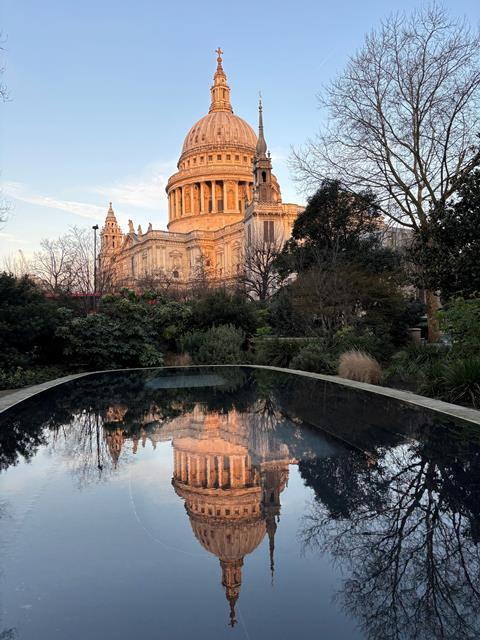
St Paul’s Cathedral has just renewed its partnership with Fabric, an events organisation who have previously staged performances in this sacred venue. Sandra Lynes Timbrell, director of visitor engagement at St Paul’s said that she hoped the concerts would introduce new visitors to the Cathedral and encourage people to “discover and engage with this historic building in new and exciting ways.”
Predictably, the news has created much consternation in some quarters. But St Paul’s is far from alone in throwing its doors open to secular events. In October, Ripon Cathedral hosts “an unforgettable night soundtracked by three incredible DJs” complete with a licensed bar. In the Anglican Cathedral in Liverpool, you can find an installation from secular artist, Tracey Emin. And it is quite common to find plays, concerts and comedy nights hosted in churches up and down the country.
We should think carefully about what we should expect the Lord to endure when we invite others to share our building
Before I get too sniffy, I remind myself that I have listened to a wonderful performance of Rachmaninov’s Second Symphony in Colmar Cathedral, as well as an ear-grating evening of Belgian bagpipes in my rural parish church. There is no event so joyous that it can’t be ruined by a set of bagpipes (there’s an opinion for you!)
So why do I feel uneasy? Am I making an exception for my own tastes while condemning others?
I do not wish to set up a false division between the holy things of God and the secular life as profane. Much of our everyday lives, work, and the art we create is good, true and beautiful. Even the humdrum, ordinary things attain holiness by virtue of our relationship with Christ and our willingness to offer everything to Him as a gift to be transformed.
For the community
Many of our church buildings sit empty for most of the week, and pragmatism has pushed us to think about how they could be better used as hubs for the local community. In locations up and down the UK, they host post offices, Zumba sessions and even atmospheric wine bars. After all, Jesus was no party pooper and obviously enjoyed bringing more wine to those who had already had their fill (see John 2). It may be naïve to think that a couple sharing a bottle of Pinot Noir one evening might give worship a try the next day. But at least the building is being used, perhaps.
Conversely, some Christians are secondary users of a building for their own worship. Squirming in uncomfortable plastic chairs in a school hall or slumping into the cushioned ease of a reclining cinema seat might be your experience of church. Do we sanctify a secular space by using it for a holy purpose? Can we worship God in a location not built primarily for His glory?
For God alone
Jesus came to fulfil rather than abolish what went before, so I turned to the Old Testament to clear my indecision. We should find a perfected version of the old covenant promises of God expressed in Him, after all.
The Holy Spirit was often invoked to transform places and objects into something sacred – that is, set apart for God’s use alone. We read that the tabernacle, altar, furniture and all the utensils are made holy (Exodus 40) in a way that permanently changes them. God’s holiness establishes boundaries around what has been consecrated to him, and we must approach with caution. When Uzzah reaches out and touches the Ark to steady it, God strikes him dead (2 Samuel 6:7).
Nor can we reclaim sacred things for ordinary use. Leviticus 27:28 tells us that “no thing a man devotes to the Lord shall be sold or redeemed.” Belshazzar found this to his cost when he deliberately took objects consecrated to God and treated them as common drinking vessels, while mocking the God to whom they belonged (Daniel 5). We also see that access to holy spaces is limited in Leviticus 16. So, we are right to be cautious about who we invite to share our churches.
Mindful that the New Testament radically relocates holiness around Christ and, through Him, the Church and the whole people of God, we need to ask how this affects our use of sacred spaces.
I do not wish to set up a false division between the holy things of God and the secular life as profane
With the Temple curtain torn from top to bottom, we must invite people to meet Christ without erecting false barriers. But we don’t achieve this by opening up our churches to all who wish to use them for whatever purpose. Taking all these strands together, where do I land?
Yes, let’s create sacred spaces. Let us be generous enough to work with secular partners and artists of goodwill. They may help us see familiar truths with fresh eyes. But these partnerships need boundaries, discernment and a very clear sense of purpose.
If they do not clearly and directly help people encounter the Risen Lord, what exactly are they doing in His house? The spaces we steward are not ours to market, monetise or make fashionable. They belong to God alone.






















2 Readers' comments