










Lavinia Byrne offers a challenging Lenten companion that refuses easy answers. Connecting biblical figures such as Abraham and Jonah to contemporary events including the Gaza conflict and Grenfell tragedy, A Place of Belonging pushes readers beyond comfort zones into deeper encounters with God and scripture, says our reviewer

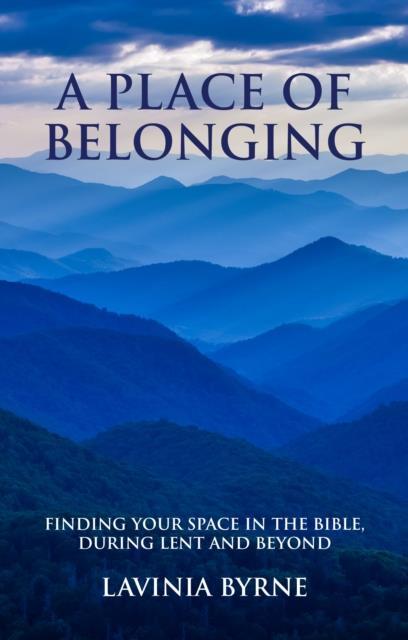
Lavinia Byrne’s A Place of Belonging: Finding Your Space in the Bible During Lent and Beyond (Darton, Longman and Todd) is a historically grounded and theologically rigorous work that invites readers to encounter scripture through an intellectually demanding yet poetically resonant lens.
Byrne reshapes how faith, biblical texts, and personal application intersect, offering a reading of scripture that feels both expansive and deeply personal.
While Lent is traditionally framed as a period of solemn reflection leading toward Easter, Byrne disrupts this narrow focus. Rather than focusing on the Easter narrative, she guides the reader on a journey from the Old Testament to the New, opening up broader questions about faith, the person of Christ, and belief in God.
The book resists a single, easily defined theme, instead presenting a tapestry of ideas that encourage readers to engage with scripture as a mirror. The stories of Abraham, Jonah, Noah, and others are not treated as distant or abstract but as narratives that echo contemporary life and global realities. Byrne skillfully weaves biblical stories together with modern events, engaging with racial conflict, the war in Gaza, the Grenfell Tower tragedy, the rise of Alzheimer’s, and the pervasive influence of technology and social media. Through this interplay of past and present, she invites readers to move beyond surface-level interpretations of scripture and beyond personal comfort zones. Byrne suggests, in this “beyond”, deep encounters with God can be found.
Importantly, this call to go deeper is not romanticised. Byrne acknowledges the difficulty many experience in their relationship with God and in sustaining faith. Using the recurring imagery of mountains, she likens faith to mountaineering: demanding, exhausting, and at times disorienting, yet ultimately rewarding. The ascent is hard, but the summit offers a vision more beautiful and expansive than imagined. This honest framing allows readers to find reassurance in struggle rather than shame.
Byrne’s breadth of knowledge is evident throughout. Her command of scripture, theology, history, and contemporary culture allows her to move between ideas, metaphors, and narratives. At times, the density of imagery and the rapid movement between themes can be challenging to follow, particularly when chapters are read consecutively. However, this richness is also one of the book’s strengths. Each chapter opens up a distinct theological and imaginative space, and the book is best approached slowly, allowing time to digest the profound and demanding thought Byrne presents. Read in this way, the book feels less overwhelming and more like a series of invitations.
The opening chapter introduces the imagery of the garden, tracing its presence throughout scripture before landing on the “garden of the heart”. This approach typifies Byrne’s method. She begins with familiar biblical symbols – gardens, mountains, fire and reframes them as theological anchors rather than decorative imagery. These symbols become sites of encounter, calling readers back to their true selves, found firmly in God. Throughout the book, she reiterates that God is not confined to specific places or moments; there is no part of creation where God cannot be found or known. As Byrne writes: “we too are offered encounters if we displace ourselves and take the risk of travelling away from what is familiar to us.” This movement away from familiarity, undertaken in trust, becomes central to her theology of belonging.
One of the book’s greatest strengths is its treatment of Lent and Easter. Rather than focusing primarily on the New Testament, Byrne dwells extensively in the Old Testament, allowing readers to see themselves within those narratives. She invites reflection on figures such as Elijah, considering themes of transition and seasonality, and on Shadrach, Meshach, and Abednego, where she explores not only refinement through fire but also questions of race, assimilation, and faithfulness under pressure. These readings feel both fresh and unsettling in productive ways.
A Place of Belonging is best suited to seasoned believers who are open to challenge or seeking out a fresh perspective over Easter. Some readers may find certain theological positions provocative, such as Byrne’s reference to the stories of Jonah and Noah as biblical myths. Regardless of one’s theological stance, however, the book remains faithful to its purpose: pushing the reader beyond complacency. Through historical insight, reflective prompts, and prayer, Byrne creates a space for deep intimacy and self-examination during Lent.
Overall, Byrne offers a compelling and contemporary devotional that bridges scripture, history, and modern life. When read in a group setting or chapter by chapter, the book encourages profound reflection on faith, biblical engagement, and the believer’s relationship to current global events. The prayers, action points, and creative practices, such as gardening or poetry, are particularly effective in grounding abstract theology in lived experience. Though the book’s expansive scope can occasionally feel disorienting, these elements repeatedly draw the reader back, making A Place of Belonging a rich and rewarding companion for Lent and beyond.
























No comments yet