









Maggie O’Farrell’s fictional tale of the death of William Shakespeare’s son has won rave reviews and eight Oscar nominations. Its heart-wrenching portrayal of death and loss should serve as a reminder to Christians not to offer glib answers or gloss over the hard parts of life, says Sophie Sanders
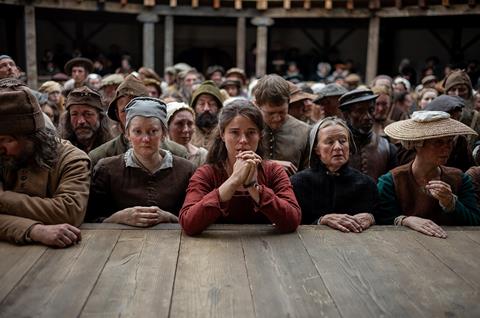
At its heart, Hamnet offers a raw, guttural portrait of grief that shatters the taboos surrounding the death of a child. Based upon Maggie O’Farrell’s novel, the film sees William Shakespeare (played by Paul Mescal) and his wife Agnes (Golden Globe winner Jessie Buckley) navigate a heart-wrenching bereavement that defies the natural order of life. It strains their relationship almost to the point of breaking and stirs up deep feelings of anger, depression, guilt and loneliness.
When their eleven-year-old son Hamnet succumbs to the bubonic plague, Agnes is nursing his twin sister, while William is away in London. Initially, they both respond to the loss of their son with haunting screams. But their emotional and physical response to this trauma quickly diverges. William runs away from the place of his son’s death, deserting his family and returning to London to continue to write.
A grief explored
In O’Farrell’s fictional account, Shakespeare’s way of dealing with his grief was to immortalise his son through the eponymous tragedy, Hamlet (the two names were often interchangeable in Elizabethan times). And in casting himself as the ghost, William is able to rewrite the past, being present at Hamlet’s passing and bidding him a proper farewell, something he was unable to do in real life.
In contrast, Agnes is filled with guilt, questioning whether she did enough to save her son with the potions and poultices she was raised to rely upon.
Ultimately, torrents of tears and lamentation are a right response to the brokenness of this world
Agnes’ connection to nature and magic seems apposite for this present cultural moment. Perhaps fuelled by an anxiety to gain a steady foothold in an uncertain world, 77 per cent of Gen Z identify as spiritual. Still living in the long shadow of a global pandemic, with global instability and child mortality rates increasing, the desire to feel in control of their destiny may be driving this renewed interest in crystals, herbal medicines, sage burning and tarot card readings.
The question of suffering
For Agnes, the death of her son also reopens old wounds. After watching her mother die in childbirth, she refused to participate in prayers at church. Like many, the age-old challenge of understanding how God can be both omnibenevolent and omnipotent in such situations causes her to lose faith in him altogether.
Today, the problem of evil and suffering remain two of the primary barriers to exploring faith. As followers of Jesus, we must therefore guard against glib statements that diminish people’s pain, force premature closure, or downplay the complexity of our triune God.
In the closing scenes of this beautifully shot film, which explores the liminal space between life and death, Agnes and William break the fourth wall to express their grief and reconnect with their dead son.
In a live performance of Hamlet, William looks straight at his wife as he delivers an emotionally charged goodbye to his son, whilst Agnes reaches out to hold the hand of the actor playing Hamlet as he takes his final breath. As their eyes meet, it’s a profound moment of shared understanding: Agnes and William are both mourning the loss of their son, albeit in very different ways.
Hope after all
Without doubt, there are many uncomfortable scenes in Chloé Zhao’s poignant adaptation of O’Farrell’s 2020 novel. And yet there’s something profoundly liberating about its unfiltered presentation of grief. Because, ultimately, torrents of tears and lamentation are a right response to the brokenness of this world.
Like Jesus, we shouldn’t be afraid to weep in the face of death (see John 11:33–36), to acknowledge the deep, tender pain of child loss or to draw close to those who are grieving – even if we don’t have the words to comfort them.
The challenge of understanding how God can be both omnibenevolent and omnipotent causes Agnes to lose faith in him altogether
Yet AW Tozer says that the hope of the gospel is that Jesus “came and wept that he might stop forever the fountain of human tears. He came and bereaved his mother that he might heal all bereavement” (The Attributes of God, Moody Press).
Through his death and resurrection, Jesus promises that our griefs will be redeemed. We have hope to offer to our weeping world – that one day, God will “restore, confirm, strengthen and establish” us in the new creation (1 Peter 5:10, LEB). In doing so, he will “wipe every tear from our eyes” (Revelation 21:4).
“Weeping may endure for a night, but joy comes in the morning” (Psalm 30:5).
May it be so.
Hamnet is now showing in UK cinemas
























No comments yet