



Jonathan Freedland’s new book account reveals how a tea party in 1943 Berlin exposed a network of high-society Germans – many motivated by Christian faith – who risked everything to resist Hitler’s regime
It is not easy to keep a reader on the edge of their seat for 365 pages when you have already given away the plot in the subtitle, but Jonathan Freedland has done it again.
As the front cover says, The Traitors Circle (John Murray Press) tells the story of a handful of people in Berlin who worked carefully and methodically to undermine Adolf Hitler’s Third Reich during the dark years of the second world war. Betrayed over a cup of tea, they were rounded up and arrested one by one, then imprisoned and tortured in horrific conditions.
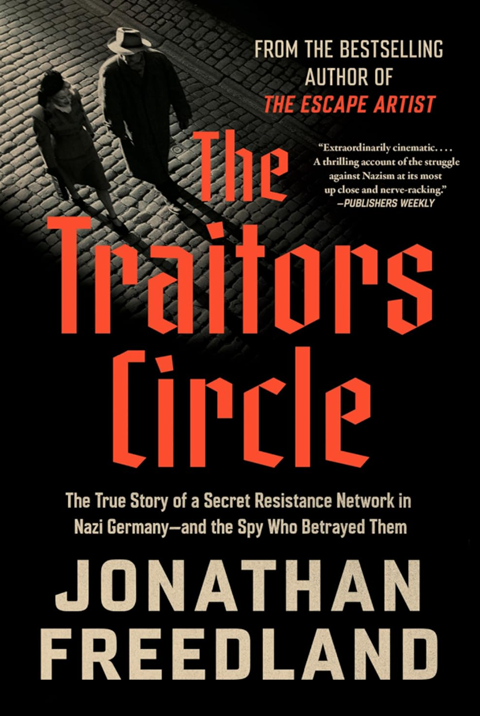
Freedland has done the sort of research usually found in only academic monographs, sifting through Gestapo documents, memoir accounts, oral history interviews, postwar trials, and material from 20 different archives spread across five different countries. He has woven his findings together into 74 short, snappy chapters that unpack the backgrounds and motives of the main characters, including that of the spy who betrayed them, their underground activities, their arrest, imprisonment and trials, and the postwar experiences of the survivors.
When Elizabeth von Thadden invited the book’s main characters to a tea party in her modest apartment in September 1943, the Gestapo thought they had entrapped a veritable “traitors circle” of prominent Germans conspiring to stage a coup against the regime. These people almost all came from high society and several occupied key offices within the Third Reich. To call this a “resistance network” somewhat undersells it though. As Freedland carefully shows, this was not one giant plot but a collection of people disillusioned with Hitler. Each of them had their own plots and networks, and several were tried and punished for crimes that had little to do with what the regime would have punished them for had it known the full extent of their resistance.
The Traitors Circle is a page turner not because the reader wants to know whether they succeed in killing Hitler (spoiler: they don’t), but because of the skilful way that Freedland shows how each character develops, radicalises, matures and acts as the action develops. This is very much a character-driven book, and the characters are all larger than life. From Hanna and Lagi Solf – the wife and daughter of a diplomat who ran an anti-Nazi discussion group and used their connections to help refugees flee Germany via Japan – to Maria von Maltzan, a Silesian countess turned veterinarian who successfully hid Jews in her home until the very last days of the war; and Leo Lange, a failed law student who pioneered the use of gas chambers before turning his skills to hunting down enemies of the Reich, the book overflows with individuals whose life stories would hardly have been believable had they not really happened.
What makes someone into a resistance fighter? Why take ridiculous risks simply for the pleasure of speaking one’s mind when the odds of discovery are overwhelming? There is no single answer to these questions. Each of the characters found their own way into the resistance for their own reasons, some of which they did not fully understand themselves.
For the schoolmistress Elizabeth von Thadden, it was her evangelical faith that radicalised her. Freedland writes that she had originally “approached Nazism with an open mind” that was full of patriotic feeling, but was quickly disillusioned once they began persecuting Jews and tried to create a new state church that was subservient to the Party.
For Otto Kiep, the German Ambassador to the United States, it was when he found himself faced with the choice of praising or condemning Albert Einstein at a function in Washington DC. His true loyalties lay, he decided, with the “old Germany” and the aristocratic values of the former nobility. Like many of those in “the traitors circle”, Kiep did not try to separate what he had learned from his aristocratic upbringing from Christian teaching. If something was wrong, he thought, it was wrong.
Although so many of the book’s heroes were Christians, these people do not come across as saints ready to lay down their lives for the faith. Instead, Freedland shows how religion inspired, reinforced, and shone through other aspects of their personalities.
Few of the plots and conspiracies described by Freedland are unknown to specialists, but they have never been tied together so neatly before, with the confidence of a first-rate storyteller who knows how to make everything turn on some offhand comments made and a business card exchanged over tea and biscuits on an innocuous afternoon.
For anyone who enjoys a good thriller, those curious about the past, or those hoping for an inspirational tale, this book is highly recommended.
The Traitors Circle (John Murray) by Jonathan Freedland is out now



















No comments yet