


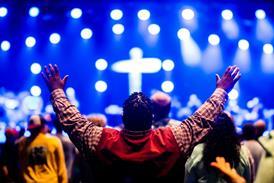





Sarah Pochin MP has claimed Christmas could be “cancelled by the woke liberati”. But this is misinformation, argues Frank Allen. Christians the world over pray for the rights and freedoms that British believers enjoy, he says
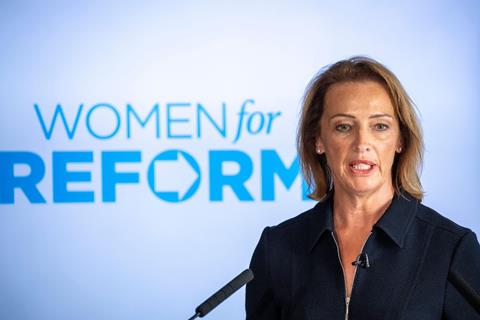
Is Christmas really at risk of being cancelled in the UK? Reform MP Sarah Pochin (pictured, above) seems to think so.
When promoting the ‘Christian Fellowship for Reform UK’ launch on X, she lauded a “brave sermon” by Reverend Henry Eatock-Taylor which apparently claimed there is a “very real prospect of Christmas being ‘cancelled’ by the woke liberati.”
Her not-so-subtle message is that Christianity in this country is under attack. But the reality couldn’t be further from the truth.
There are some real challenges for our churches, from many congregations shutting their doors, to churches struggling to maintain the spaces they already have, to appalling cases of abuse.
But these challenges are not the result of any external opposition or persecution. Much may even be attributed to decades of failure from the church itself - a failure to bring the love of Christ, and God’s kingdom, to earth.
Misinformation
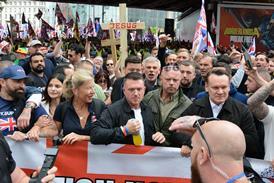
A ‘liberal agenda’ against Christmas and Christianity is non-existent. For nationalists, the fact that the Unite the Kingdom ‘Christmas service’ went ahead with no obstruction should be proof enough. We should not allow ourselves to swallow this myth, one created to stoke a culture war that says little about the reality in the UK and more about those promoting this division.
After all, it was liberalism (which has its ideological roots in Christianity) that brought us the right to practice our faiths openly and free of persecution. British liberals to this day openly protect this right.
There are also very few prohibitions on how we express our faith. One of the favourite examples of Christian Nationalists is to say that ‘Merry Christmas’ is supposedly ‘not PC’ and is being strongly discouraged. This is more misinformation. As should be obvious, saying ‘Merry Christmas’ is a normal part of everyday British life in December. Christian symbols and songs can be found across the nation, and many of us sign off our work emails in secular workplaces with, “Merry Christmas!”
There are cases where Christians in the UK are persecuted on an individual basis - I personally know people who have been victims of this. But it is because of our liberal laws that attacking Christians (as well as those of other faiths) is rightfully treated as discrimination and looked down upon by most tolerant and open-minded people.
Far from our faith being under attack, one could credibly argue that a Christian revival is actually happening among the young. Break-neck technological advances and increasing economic and social pressures are creating a chaos which many find can only be bridged by the community and meaning which Christianity provides. So not only is British Christianity unthreatened from the outside, but it may even be growing in some respects.
Where Christmas is threatened
In contrast, there are countries where groups and governments actively target Christians, often with impunity. Where Christians can face life or death to practice their faith. Where Christmas is at real risk of being cancelled.
The luxury we have of going to Christmas services in peace is not a given in other countries such as Egypt, where almost yearly suicide bombings create devastation at a time which should be joyful. Similar violence is carried out year round in countries such as Iraq, Syria, and Nigeria.
Or consider North Korea, China, and the Gulf, where state sanctions and prohibitions on practice make daily Christian living an act of defiance.
We are trivialising the suffering and persecution of global Christians by claiming Christianity in Britain is under threat. Christians the world over pray for the rights which we have in the UK to exist. Instead of feigning oppression or sharing misleading headlines we should support global Christians in any way we can. Whether that be through heartfelt prayer, raising awareness, supporting community initiatives, or even by offering shelter and safe passage to countries where they can safely practice.
Christians facing persecution across the globe need our earnest support. They deserve more than to have their suffering compared to manufactured persecutions made for nationalistic ends.
We should see in them the same humanity Christ incarnated himself into. We must end the navel gazing and be a true part of the global Christian community.