






Pope Leo has appointed Rt Rev Richard Moth to succeed Cardinal Vincent Nichols as Archbishop of Westminster. He’s known for careful governance, social justice advocacy, and deep Benedictine spirituality, says Tony Wilson. But will his management skills and contemplative prayer life contribute to a spiritual awakening in modern Britain?
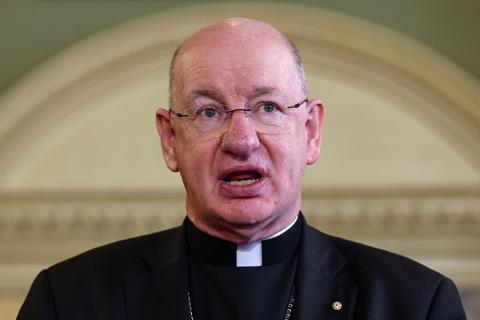
Pope Leo XIV has appointed Richard Moth, Roman Catholic bishop of Arundel and Brighton, to succeed Vincent Nichols as the 12th Archbishop of Westminster next year.
In taking up this role, Moth will become the leader of the Roman Catholic Church in England and Wales.
Born in Zambia in 1958, Moth came to England with his family where he received a traditional grammar school education in Kent. After training for the priesthood at Wonersh Seminary, he was ordained in 1982 by Michael Bowen, the Archbishop of Southwark for whom he would later serve as permanent secretary.
After ministering as curate in Clapham, Moth studied for a master’s degree in Canon Law in Ottawa, Canada before resuming parish ministry in south east London and as a chaplain to the territorial army.
His love of the outdoors, walking and horse riding, made him a natural choice to serve as bishop to the chaplaincy of the armed forces from 2009 to 2015. Pope Francis then appointed him as bishop to the diocese of Arundel and Brighton where he has served for the last ten years.
Moth won respect for his ability to manage the complexities of the diocese, and particularly his emphasis on strong governance. His background in canon law gave him the right instinct to ensure that the diocese enjoyed careful oversight. While some might dismiss this as managerialism, it is important that we remember what happens to people when principles of good governance fall apart. We don’t have to look back too far in our secular politics for object lessons in this regard, and nor can we overlook the devastating consequences of weak oversight in church leadership either.
The lawyer’s instinct has marked Moth’s ministry in other respects too. His advocacy for the poor and marginalised through his commitment to Catholic Social Teaching, is significant. Calling for prison reform and his championing of education are markers of his ministry to date.
This preference for the poor might have brought him to the attention of Pope Francis but we can also see why Pope Leo XIV may have selected him. By taking the name Leo, the new Pope showed us that he shared concerns of Leo XIII who published Rerum Novarum in 1891 - a groundbreaking critique of both the far-left and far-right ideologies that were tearing Europe apart and laying the foundation for a century of global conflict. I am confident that we can expect Moth to continue to speak truth to power.
Perhaps Moth’s concern for asylum seekers explains why the Daily Telegraph referred to him as a liberal bishop. This would be to misrepresent only one dimension of the man. Others might well call him a conservative because of his strong pro-life stance and campaigning.
Still others might say he is a traditionalist because he has taken a live and let live attitude to those priests in his diocese wanting to offer the mass in Latin. He has taken the middle ground by seeking Vatican approval for his priests to have the freedom to use this rite, while not taking up their cause. This pastoral caution and a reluctance to make radical public pronouncements suggests he is more Leonine than Franciscan.
While caution, sound management, strong governance and social concern are all necessary in the modern church, they certainly aren’t sufficient. We can find these qualities in any decent council social services department. The church must be more with its distinctive spiritual claim on our lives – we need a saviour who is Lord, not just someone to make life work better, important though that is.
Moth does have a firm spirituality based in personal prayer. As an oblate of the Benedictine order, he will have a deep contemplative spirituality. It was he who gave me a few principles in daily prayer that have served me well for many years.
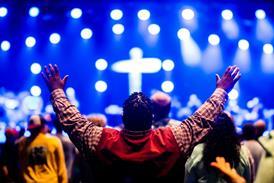
A life filled with prayer will carry Moth a long way in his new ministry. To the management of the diocese and his oversight of the Catholic Bishops’ Conference of England and Wales, he must also seize the moment afforded by the spiritual awakening across the nation. Now is the time to preach the gospel with confidence in a way that cuts through the nihilism offered by our confused and largely incompetent politicians.
I am confident that the Right Reverend Richard Moth, Archbishop-designate of Westminster, will use his leadership to great effect in serving the church in England and Wales.
























No comments yet