







With Iran experiencing brutal crackdowns on protesters and US military forces positioned nearby, the Middle East faces another potential crisis. But as Christians witness this unfolding tragedy, we’re not called to respond with panic or indifference, says Tim Farron MP, but with humble dependence on God
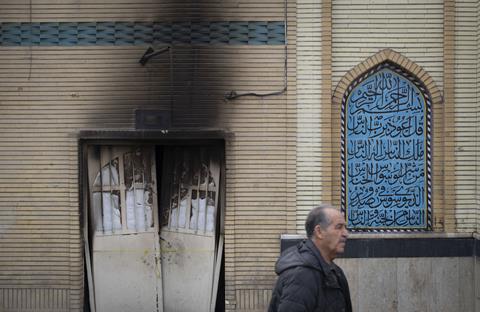
“Why is the state denying me the means to live?”
After a month of riots and strikes – driven by this haunting question – Iran seems to be teetering on the brink of civil war.
France’s General De Gaulle once dismissively branded Britain “a nation of shopkeepers” but, in the case of Iran, that is especially so. It was the small shopkeepers whose change of allegiance in 1979 saw the fall of the Shah and the coming to power of Ayatollah Khomeini. Over recent weeks, those same small shopkeepers’ struggle to keep pace with the collapsing currency prompted waves of protests that erupted in Tehran’s Grand Bazaar on 8 January, spreading to more deprived towns and converging once again on the capital.
Along with the shopkeepers - or Bazaaris, as they are known - many workers also seem to have rejected the regime, showing favour instead towards the former Shah’s son. Yet this has come at an immense cost. The revolutionary guard’s brutal crackdown has choked Tehran’s streets with tear gas and imposed frequent blackouts. In just one overwhelmed morgue, the BBC counted 186 bodies. Victims of state reprisals and repression. Thousands more are presumed to have died.
Rumours of war
The regime is clearly panicking. Iran’s regional proxy network has collapsed, its nuclear programme was derailed by American bombs last summer, and now the US might finally be coming for it. Over the weekend, the nuclear-powered aircraft carrier, USS Abraham Lincoln, entered the Arabian Sea within striking distance of Iran.
Many countries are cautioning Trump against launching another attack, fearing it could trigger an outright war in the region and endanger Gulf oil and gas facilities.
In his compassion, Jesus moves towards the distressed to speak words of freedom
These are deeply painful and challenging times. The plight of the Iranian people and their persecution is very real, so we might be tempted to support a US attack. But let’s just take a moment to look at the state of Libya today and remember that no situation is ever so bad that we can’t make it worse.
Indeed, the intervention in Iraq still casts a long shadow. That the UK and US broke international law in order to launch that invasion has arguably undermined global security and justice ever since. And let’s not forget the West’s habit of choosing a side that benefits us, only to switch allegiance when it no longer does.
Prince of Peace
So how should Christians engage? What does the Bible say? In Matthew 9, Jesus had compassion on the crowd “because they were harassed and helpless; like sheep without a shepherd.”
The people of Iran are undoubtedly “harassed”; they are anxious and distressed, seeking something better and subject to violent oppression for doing so. The Greek word translated as ‘harassed’ means a people scattered, pulled apart, and distracted in their focus. We need to understand the Iranian people’s plight, to care and pray for them.
No situation is ever so bad that we can’t make it worse
The passage also shows Jesus moving towards the harassed crowd with compassion. Compassion is a special word in the New Testament because it is only used by or about Jesus. In other words, he knew that he had been sent to meet the challenges we face.
The teetering Iranian regime is just one symptom of the leadership bankruptcy experienced by our world since the Fall. Today we wonder whether it is even possible for admirable leaders to exist.
Justice for all
The prophet Micah was deeply disappointed with the leadership of Judea in the eight century BC. When threatened by the Neo-Assyrian empire, he believed the Lord required his people to “act justly, love mercy, and walk humbly” with their God (Micah 6:8).
It is the same for us today. It’s easy to be overwhelmed by the magnitude of geo-political crisis, rumours of war and reports of horrific injustice. We do need to be aware of them, but we need not be consumed by them.
As we reflect on the Iranian protests and the regime’s angry, anxious response, let’s remember that Jesus is moved by the harassment of his people and that, in his compassion, he moves towards the distressed to speak words of freedom. Compassion made Jesus willing to face evil; it took Him to the cross and, when He rose from the grave, He ascended to the right hand of the Father, where He now intercedes day and night for us.
You might be facing many challenges this week, and our world may feel just too messy to handle. Can I encourage you to not switch off your emotional sensors, succumb to outrage fatigue, or let the important become trivial and the trivial important?
Rather, let’s refocus on Micah’s instructions to do justice, love mercy, and walk humbly with God. Let’s not panic, nor close our eyes when we look at the Middle East. We need to care and we need to pray.





















No comments yet