









Ben Cohen from Open Doors explains how increased media and political attention on the plight of persecuted Christians in Nigeria is having a positive effect
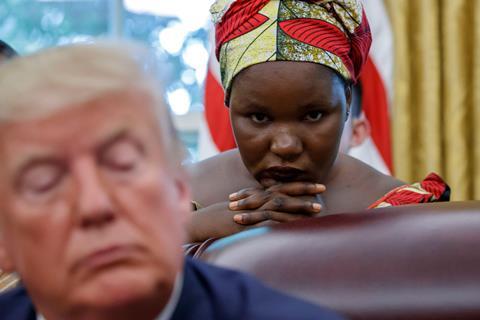
In November 2025, Donald Trump said that if the Nigerian government didn’t tackle the persecution of Christians, he would send in US troops “guns a blazin’”. Then over Christmas, he launched an air strike on a terrorist camp. Now, US troops have landed in Nigeria to support security forces.
After years of vicious attacks from armed groups, has the tide finally turned for millions of Christians (and Muslims) in northern Nigeria?
I remember the moment I first learned about the air strikes. It was Boxing Day and I was preparing for a bracing walk to blow away the cobwebs. Normally, a persecution-related story at that time of year is unambiguously terrible news: groups hostile to Christianity often choose major festivals to target churches and their congregations.
This was different - and rather harder to gauge: President Donald Trump declared that the US had targeted what he called Islamic State militants in the north west of Nigeria.
For years, the militant groups have been acting with almost total impunity. All this has changed now
On a Truth Social post, he declared: “Tonight, at my direction as Commander in Chief, the United States launched a powerful and deadly strike against ISIS Terrorist Scum in Northwest Nigeria, who have been targeting and viciously killing, primarily, innocent Christians, at levels not seen for many years, and even Centuries!”
The Nigerian Government confirmed that they had cooperated with America in the intervention - although they denied that it was connected to the persecution of Christians, which they have long claimed is not occurring in the country.
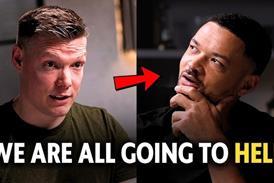
The attack followed Trump’s previous threats ”to completely wipe out the Islamic Terrorists” if the Nigerian Government didn’t take action against “the killing of Christians.” Along with talk show host Bill Maher and rapper Nicki Minaj, Trump’s words and actions have shone a spotlight on the persecution of Christian Nigerians like never before.
Lasting change?
The question is: What has changed in the wake of Donald Trump’s actions and the increased international attention?
Judging from the death toll so far this year, it might appear very little. Indeed, signs are that the violence has increased, with a series of attacks and kidnappings across the region affecting both Christians and Muslims. Of course, all this could change if the US cooperation strengthens security in the north. We are told that they will be offering training, not participating in operations.
However, according to Illia Djadi, an Open Doors persecution analyst for sub-Saharan Africa, something has already shifted: “The symbolic power of the Christmas attack is resonating across the whole of Nigeria and beyond,” he says. “For years, the militant groups have been acting with almost total impunity. All this has changed now.”
And this new sense of vulnerability among Islamic militants extends far beyond the scene of the air strikes in Sokoto state: “In the north east, we have heard reports that Boko Haram militants are fleeing to neighbouring countries, Niger, Chad and Cameroon. They fear they could be the next target.”
However, attempting to end the violence with a show of brute strength could be counter productive, he says: “Dropping a bomb will create the kind of reaction and polarisation we have been seeing, making Christians even more of a target.”
Instead, what is needed is a systematic and comprehensive approach to the violence in the region. “In northern Nigeria, the persecution of Christians is an endemic issue, even a mindset. Christians are seen and treated as a second-class citizen. All this needs to be addressed.”
Taking action
There have, however, been some very telling developments amid the ongoing violence. Last month, 177 Christians were abducted by armed men who targeted three evangelical churches in Kaduna state, north-west Nigeria.
Security forces initially denied that any such attack had taken place. However, several journalists went to the scene of the abduction (closed off by police) and were given a list of names of those taken by locals. Two days later, the police backtracked on their earlier denial. All 177 have since been safely returned.
Why would nomadic herders be in possession of semi-automatic AK-47s?
Why is this significant? Previously, an attack like this might have passed with barely a column inch outside of the region. But this time it gained international attention.
Then, last week, nine men were charged with terror offences for an attack last June in which 200 people were murdered and thousands displaced. Benue state is perhaps the most dangerous place to be a Christian in Nigeria, with radicalised members of the Fulani people staging brutal attacks on entire villages. However, the official line has always been that the violence has no religious element to it - something roundly debunked by Open Doors statistics.
“The Government are tacitly admitting that attacks like these aren’t just general criminality,” says Anna Finn*, from Open Doors’ sub-Saharan Africa operational team. “There’s something bigger at play there. There’s an organization of people behind them. Why would nomadic herders be otherwise in possession of semi-automatic AK-47s?”
Both Illia and Anna acknowledge that the Nigerian government is beginning to work harder to address the terrible violence in northern Nigeria. However, Illia warns that in order for lasting change to occur in the region, we will need to keep applying the pressure for many years.
“Nigeria is the biggest economy in West Africa,” says Illia. “They have the capacity to deal with this issue, but they need to show clear willingness. If people are attacked, it was because the Nigerian government are not doing enough.”
“Christians are relieved and thankful that the world is noticing what is happening in Nigeria,” adds Anna. “The attention is good, but if it does not lead to action and lasting change, then it’s more harmful.”
How you can play your part:
- Sign the Arise Africa petition, to bring an end to the horrific religious persecution across much of sub-Saharan Africa.
- Make sure your church is talking about the violence. “Bring it up at a prayer meeting, talk to your friends about it,” says Anna. “This violence is impacting the whole world.”
- Pray for an end to the attacks, but also for believers to stand firm in their faith. Abducted Christians say they faced torture and were told they would be spared if they embraced Islam.






















No comments yet