








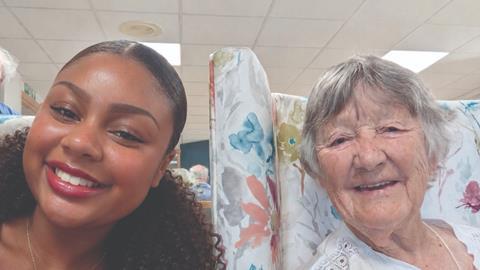

After nearly two years of visiting Pilgrims’ Friend Society care homes, 26-year-old Tyler Sewell-Nicholas reflects on the unexpected lessons she has learned from older people about faith, friendship and the gift of truly listening
What if you could sit down with someone who had lived through the second world war, seen the world transformed by technology, raised a family, weathered heartbreak and still remained steadfast in their faith? I’ve had that privilege time and time again. Some of the wisest, funniest and most faith-filled people I know are in their 80s and 90s – and I never expected to meet them through my job.
In my role as communications and social media officer at Pilgrims’ Friend Society, my job is primarily to write articles and create content for our website, magazine and social channels. In reality, it has become something far deeper than that. Each month, I travel to our care homes and housing schemes, spend time with family members (our name for the residents who live with us), listen to their stories, join in activities and witness the beautiful moments that make up their everyday life.
At 26, I did not expect this to affect me so profoundly. Spending time with older people has been one of the most joyful, moving and transformative experiences of my life. It has challenged my assumptions, deepened my faith and made me think differently about ageing, care and what it means to honour one another well.
We live in a culture that often sidelines older people. They are spoken about as though they are past their best; as though their value diminishes with age. Yet the more time I spend in our homes, the more I see how false that narrative is. Older people are not a burden to be managed or a problem to be solved. They are full of wisdom, humour, history and spiritual depth; image-bearers of God.
Growing older does not mean people stop caring about how they want to be seen
In some ways, ageism connects the generations more than we realise; young people can also be patronised, underestimated or stereotyped. Perhaps that is one reason I feel such a strong sense of kinship with the family members I meet. When I listen to their stories, I no longer see them through society’s labels. I see individuals: the cheeky one, the stylish one, the prayer warrior, the adventurer, the teacher, the engineer, the person who has loved deeply and suffered much, but still has warmth to give. These are people who have paved the way for my generation.
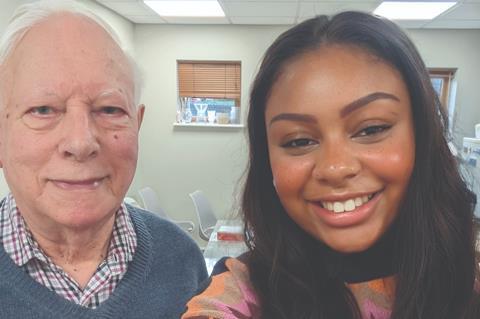
Memorable encounters
I often arrive at a care home thinking about what I can give: my time, attention or ability to share someone’s story. Yet I usually leave feeling that I have received far more than I offered: perspective, encouragement and reminders of the things that are easy to overlook when life becomes busy. These encounters have taught me to slow down, listen more carefully and appreciate the beauty found in ordinary moments.
One couple I will never forget are Michael, 97, and Joan, 87, who live at Dorothea Court in Bedford. As soon as I introduced myself, they welcomed me with such affection that I felt immediately at ease. And as they shared about their lives and missionary work, I was struck by the way their faith had shaped their marriage. I made a video about their love story and the marriage wisdom they wanted to pass on that later went viral on social media. But what stayed with me was not the number of views. It was the feeling in the room: the gentleness, the gratitude and the quiet strength of a love refined over decades.
Then there was Aileen, 82, a family member from Shottermill House in Haslemere. Almost as soon as I sat down with her, she said: “I met Nelson Mandela, you know.” I laughed in surprise, assuming that she was joking. But she looked at me with complete seriousness and began to tell me her story. She was born and raised in Cape Town, South Africa, and had nursed Mandela when he was imprisoned on Robben Island. “He was a nice man,” she told me. “Very kind. And a Christian too.”
I sat there in awe. This was not a story from a history book or documentary. This was a real woman, right in front of me, carrying memories of a remarkable chapter in world history. Because of her dementia, some of the dates and details had to be confirmed later with the help of her daughter, but the heart of her memory remained. It reminded me that every family member has lived an entire life before I’ve even met them.
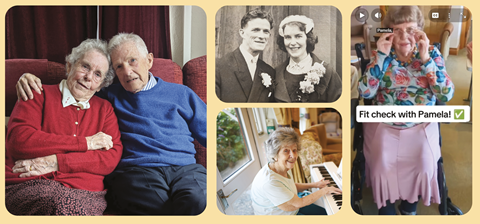
Style and self-expression do not disappear with age either. Pamela, 85, a family member at Milward House in Tunbridge Wells, taught me that. The first time I met her, I was wearing a multicoloured jumper that she complimented me on straight away. From there, we became firm friends. She was wearing a floral top, purple skirt and sparkly sandals, with handmade earrings and a necklace. She looked fabulous and when I told her so, she replied that it is important to look nice and presentable, even as you get older. It was a reminder to me that growing older does not mean people stop caring about how they want to be seen. Beauty, dignity and self-expression matter at every age. Pamela challenged the idea that ageing means becoming less interested in the things that bring us joy. The clothes we wear, the hobbies we enjoy and the ways we express ourselves are part of who we are. They are not things we leave behind with youth.
The same could be said of Gwynneth, 85, who lives at Royd Court, our housing scheme in Mirfield. She was so warm and kind when I met her, and we spoke about her life and community. At one point I noticed a crocheted frog keyring and told her I wanted one. She explained that she made them in the housing scheme’s weekly Huddle group that she organises for residents. Sometime later, she sent me one through the post – it is still attached to my keys. That small act of thoughtfulness says so much about what I have experienced in these homes. They are not places devoid of generosity or initiative. They are places full of relationships, creativity and affection.
This was not a story from a history book. This was a real woman, right in front of me, carrying memories of a remarkable chapter in world history
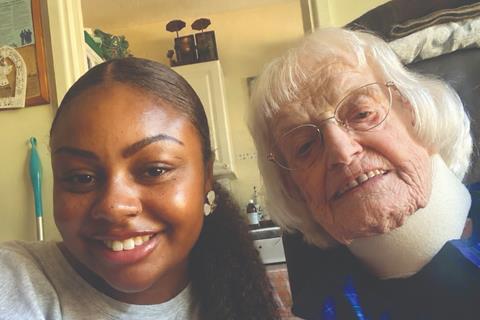
Then there are the people who leave such an imprint on your heart that even writing about them makes you emotional. Margaret is also known as ‘Titch’ because of her small stature. She is 94 and lives at Emmaus House in Whitehaven. We bonded immediately. She spoke about her husband with such love. They had met as teenagers, and he once surprised her with a tandem bike. Together they travelled far and wide. When I asked whether there was anything she would change about her life, she said no. Nothing. She had lived fully.
That answer humbled me. We live in an age of endless optimisation, always wondering what we should have done differently, what better version of life we might construct. But here was a woman who had known love, loss, adventure and hardship, and could still say: “I would not change any of it.” There was such peace in that. Before I left, I sang: ‘The blessing’ to her. Later the care manager, Julie, said that Margaret had told both her hairdresser and her family how lovely the visit had been. I was reminded again that presence – and simple kindness – matter.
Life in all its fullness
One of the biggest myths my job has dismantled is the idea that care homes are dreary, passive places where life narrows. Of course, there are challenges that come with ageing, illness and dementia. I do not want to romanticise these, but neither should we accept the caricature. I have witnessed how these homes are places of joy – spaces where people continue to build friendships, make memories and discover new ways to enjoy life.
That spirit is reflected in the many activities and events that take place, from craft activities to mark National Bobblehead Day to fun runs cheered on by under-fives from a local nursery. I have also witnessed pancake flipping, talent shows and conversations filled with laughter. Older people are still living life to the full. The rhythm of life may change, and support needs may increase, but the desire for connection, creativity and enjoyment remains strong. These moments remind me that care homes are not simply places where people receive support; they are communities where people contribute, relationships grow and life continues to be celebrated.
A huge part of that is down to the staff. I have watched carers serve with tenderness and attention to detail. They know when someone needs encouragement, quiet time, a laugh or simply to be treated with unhurried dignity. Their work is not just practical; it is relational, emotional and deeply human. Good care is never only about efficiency. It is about love made visible in ordinary actions.
Relatives often tell us how relieved they are to see their loved ones not only cared for and kept safe but also known. That distinction matters. To be known is one of the deepest human needs we have. At their best, Pilgrims’ Friend Society care homes are places where people are not reduced to tasks, conditions or routines. Instead, they are seen as whole people, with stories worth hearing and personalities worth delighting in.
How to have better conversations
If you do not know many older people, I would strongly encourage you to change that. Visit someone in your church. Volunteer at a local care home. Start a conversation. Ask questions. You may go in thinking you are there to brighten someone else’s day and come away realising they have profoundly shaped yours.
Here are some hints and tips to get started:
Take the first step: Don’t wait to be introduced; instead, start a conversation over tea, after church or at a community event
Be genuinely curious: Ask about someone’s life, faith journey, hobbies or favourite memories. People love to know their story matters
Listen more than you speak: One of the greatest gifts you can give is your full attention
Be patient: Friendships take time to develop, especially if someone is shy, hard of hearing or living with memory loss
Don’t worry about correcting every detail: If someone is living with dementia, instead of focusing on what’s factually accurate, respond to the emotion behind what they’re saying, and enjoy the conversation
Look for what you can learn: Older people have a wealth of wisdom, resilience and life experience to share
Keep showing up: Regular visits, phone calls or simply sitting together can make a much bigger difference than grand gestures.
From generation to generation
All of this has changed me. It has made me think more carefully about how I speak to older people and about the assumptions I unconsciously absorb from the culture around me. It has made me more attentive to the holy weight of ordinary encounters. It has also made me reflect on the kind of life I want to live. When I meet older people who radiate peace, humour, gratitude and resilience, I find myself asking: What habits do they have that I need to start cultivating now?
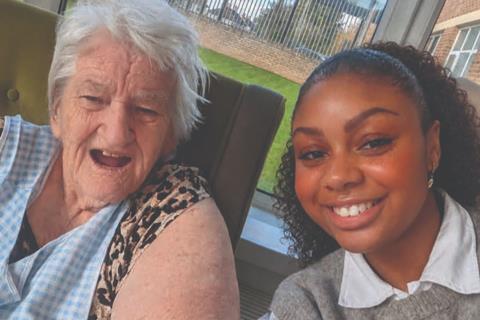
When I meet older people who radiate peace, I find myself asking: What habits do they have that I need to start cultivating now?
Perhaps part of the answer is connection. We are not meant to live in generational silos. We are one body, and every age has something to offer. Older Christians carry testimonies of God’s faithfulness over many decades. They have persevered through war, grief, change, disappointment and joy. Younger people need that witness, and older people deserve more than polite acknowledgement from a distance. They deserve friendship, honour and genuine interest. Their voices carry lessons that cannot be learned from books alone, reminding us that every generation has something precious to share with the next.






















2 Readers' comments