










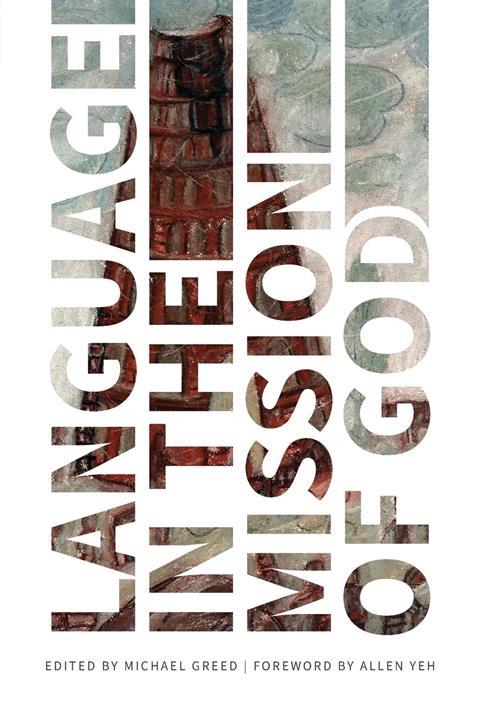
This book challenges the idea that linguistic diversity is a curse, arguing instead that God delights in speaking through many languages—affirming his truth while honouring our distinct cultural identities
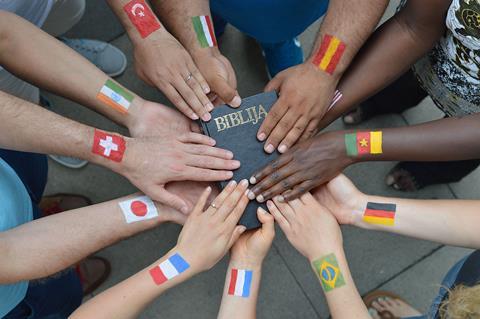
Language in the Mission of God, edited by Michael Greed, is published by SIL Global, a Christian charity dedicated to serving language communities around the world. SIL’s core work centres on helping people use their own languages to know God, learn freely and live with dignity. To that end, the organisation documents lesser-known languages, expands linguistic research, promotes literacy and translates the Bible into local languages – all while supporting the development and flourishing of minority language communities.
However, while SIL Global’s work is deeply rooted in linguistics, its driving purpose is to honour God and affirm the unique identities of individuals through their own languages. Language in the Mission of God explores this convincingly, addressing common myths about linguistic diversity and sharing real-life stories of people whose lives have been transformed by receiving literature and especially Bible translations in their language.
As a Black British woman with Jamaican and Nigerian heritage living in a white-majority culture, I know how the trivialisation of minority languages can make people feel as though their identity is somehow inferior to dominant languages like English. I’ve heard Jamaican patois dismissed as “ghetto”, “broken English”, or even “rude”, yet having grown up around family who spoke it, I know it carries far more than an exchange of words, but sparks feelings of home and identity.
Language in the Mission of God speaks directly into this reality, showing how God uses different languages as a tool to communicate his truth. God does not discriminate by language and neither should we, as his image-bearers.
Diversity is an essential component of what it means to be created in the image of God
From my Lingala-speaking friends to my Patois-speaking family, it was encouraging to learn that there is an organisation actively working to honour and preserve languages like ours. The book makes a deliberate effort to highlight often marginalised communities and linguistic groups including Deaf communities who communicate through sign language and affirms their place within God’s story.
One of the most insightful contributions comes in Chapter 9, written by Gary Simons. Here, he dismantles the widespread assumption that linguistic diversity is a curse – a belief often traced to Genesis 11, when God “confused” the language of those building the Tower of Babel. Simons challenges this interpretation by describing diversity not as a punishment, but as: “the blueprint of creation”. He argues that language diversity didn’t begin in Genesis 11 at all. Instead, he points back to Genesis 2, where God gives Adam the creative freedom to name the animals. In that moment, he suggests, language began to differentiate, making diversity an: “essential component of what it means to be created in the image of God”. With careful biblical reasoning, Simons shows that linguistic diversity is not an inherent curse, but a God-given part of what it means to be human.
Another insight I drew from the book was its reminder of how Christianity relates to language differently from other faiths. In Islam, for instance, the original Arabic of the Qur’an is considered sacred, and its holiness is viewed as diminished in translation. By contrast, Christianity is not bound to a single holy language. God is most concerned with the language that speaks to a person’s heart, and Bible translation exists so that people can encounter him in the words that they understand. It shows how Christianity isn’t limited to a particular language and that God is most concerned with the language that speaks to the person’s heart to win them to himself.
With 22 contributors from around the world, the book brings together a rich range of linguistic perspectives. Their collective insight reinforces a central theme of the book: preserving and valuing a person’s native language is often the most effective way to reach them.
Although theologically and linguistically dense, Language in the Mission of God is an important and comprehensive read for Christian leaders serving diverse communities and seeking to reach people across cultures. It is also valuable for Christians like myself who care about honouring the God-given identities of the diverse communities around us which, ultimately, should be the aim of all believers.
Language in the Mission of God edited by Michael Greed (SIL Global) is out now

























No comments yet