







As Rev Jamie Sewell watched the body of his 95-year-old parishioner weaken, he saw her faith deepen. Humans find death so hard because we were made for eternity, he says. We only make peace with it when we find the hope of heaven
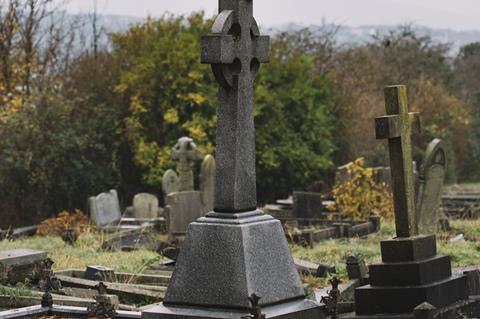
Last week, a lady in my church congregation died.
Her name was Teresa. She was 95-years-old, blind, and had one of the deepest revelations of Christ of anyone I’ve ever met.
For the last three years, I had the privilege of giving her communion at home. Her health slowly declined over that time, but her faith never seemed to. If anything, it deepened. She would often tell me about visions she had experienced, about seeing Jesus, about glimpses of heaven.
I never felt the need to argue about whether they were literal or symbolic. What struck me was the extraordinary peace they seemed to give her.
At the end of each visit, I would stand up, gather my things and say, “Well, Teresa, I’ll see you next time.” Without fail, she would reply, “Well, I might be dead.” She wasn’t being morbid; she had an unusual peace about death.
At first, I would awkwardly laugh and brush the comment aside. But after hearing it enough times, I eventually found the right response. “Well,” I would say, “if I don’t see you here, I’ll see you in eternity.”
As the months passed and her body became weaker, those words felt less like a pleasantry and more like a promise. Then last week, I got the phone call to say that Teresa had died.
I was sad. I will miss our conversations, taking her communion and listening to stories about the Jesus she felt so close to. But if I’m honest, alongside the sadness was something else.
Peace.
Not because death is a good thing. It isn’t. But because I genuinely believe that the frail old woman I visited is no longer frail. I believe her eyes have been restored. I believe the body that had slowly failed her for years is now whole. I believe she stands in the presence of the King she spent so much of her life talking about.
And perhaps that is why, as I’ve got older, I’ve found myself thinking more about eternity.
The promise of more
I’m 42. I recently got on top of some life admin and attended the NHS health check I should have had at 40. It politely informed me that I’m no longer indestructible. A faintly high cholesterol here, a little warning there. Nothing dramatic, but enough to remind me that time quietly marches on.
I realised recently that I’ve stopped measuring physical advancement and started measuring physical decline.
I’m not trying to become the strongest I’ve ever been; I’m trying to hold on to the strength I already have. I’m not trying to become the fastest version of myself; I’m simply hoping to remain respectable compared with the man I used to be.
Perhaps the reason death feels so unnatural is because it always was
When I was younger, I was drawn to the exciting parts of the Christian story. I imagined adventure, mission, taking risks for God, standing against darkness and helping to change the world.
Those things still matter. But these days I find myself returning again and again to Jesus’ simple promise: “Do not let your hearts be troubled…I go to prepare a place for you” (John 14:1-3).
As I become more aware of my own mortality, I find myself taking greater comfort in the promise of eternity.
I’m not sure I could do this life without believing there is more to come. I’m not sure I could watch the people I love grow old and die if I thought death had the final word. I’m not sure I could make sense of a world that contains so much beauty and so much heartbreak if I believed this was all there was.
Eternity awaits
Years ago, during a Bible study, an older Christian asked me a question that I’ve never forgotten. “Have you ever wondered why death still feels so foreign?”
At first, I wasn’t sure what he meant. Death happens to everyone. It has always been part of the human experience. Why should it feel strange?
He answered his own question: “It’s because we were never made for it.”
Whether you have faith or not, there is something about death that feels deeply wrong. When someone moves abroad, we miss them. But when someone dies, something altogether different happens. We grieve because something inside us cries out that this is not how things should be.
Christians believe that instinct is not an accident. We believe death is an intruder.
The Bible begins not with graves but with a garden. It tells the story of a creation that was made for life, relationship and wholeness. Death was never the destination.
Perhaps that is why, even after thousands of years, we still struggle to make peace with it. Perhaps the reason it feels so unnatural is because it always was.
Last week, Teresa died. When I think of her now, I don’t picture a blind old woman sitting quietly in her chair. I picture her seeing. I picture her walking. I picture her laughing. And I think back to those words we repeated so often: “If I don’t see you here, I’ll see you in eternity.”
Maybe you’ve never believed in God. Maybe you’ve never given much thought to heaven. Maybe you’ve spent your whole life trying not to think about death at all. But perhaps the reason it feels so foreign, so deeply unsettling, is because you were never designed for it.
Christians believe that death does not have to be the end of the story.
We believe that 2,000 years ago, a man walked out of an empty tomb and changed the destiny of everyone willing to follow Him. And because of that, I believe that one day I will see Teresa again.
























No comments yet